

Evaluated on the LoCoMo and LongMemEval benchmarks with LLM-as-a-Judge metrics, reporting average scores across temporal reasoning, multi-hop, open-domain, single-hop, and long-term memory tasks
Titans + MIRAS: Helping AI have long-term memory
Ali Behrouz, Student Researcher, Meisam Razaviyayn, Staff Researcher, and Vahab Mirrokni, VP and Google Fellow, Google Research

A Definition of AGI
The lack of a concrete definition for Artificial General Intelligence (AGI) obscures the gap between today's specialized AI and human-level cognition. This paper introduces a quantifiable framework to address this, defining AGI as matching the cognitive versatility and proficiency of a well-educated adult. To operationalize this, we ground our methodology in Cattell-Horn-Carroll theory, the most empirically validated model of human cognition. The framework dissects general intelligence into ten core cognitive domains-including reasoning, memory, and perception-and adapts established human psychometric batteries to evaluate AI systems. Application of this framework reveals a highly "jagged" cognitive profile in contemporary models. While proficient in knowledge-intensive domains, current AI systems have critical deficits in foundational cognitive machinery, particularly long-term memory storage. The resulting AGI scores (e.g., GPT-4 at 27%, GPT-5 at 57%) concretely quantify both rapid progress and the substantial gap remaining before AGI.

milla-jovovich/mempalace
The highest-scoring AI memory system ever benchmarked. And it's free.
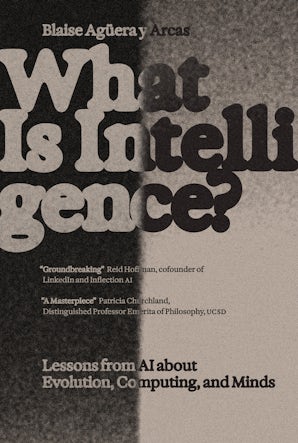
What Is Intelligence?
It has come as a shock to some AI researchers that a large neural net that predicts next words seems to produce a system with general intelligence. Yet this ...
Letting an AI remember tripled its puzzle score - Sensemaker
OpenAI changed two conversation settings, not the model. The result shows why long-running AI tests depend on their memory setup.
Why AI Coding Agents Forget — And How ArcticMem Fixes It
Explore ArcticMem, Snowflake’s persistent semantic memory system for AI coding agents. See how dual-tier memory improves benchmark pass rates to 73%.

Solving a Million-Step LLM Task with Zero Errors
LLMs have achieved remarkable breakthroughs in reasoning, insights, and tool use, but chaining these abilities into extended processes at the scale of those routinely executed by humans,...
LLM Leaderboard - Comparison of over 100 AI models from OpenAI, Google, DeepSeek & others
Comparison and ranking the performance of over 100 AI models (LLMs) across key metrics including intelligence, price, performance and speed (output speed - tokens per second & latency - TTFT), context window & others.
I Benchmarked OpenAI Memory vs LangMem vs Letta (MemGPT) vs Mem0 for Long-Term Memory: Here’s How They Stacked Up
145 votes, 53 comments. Lately, I’ve been testing memory systems to handle long conversations in agent setups, optimizing for: Factual consistency…
MemOS: An Operating System for Memory-Augmented Generation (MAG) in Large Language Models
Large Language Models (LLMs) have emerged as foundational infrastructure in the pursuit of Artificial General Intelligence (AGI). Despite their remarkable capabilities in language perception and generation, current LLMs fundamentally lack a unified and structured architecture for handling memory. They primarily rely on parametric memory (knowledge encoded in model weights) and ephemeral activation memory (context-limited runtime states). While emerging methods like Retrieval-Augmented Generation (RAG) incorporate plaintext memory, they lack lifecycle management and multi-modal integration, limiting their capacity for long-term knowledge evolution. To address this, we introduce MemOS, a memory operating system designed for LLMs that, for the first time, elevates memory to a first-class operational resource. It builds unified mechanisms for representation, organization, and governance across three core memory types: parametric, activation, and plaintext. At its core is the MemCube, a standardized memory abstraction that enables tracking, fusion, and migration of heterogeneous memory, while offering structured, traceable access across tasks and contexts. MemOS establishes a memory-centric execution framework with strong controllability, adaptability, and evolvability. It fills a critical gap in current LLM infrastructure and lays the groundwork for continual adaptation, personalized intelligence, and cross-platform coordination in next-generation intelligent systems.
Andrej Karpathy on Twitter / X
The race for LLM "cognitive core" - a few billion param model that maximally sacrifices encyclopedic knowledge for capability. It lives always-on and by default on every computer as the kernel of LLM personal computing.Its features are slowly crystalizing:- Natively multimodal… https://t.co/2jsVevkTSJ— Andrej Karpathy (@karpathy) June 27, 2025
I accidentally turned LLM memory into program analysis :: pwning.systems
Why I stopped trying to give LLM agents a better memory and instead built Lemmalog, a Datalog engine that maintains an agent's knowledge as analysis state, with provenance, retractions and incremental evaluation, plus what happened when I benchmarked it on LongMemEval and LoCoMo.
ARC-AGI-3: A New Challenge for Frontier Agentic Intelligence
We introduce ARC-AGI-3, an interactive benchmark for studying agentic intelligence through novel, abstract, turn-based environments in which agents must explore, infer goals, build internal models of environment dynamics, and plan effective action sequences without explicit instructions. Like its predecessors ARC-AGI-1 and 2, ARC-AGI-3 focuses entirely on evaluating fluid adaptive efficiency on novel tasks, while avoiding language and external knowledge. ARC-AGI-3 environments only leverage Core Knowledge priors and are difficulty-calibrated via extensive testing with human test-takers. Our testing shows humans can solve 100% of the environments, in contrast to frontier AI systems which, as of March 2026, score below 1%. In this paper, we present the benchmark design, its efficiency-based scoring framework grounded in human action baselines, and the methodology used to construct, validate, and calibrate the environments.
AA-Omniscience: Knowledge and Hallucination Benchmark | Artificial Analysis
Compare AI model performance on AA-Omniscience: Knowledge and Hallucination Benchmark. A benchmark measuring factual recall and hallucination across various economically relevant domains.
Cross-Harness Agentic Memory
Supermemory built a ~99% benchmark ensemble to prove the benchmarks are gameable.Letta scored 74% on LoCoMo with just a filesystem. No vector DB, no graph.
AI makes you smarter but none the wiser: The disconnect between performance and metacognition
Optimizing human–AI interaction requires users to reflect on their performance critically, yet little is known about generative AI systems’ effect on users’ metacognitive judgments. In two large-scale studies, we investigate how AI usage is associated with users’ metacognitive monitoring and performance in logical reasoning tasks. Specifically, our paper examines whether people using AI to complete tasks can accurately monitor how well they perform. In Study 1, participants (N = 246) used AI to solve 20 logical reasoning problems from the Law School Admission Test. While their task performance improved by three points compared to a norm population, participants overestimated their task performance by four points. Interestingly, higher AI literacy correlated with lower metacognitive accuracy, suggesting that those with more technical knowledge of AI were more confident but less precise in judging their own performance. Using a computational model, we explored individual differences in metacognitive accuracy and found that the Dunning–Kruger effect, usually observed in this task, ceased to exist with AI use. Study 2 (N = 452) replicates these findings. We discuss how AI levels cognitive and metacognitive performance in human–AI interaction and consider the consequences of performance overestimation for designing interactive AI systems that foster accurate self-monitoring, avoid overreliance, and enhance cognitive performance.