


Come learn about the benefits of observing end users, creating and mapping personas, and assessing iterative designs. Additionally, see the other tools we use and visuals we create to capture and distill information that will help us mitigate the risk of a failed end product. These steps build the foundation for user-friendly designs tailored to target persona(s) – for products that are actually adopted (and even enJOYed!) rather than tossed to the side or treated like paperweights.
The New Science of Designing for Humans (SSIR)
The rise of behavioral science and impact evaluation has created a new way for engineering programs and human interactions. <meta property=
Personas - USABLE Tools
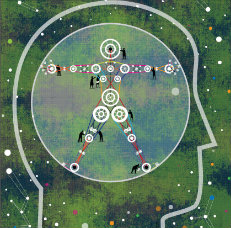
Personas, or profiles of end users, play an important role in the design process and allow developers to better understand community needs and facilitate the creation of user stories and more concrete use-cases for their products. In some of the most challenging security environments in the world, understanding the users capacity, threats, risks, and strengths can be difficult. The USABLE project has harnessed the knowledge of the digital security training community to build personas of high-risk users from around the globe. Learn more about USABLE Personas here.
Jenny Wen: The design process is dead. Why Designers can no longer trust it.
Thinking in Triplicate — Mule Design
To align design and business, visualize the shared narratives

Welcome to the Relational Design Lab | LX Cast | 19 comments
Today I am VERY excited to share with all of you about my new home, Relational Design Lab! This R&D studio brings together a number of projects and will, I hope, grow to encompass many more. I imagine this lab as a gathering place for curious people who want to think about systems, and not in the typical mechanistic way they are described and implemented in technology. Instead, we'll feel into living systems, fractal ways of being, where the how is as important as the what. Over time, I hope the Lab will be a home or a waypoint for designers, researchers, community organizations, artists, storytellers, and technologists to explore togetherness together. Our 'theory of change' focuses on paradigm shift. Big change takes practice and possibility. Paradoxically, paradigm shift is a result of many small changes and repetitions in our behaviour and belief systems. We embrace emergence, mutual support, collective practice, and storytelling. One thing feels pretty clear, we need technology that is designed in solidarity with mutual care, does not depend on the whims of big corporations or its surveillance, and is joyful to use. To live in this reality, we also need to consider how business, funding, governance, scale, and context affect our work. We need embodied ways of knowing and sharing knowledge alongside our technical reasoning. And we need to face the reality of the consequences of our actions and those of our ancestors. This is not a project that aims to solve all the world's problems, but instead, to nurture the capacity for doing things together. We support and practice responding with curiosity and care, not with answers or attachment to ideals that no longer make sense amid collapsing systems. We are not "hiring" for this project now but there are many ways to get involved and would welcome opportunities to collaborate. Some of the projects we're holding include Folk Tech, Spacious, SEED Founding, and Relational Source License. We're also developing a very cool workshop process to help other organizations explore relational design through a community-driven futurism process. As ecosystem supporters, we are developing relationships with many aligned groups and projects as well. There will be more communications coming! If this all sounds like something you would like to support, contribute to, keep track of, or develop relationship with, for now you can subscribe to our calendar here https://lnkd.in/gPRFW7zC and message me directly! | 19 comments on LinkedIn

The A.I.-Design Aesthetic That’s Taking Over the Internet
How Anthropic’s new tool, Claude Design, is creating overnight web-design clichés.
%20(1).jpg)
Built by Designers: No Explanation Needed
Designers now turn ideas into working products. Explore a curated collection of apps, tools, websites, and experiments designed, built, and shipped by designers.
Design Thinking
In the past, design has most often occurred fairly far downstream in the development process and has focused on making new products aesthetically attractive or enhancing brand perception through smart, evocative advertising. Today, as innovation’s terrain expands to encompass human-centered processes and services as well as products, companies are asking designers to create ideas rather than to simply dress them up. Brown, the CEO and president of the innovation and design firm IDEO, is a leading proponent of design thinking—a method of meeting people’s needs and desires in a technologically feasible and strategically viable way. In this article he offers several intriguing examples of the discipline at work. One involves a collaboration between frontline employees from health care provider Kaiser Permanente and Brown’s firm to reengineer nursing-staff shift changes at four Kaiser hospitals. Close observation of actual shift changes, combined with brainstorming and rapid prototyping, produced new procedures and software that radically streamlined information exchange between shifts. The result was more time for nursing, better-informed patient care, and a happier nursing staff. Another involves the Japanese bicycle components manufacturer Shimano, which worked with IDEO to learn why 90% of American adults don’t ride bikes. The interdisciplinary project team discovered that intimidating retail experiences, the complexity and cost of sophisticated bikes, and the danger of cycling on heavily trafficked roads had overshadowed people’s happy memories of childhood biking. So the team created a brand concept—“Coasting”—to describe a whole new category of biking and developed new in-store retailing strategies, a public relations campaign to identify safe places to cycle, and a reference design to inspire designers at the companies that went on to manufacture Coasting bikes. [hbr_brightcove id=”4443548301001″]

By Humans, For Humans – Mindful Design
Now, more than ever, we need to consider the real, human impact of the work we do. This is a fundamental principle of Mindful Design.

COMMUNITY-BASED, HUMAN-CENTERED DESIGN
We propose a radical change in design from experts designing for people to people designing for themselves, leveraging the creativity of communities to solve their own problems. People in communiti…

Co-creating with emergent processes ✦ Hijinx World
Existential musings over algorithmic design with creative programming legend Dan Tapper.

Digital Art Enters the Museum Age — Social Software
We explore code and systems as a medium for creating new forms of art. We consider "software" in an expanded sense, examining the ways that we are programmed by technology around us and the ways we can write software to make change in the world.
Reverse-engineering Claude's generative UI - then building it for the terminal
Extracting Anthropic's design system from a conversation export and rebuilding generative UI for the terminal.
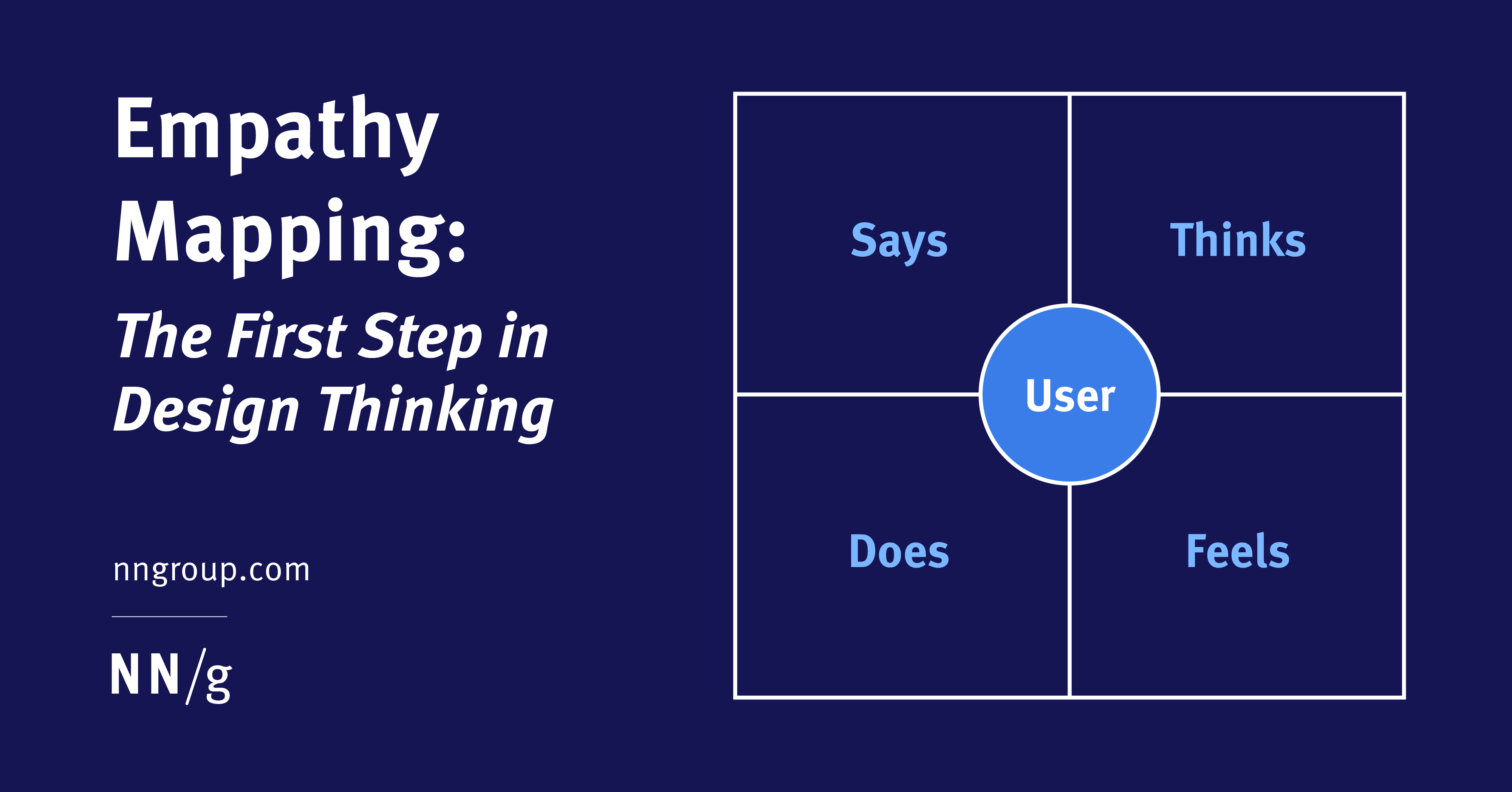
Empathy Mapping: The First Step in Design Thinking
Visualizing user attitudes and behaviors in an empathy map helps UX teams align on a deep understanding of end users.
An introduction to radical participatory design: decolonising participatory design processes
Outside of community-led design projects, most participatory design processes initiated by a company or organisation maintain or even strengthen power imbalances between the design organisation and the community on whose purported behalf they are designing, further increasing the absencing experience. Radical participatory design (RPD) is a radically relational answer to the coloniality inherent in participatory design where the community members’ disappointment is greater due to the greater expectations and presencing potential of a ‘participatory design’ process. We introduce the term RPD to show how research and design processes can be truly participatory to the root or core. Instead of treating participatory design as a method, a way of conducting a method, or a methodology, we introduce RPD as a meta-methodology, a way of doing any methodology. We explicitly describe what participation means and compare and contrast design processes based on the amount of participation, creating a typology of participation. We introduce ‘designer as community member’, ‘community member as designer,’ and ‘community member as facilitator’ models and provide characteristics for the meta-methodology of RPD.
An introduction to radical participatory design: decolonising participatory design processes
Outside of community-led design projects, most participatory design processes initiated by a company or organisation maintain or even strengthen power imbalances between the design organisation and the community on whose purported behalf they are designing, further increasing the absencing experience. Radical participatory design (RPD) is a radically relational answer to the coloniality inherent in participatory design where the community members’ disappointment is greater due to the greater expectations and presencing potential of a ‘participatory design’ process. We introduce the term RPD to show how research and design processes can be truly participatory to the root or core. Instead of treating participatory design as a method, a way of conducting a method, or a methodology, we introduce RPD as a meta-methodology, a way of doing any methodology. We explicitly describe what participation means and compare and contrast design processes based on the amount of participation, creating a typology of participation. We introduce ‘designer as community member’, ‘community member as designer,’ and ‘community member as facilitator’ models and provide characteristics for the meta-methodology of RPD.