

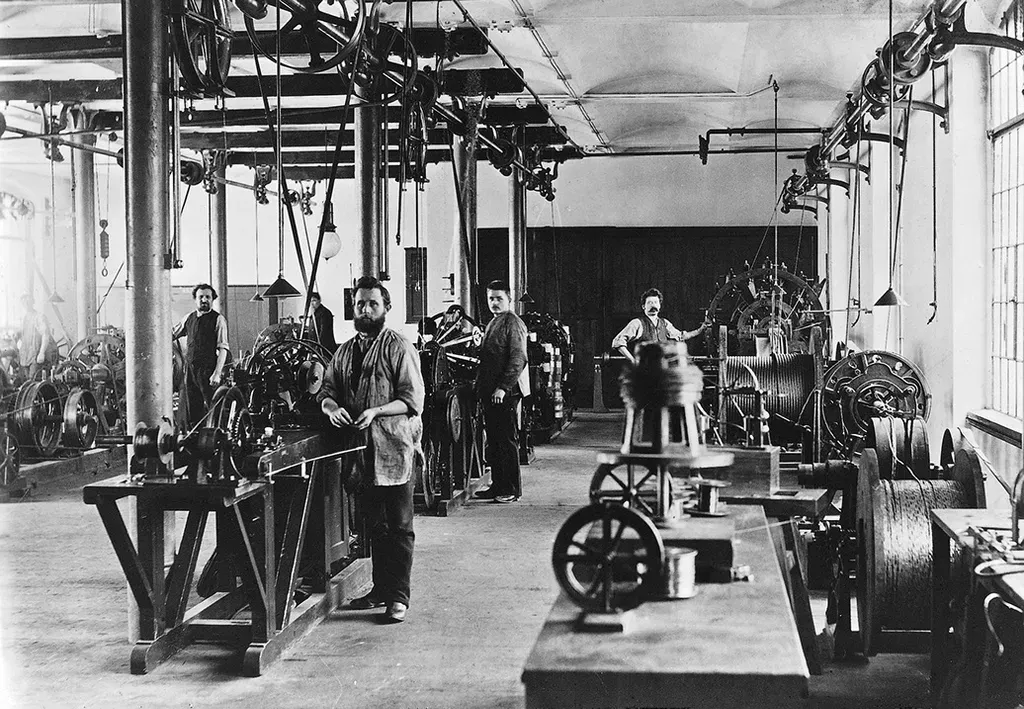
While the German economy is stagnating, Digital-Mittelstand may offer a solution.
Digitalisation in Europe – 2025 edition - Interactive publications - Eurostat
Digital technologies are transforming the world we live and work in. They touch many different aspects of our lives, from everyday tasks like making phone calls and shopping to how businesses and public services operate. Digital transformation is one of the key priorities for the EU. The digital decade initiative sets out the EU targets that will guide digital transformation until 2030.
The role of small and medium-sized enterprises in development: What can be learned from the German experience?
Small and medium-sized enterprises (SMEs) play an important role for development. Of importance are Schumpeterian SMEs, which include start-ups that trigger innovation, boost productivity and bring about structural change. Normal SMEs, which only adjust to market pressure, are also important for development and employment. Germany is a role model for SMEs. This is due to several important factors: Germany's local banking system, which is not profit oriented (made up of Sparkassen, or savings banks); the dual vocational system, with its combination of practical and theoretical education; the high social capital of strong employers' associations and trade unions; government support of SME clusters and a big, government-owned development bank (the KfW). SMEs in developing countries typically suffer from limited access to long-term and affordable finance, insufficient institutions for developing a skilled class of entrepreneurs and workers, a low income, and poor policies to support economic and social upgrading of SMEs. Economic upgrading in developing countries is necessary, but it will not be successful without social upgrading. Germany - with its high social capital within the framework of a social market economy, its financial and education system, and its government support for SMEs - can stimulate debates about SMEs in developing countries.
Digital skills shortage is hampering German SMEs’ digital transformation | KfW
One third of SMEs cannot meet their digital skill requirements. The problem applies not just to basic digital skills, such as the use of standard software and digital devices, but also to advanced skills such as programming and statistical data analysis. Most SMEs attempt to build digital skills through further training. But short training measures with often limited skill-building effects predominate. More intensive training is hampered primarily by financial barriers. One third of SMEs describe the direct costs as a problem, while one quarter are challenged by employees’ absence from work. Digital learning formats enable more flexible learning, so they have the potential to stimulate further training in small and medium-sized enterprises.
Digitalization and Signatures: Evidence from a Survey among German Citizens
We assess the knowledge of two legal norms central to the digital transformation of the German population in representative population survey: the revised requi

The Rise of the Decentralized Startup
I think we’re seeing a very big shift right now in how startups are created and operate. But before we dig into that, I want to spend some time talking about work. For centuries, work has bee…

Sovereign Tech Fund | Sovereign Tech Agency
With the Sovereign Tech Fund, we invest globally in the open software components that underpin Germany's and Europe's competitiveness and ability to innovate. By targeting core digital infrastructure, our investments scale across many sectors and benefit a broad range of users. Improving the security, stability, and reusability of open software components directly enhances the productivity, competitive edge, and capacity for innovation of startups and small and medium-sized businesses.

Small- and Medium-Sized Enterprises: Trends and Future Perspectives for Sustainability and Digitalization in Germany | MDPI
The objective of this research was to provide a review of the state-of-the-art literature related to sustainability and digitalization in SMEs to identify current trends and future perspectives within this vital sector.

Excuse me, is there a problem?
Many startups fail despite identifying a real problem and building a product that solves that problem. This explains why, so you can avoid their fate.
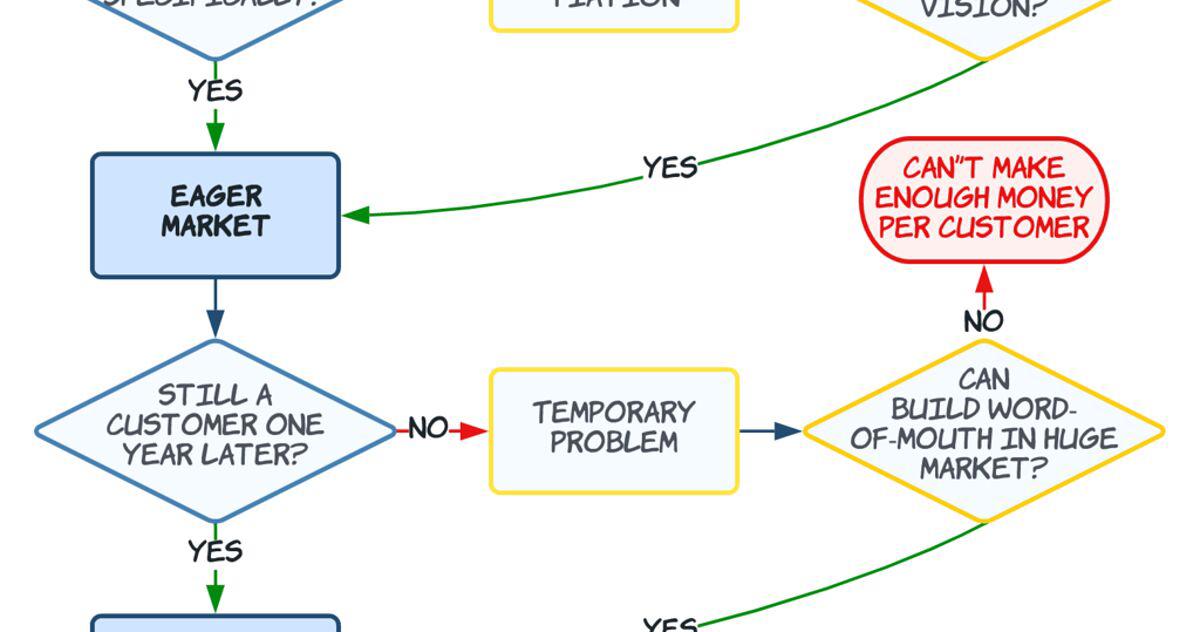
Excuse me, is there a problem?
Many startups fail despite identifying a real problem and building a product that solves that problem. This explains why, so you can avoid their fate.
Distribution vs. Innovation | Andreessen Horowitz
The battle between every startup and incumbent comes down to whether the startup gets distribution before the incumbent gets innovation. The TiVo Problem In 1999, ReplayTV and TiVo invented the Digital Video Recorder (DVR). It was an incredible innovation — allowing you to “pause” live television. But TiVo had no value without “content” to pause. That...

A European path out of Big Tech lock-in: Eurosky + the "Everything Account" idea (AT Protocol)
If you care as much about privacy, decentralization, and independence from Big Tech than having a 100% EU-made software stack, Eurosky might be worth…
The Market Curve
The market you choose to serve is one of the most important factors for an early-stage startup. And for most technologists, it’s a blind …

TypeDB for Startups
We back the builders and breakers. Launch and scale on TypeDB's unique language and infrastructure.

under the hood
This week I’ve been thinking about what it’s like for a new generation to make things with computers. When we were talking in Berlin, Luce made a point that...

Supporting AT Proto development with money and infrastructure should be a no-brainer for EU industrial policy. In fact, given the need for alternatives to US-owned platforms, comparative advantage, and infinite downstream benefits, few areas offer a bigger bang for your industrial policy buck.

Eurosky Sebastian
2 days ago I had the opportunity to participate in the European Commission‘s workshop on the future of social networks in Europe, together with researchers, entrepreneurs, policymakers, investors and civil society representatives.
