Pick Hall for International Studies 5828 South University Ave., Room 301 Chicago, Illinois 60637
Jonathan Berkey
I teach the full range of Middle Eastern history since the rise of Islam, and I participate in Davidson's Humanities Program. My research and writing focus on Islamic religious culture and medieval Egypt and Syria.
It Can Be Lonely to Have a Middle-of-the Road Opinion on the Middle East (Published 2024)
Some college students and faculty members are seeking space for nuanced perspectives on the Israel-Hamas war on deeply divided campuses.

Lorenzo Kamel
He held teaching and research positions in several universities in the Middle East, the United States, and Europe, including the Albert-Ludwigs-Universität Freiburg, where he served as a Marie Curie Experienced Researcher,[4] and Harvard University, where, among other appointments, he was a postdoctoral fellow for two years with a project entitled "Artificial Nations? The Sykes-Picot and the Islamic State's narratives in a historical perspective".[5] He holds a two-year M.A. in Israeli society and politics from the Hebrew University of Jerusalem, a Ph.D. in history from the University of Bologna, and lived for years in several countries in the Middle East, including, with visiting appointments, Egypt ('Ain Shams University), the Palestinian Territories (Birzeit University), Israel (Hebrew University), and Turkey (Bilkent University).
Dan Sperber, Explaining Culture

010 - Greg Stoker on Iran, U.S. Imperialism, and Why the Wars Never Stop
Shahan Ali Memon (@shahanmemon.bsky.social)
Researching {science of AI-mediated science, metascience #SciSci, #AI4Science, #GenAI, LLMs, agents, alignment, AI governance, misinformation in science} PhD @ UW. Visiting @ NYU & MSR Alum @ Carnegie Mellon Academic webpage: https://samemon.github.io

Institute for the Critical Study of Zionism - Institute for the Critical Study of Zionism
ICSZ supports the development of Critical Zionism Studies with resources for academics and activists. The Institute’s work includes fellowships,

Masar Badil | Program on Extremism | The George Washington University
Authored by Jeff Parsons, Asher Stern, Samantha Wampold and Zeynep Ozharat

Paul Meehl Graduate School Meta Research Symposium 2026 | Paul Meehl Graduate School
October 8-9, 2026
Paul A. Haslam, Jessica Schafer and Pierre Beaudet, eds. Introduction to International Development: Approaches, Actors and Issues, 2nd Edition (Don Mills, Oxford University Press, 2012). 580pp
Andrej Karpathy on Twitter / X
Personal update: I've joined Anthropic. I think the next few years at the frontier of LLMs will be especially formative. I am very excited to join the team here and get back to R&D. I remain deeply passionate about education and plan to resume my work on it in time.— Andrej Karpathy (@karpathy) May 19, 2026
Phil Agre's Home Page
Phil Agre is no longer a professor at UCLA. This page and others by him are being provided as a record of his writings and are no longer actively maintained.
United Black Library
Discover, read, and save Black History and African Diaspora content—ebooks, lectures, documentaries, and films. Access a vast catalog, subscribe or purchase content, and join a community of learners.
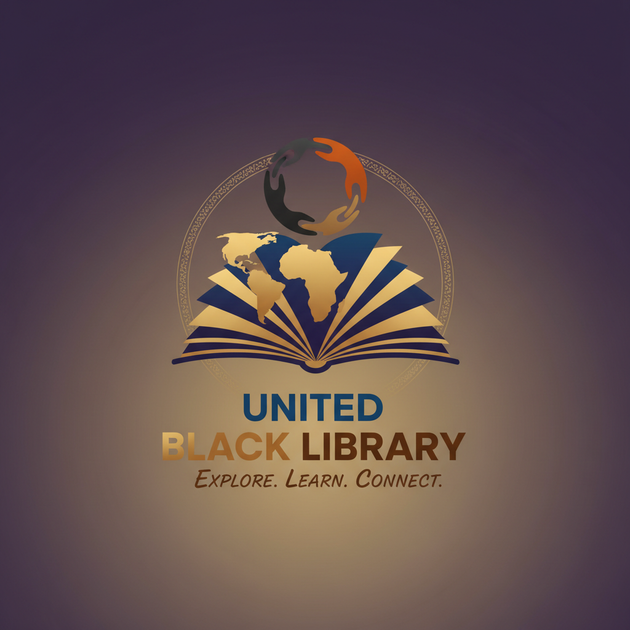
The Civilizational Crisis in the Middle East and the Democratic Civilization Solution: Manifesto of the Democratic Civilization, volume IV
The global crisis of civilization is nowhere more visible than in the Middle East. Wars, authoritarian regimes, social fragmentation, and ecological collapse converge into a single, devastating picture. Abdullah Öcalan argues that the solution to this crisis must be found in the same place where centralized civilization first emerged 5,000 years ago. The fourth volume of Öcalan’s Manifesto of Democratic Civilization traces the region’s deep historical crises while highlighting the many traditions of resistance—religious, cultural, communal, and antiauthoritarian—that have survived despite millennia of state domination. These traditions, he argues, provide the building blocks for a future beyond capitalist modernity. Drawing on the theoretical framework laid out in earlier volumes, Öcalan offers a bold rereading of Middle Eastern history, revealing how patriarchy, hierarchy, and empire became entrenched, and how they can be dismantled. He presents democratic confederalism, a moral and political society, and an ecological, women-centered economic order as the essential pillars of a new civilizational model. In this volume, Öcalan emerges not only as a strategist for resolving the Kurdish question but as a visionary for democratizing the entire region. He closes with urgent questions that speak directly to our global moment: How should we live? What must we do? And where do we begin? Praise “Öcalan, from his cell, reminds us that freedom is not a point of arrival, but a living process, a weaving that is remade collectively, an ethical construction that challenges us in every decision, in every word, in every step. His thought, in dialogue with the rebellious spirit of the people, becomes a vital tool for thinking about emancipation beyond classical forms of politics. That is why reading his work is not only an intellectual act, but a profoundly political act.” —Rosario Aquím Chávez, Bolivian activist, poet, and educator “Öcalan’s works have played a key role in inspiring one of the most widespread movements of real-life revolutionary transformation in recent memory.” —David Graeber, author of Debt and The Dawn of Everything “One should conclude that Abdullah Öcalan is nothing less than a Kurdish Nelson Mandela.” —Slavoj Žižek, author of The Courage of Hopelessness “Öcalan’s utopia—as is soon discovered—is extremely concrete; it is embodied in the struggles and the order of the zones liberated by the Kurdish communist militias! A real utopia, the one that Öcalan supports, a precious gem that strongly opposes the rebirth, so common today, of national fascisms. The utopia of the democratic confederation of peoples embodies a real process that will win every battle.” —Antonio Negri “In these times of accelerating climate change and deepening crises, the product of centuries of imperialism and the past few decades of hyper neoliberalism and ecological destruction, your struggle for freedom and peace has become our struggle, and your example a beacon for untold millions who will yet follow.” —Barry Gills, professor of Global Development Studies at the Faculty of Social Sciences, University of Helsinki About the Contributors Abdullah Öcalan, the founder of the Kurdistan Workers’ Party (PKK), is credited with developing the paradigm of Democratic Modernity. Since his abduction in 1999, he has been imprisoned on the island of Imrali in conditions of extreme isolation. During his time in prison, he has written over ten books that have transformed Kurdish politics. Writing extensively about history, philosophy and politics, he is widely regarded as a key figure in finding a political resolution to the Kurdish question. His writings have made significant contributions to discussions on freedom and outline proposals for non-state political systems in his theories on Democratic Confederalism. His most notable work is the five-volume “Manifesto for a Democratic Civilisation”. His works have been translated into over twenty languages. Leyla Güven is a Kurdish politician, co-chair of the Democratic Society Congress and former mayor of the municipality of Viranşehir in the Şanlıurfa Province of Southeast Anatolia of Turkey, where she represented the former Democratic Society Party. Click here for one-page information sheet on this product