

An introduction to meta-rationality: ways of using rational systems more effectively by understanding how they relate to their contexts.
How To Think Real Good | Meta-rationality
Practical epistemology: heuristics for how to think about difficult things, particularly using formal methods.
The biogenic approach to cognition
After half a century of cognitive revolution we remain far from agreement about what cognition is and what cognition does. It was once thought that these questions could wait until the data were in. Today there is a mountain of data, but no way of making sense of it. The time for tackling the fundamental issues has arrived. The biogenic approach to cognition is introduced not as a solution but as a means of approaching the issues. The traditional, and still predominant, methodological stance in cognitive inquiry is what I call the anthropogenic approach: assume human cognition as the paradigm and work ‘down’ to a more general explanatory concept. The biogenic approach, on the other hand, starts with the facts of biology as the basis for theorizing and works ‘up’ to the human case by asking psychological questions as if they were biological questions. Biogenic explanations of cognition are currently clustered around two main frameworks for understanding biology: self-organizing complex systems and autopoiesis. The paper describes the frameworks and infers from them ten empirical principles—the biogenic ‘family traits’—that constitute constraints on biogenic theorizing. Because the anthropogenic approach to cognition is not constrained empirically to the same degree, I argue that the biogenic approach is superior for approaching a general theory of cognition as a natural phenomenon.
A periodic table of cell types
Summary: This Hypothesis proposes a periodic table that aligns cell types according to their developmental stages, connecting them to one another according to the universal axis from stem cells to differentiated cells.

The Shape of Knowing - The Cynefin Co
We evolved to make sense of a world that does not come with explanations attached. This is the third in a series on the trialectics. For an introduction

Complexity Explorables
A collection of interactive explorable explanations of complex systems in biology, physics, mathematics, social sciences, epidemiology, ecology and other fields....
Metaventory — the meta-science community
A comprehensive community of the people building meta-science and the tools they make — psychology and economics first, growing science-wide.

Rationality: What It Is, Why It Seems Scarce, Why It Matters by Steven Pinker
In the twenty-first century, humanity is reaching new heights of scientific understanding—and at ...
Mapping an Ecology of Integrative Approaches to Addressing the Metacrisis
Dear friends, The Institute of Applied Metatheory (IAM) is pleased to announce the release of a new white paper that charts the landscape of leading-edge responses to the global metacrisis. In “Mapping an Ecology of Integrative Approaches to Addressing the Metacrisis”, IAM scholars Brandon Norgaard, Nicholas Hedlund, PhD, and Claudia Meglin provide a sweeping (albeit
How to understand cells, tissues and organisms as agents with agendas | Aeon Essays
Biology’s next great horizon is to understand cells, tissues and organisms as agents with agendas (even if unthinking ones)

E. coli chemotaxis: the baffling intelligence of a single cell
I want to tell the story of a beautiful phenomenon in biology. In some sense it’s the prototype of much of the activity of life. The phenomenon is the way in which an individual cell of E. coli forages for nutrients. This process, known as “chemotaxis”—the “chemo-” for chemical and the “taxis” from the Greek τάξις, for tactics—is intelligence in one of its most elemental forms. An individual E. coli has no brain, obviously, and is even many orders of magnitude simpler than a human cell, and yet already it possesses something like a sense of smell, drive, even a memory. Chemotaxis recasts E. coli not as some aimless gut-pest but rather as an exquisitely sophisticated physical computer.

The Irrational Decision
How the computer revolution shaped our conception of rationality—and why human problems require solutions rooted in human intuition, morality, and judgment

Senomic view of the cell: Senome <i>versus</i> Genome
In the legacy of Thomas Henry Huxley, and his ‘epigenetic’ philosophy of biology, cells are proposed to represent a trinity of three memory-storing media: Senome, Epigenome, and Genome that togethe...

I missed a lot of #metascience discourse in hospital, and am mostly sad I didn't get a chance to wade in on the absurdity of this being a paper in Nature in 2026; ignoring a decade of commentary from statisticians on OSC 2015 paper. nature.com/articles/s41586-025-10078-y

Investigating the replicability of the social and behavioural sciences - Nature
www.nature.comCellosophy

Exploring the origins of intelligence and agency, starting with unicellular organisms such as bacteria, choanoflagellates and other protists.

Principles of Minimal Cognition: Casting Cognition as Sensorimotor Coordination
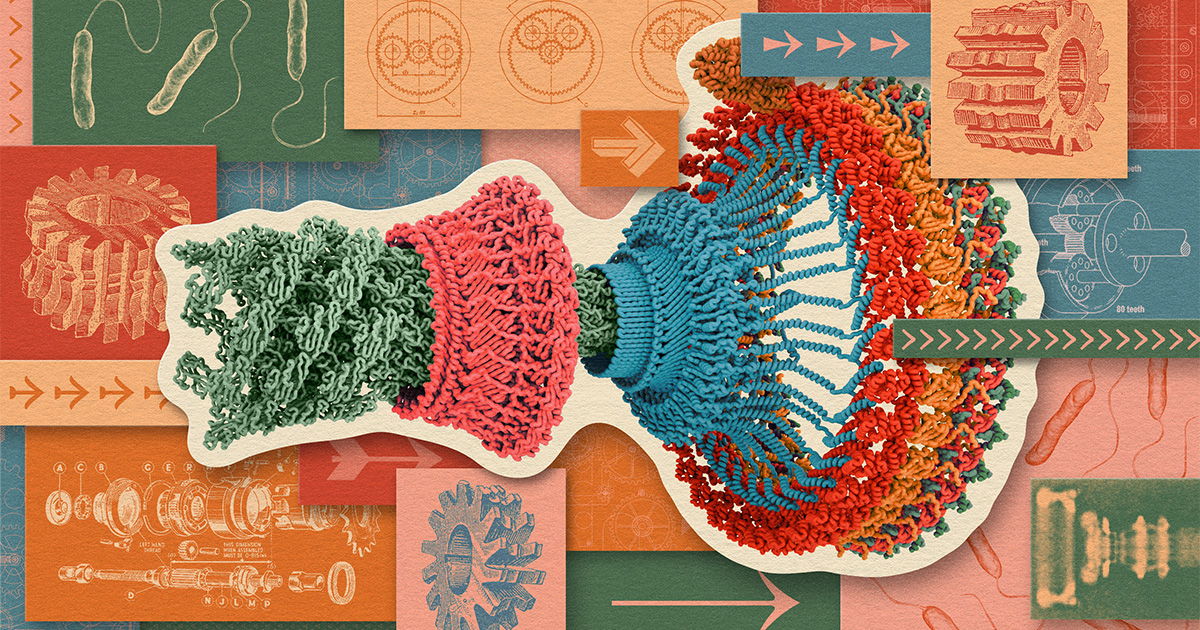
What Physical ‘Life Force’ Turns Biology’s Wheels? | Quanta Magazine
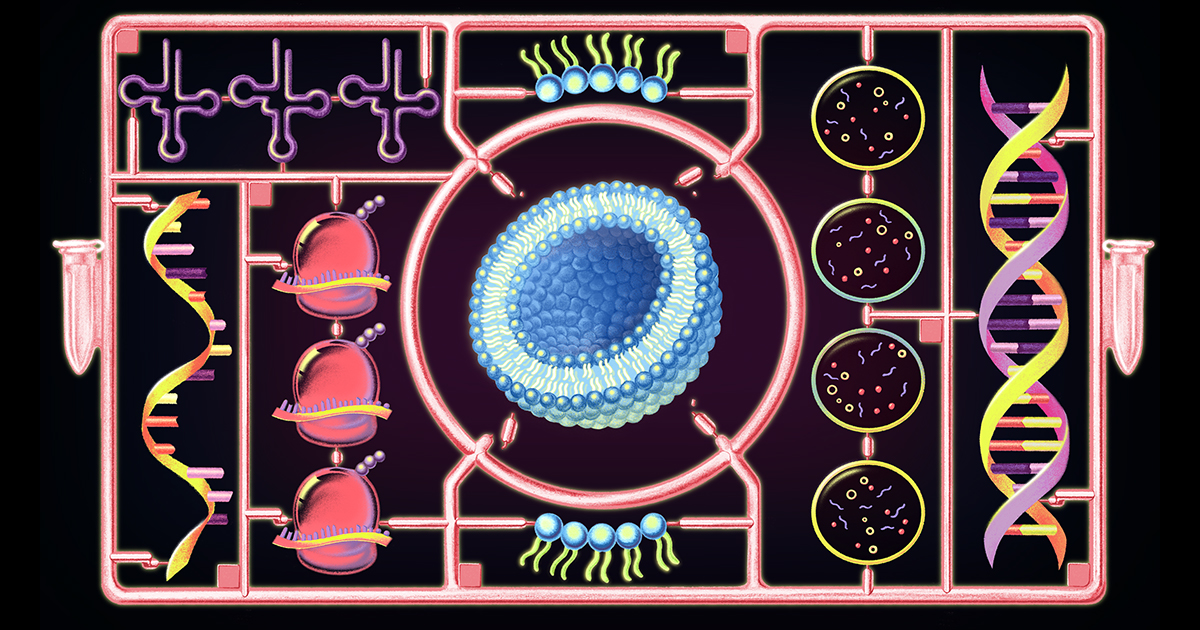
For the First Time, a Cell Built From Scratch Grows and Divides | Quanta Magazine
www.science.org

Cognition without brains? Learning and memory in microorganisms
Learning Outside the Brain: Integrating Cognitive Science and Systems Biology
