

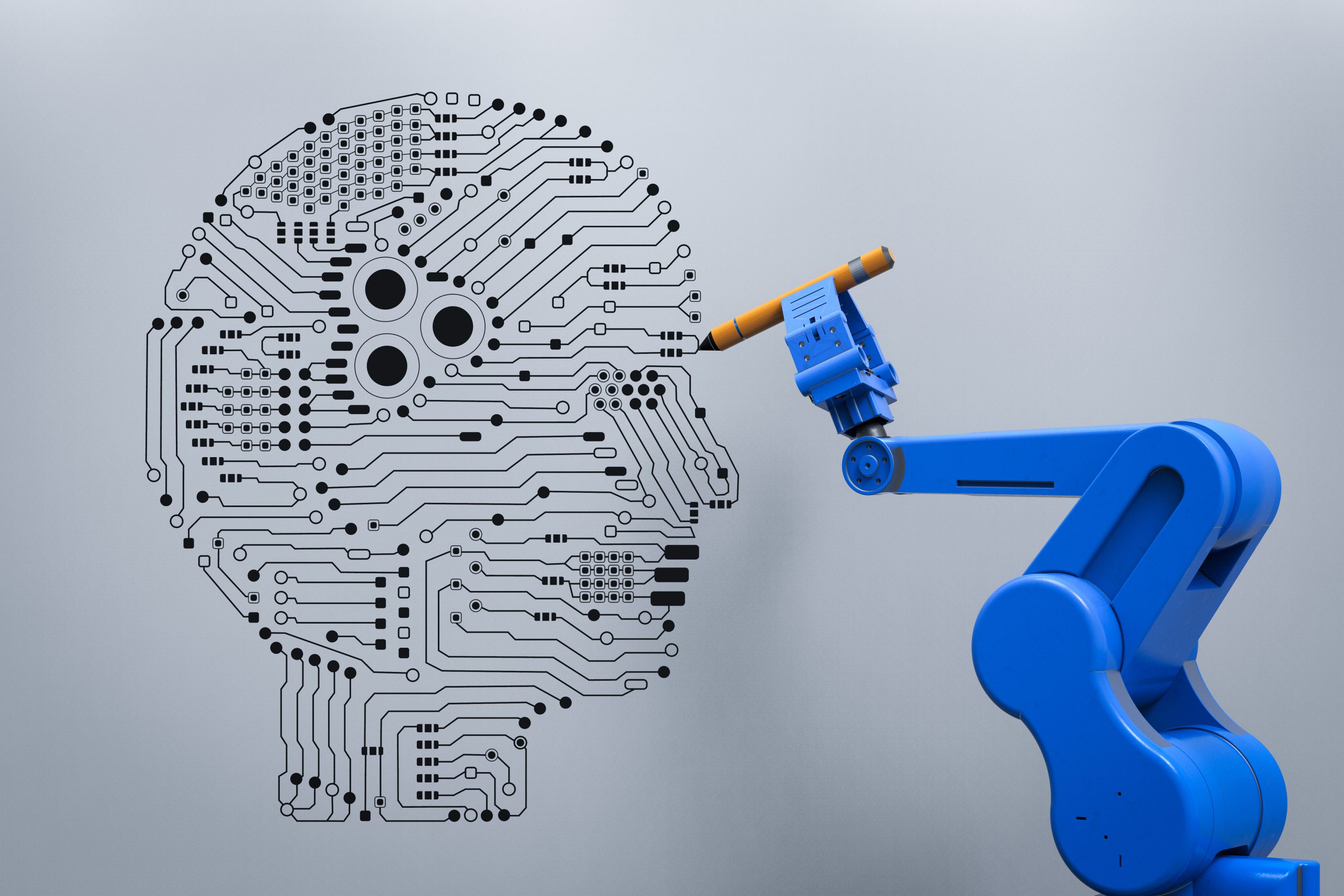
Since its beginnings in the 1940s, automated reasoning by computers has become a tool of ever growing importance in scientific research. So far, the rules underlying automated reasoning have mainly been formulated by humans, in the form of program source code. Rules derived from large amounts of data, via machine learning techniques, are a complementary approach currently under intense development. The question of why we should trust these systems, and the results obtained with their help, has been discussed by early practitioners of computational science, but was later forgotten. The present work focuses on independent reviewing, an important source of trust in science, and identifies the characteristics of automated reasoning systems that affect their reviewability. It also discusses possible steps towards increasing reviewability and trustworthiness via a combination of technical and social measures.
Trust and reliance on AI — An experimental study on the extent and costs of overreliance on AI
Decision-making is undergoing rapid changes due to the introduction of artificial intelligence (AI), as AI recommender systems can help mitigate human flaws and increase decision accuracy and efficiency. However, AI can also commit errors or suffer from algorithmic bias. Hence, blind trust in technologies carries risks, as users may follow detrimental advice resulting in undesired consequences. Building upon research on algorithm appreciation and trust in AI, the current study investigates whether users who receive AI advice in an uncertain situation overrely on this advice — to their own detriment and that of other parties. In a domain-independent, incentivized, and interactive behavioral experiment, we find that the mere knowledge of advice being generated by an AI causes people to overrely on it, that is, to follow AI advice even when it contradicts available contextual information as well as their own assessment. Frequently, this overreliance leads not only to inefficient outcomes for the advisee, but also to undesired effects regarding third parties. The results call into question how AI is being used in assisted decision making, emphasizing the importance of AI literacy and effective trust calibration for productive deployment of such systems.
AI, peer review and the human activity of science
When researchers cede their scientific judgement to machines, we lose something important.

How do authors want to use AI for review?
A survey of researchers who compared AI-generated scientific reviews with journal-agnostic human peer review reveals that they overwhelmingly prefer using AI as a self-checking tool before submission rather than as a replacement for human reviewers. It encourages an “author-centric” model in which AI helps researchers improve their manuscripts before they are reviewed by their peers.

Reflections on trusting trust
To what extent should one trust a statement that a program is free of Trojan horses? Perhaps it is more important to trust the people who wrote the software.

AI’s Growing Role as Scientific Peer Reviewer | Stanford HAI
Stanford computer scientist James Zou is exploring how AI can accelerate scientific research and peer review. His finding: AI excels at spotting gaps, but judgment calls still need humans.

AI agents are checking the scientific literature — and spotting decades-old errors
The technology is proving adept at finding faults in decades-old papers and reference databases.
Can AI Agents Synthesize Scientific Conclusions?
Scientific AI agents increasingly retrieve evidence, reason across sources, and synthesize conclusions used in consequential decisions. Yet, their ability to do so in high-stakes domains such as health remains unclear. We introduce SciConBench, a large-scale live benchmark of 9.11K questions and expert-written conclusions from systematic reviews to evaluate open-domain scientific conclusion synthesis. The benchmark draws on an expert-validated automated evaluation pipeline that decomposes conclusions into atomic facts and measures correctness and comprehensiveness via factual precision and recall. To mitigate data leakage, we further introduce SciConHarness, a clean-room evaluation harness that equips agents with controlled web interaction to ensure valid measurement. Evaluating 8 frontier models and deep research agents, we find that factual quality remains low: under clean-room settings, the best agent achieves only a factual F1 of 0.337. Our clean-room setting consistently reduces performance relative to unconstrained evaluation, suggesting that leakage inflates estimates of models' true synthesis capabilities. Finally, we audit consumer-facing agents (e.g., Google AI Overview, OpenEvidence) and find they frequently generate incomplete and sometimes contradictory conclusions, even when the ground-truth answer is available. Overall, our results show that reliable synthesis of scientific conclusions remains an open challenge, and that clean-room evaluation is essential for assessing open-domain AI agents.

The AI Trust Gap: 82% Are Skeptical, Yet Only 8% Always Check Sources
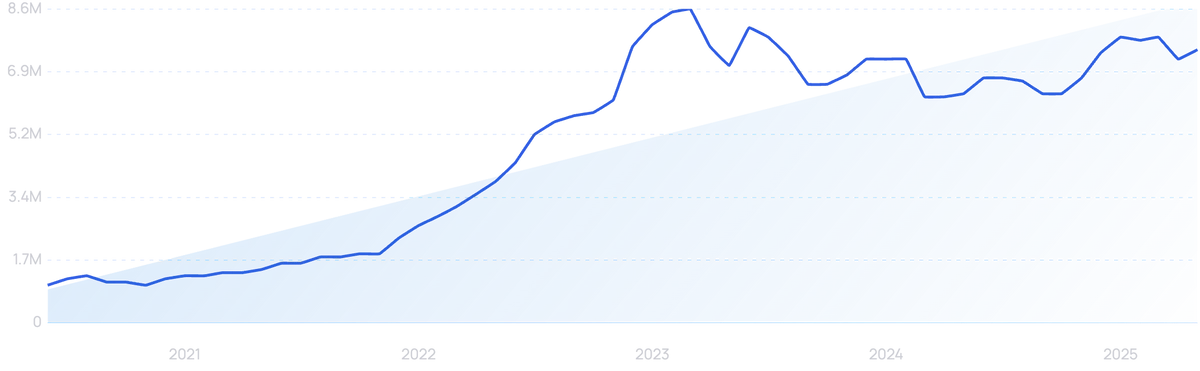
Original Exploding Topics survey data explores public sentiment on AI Overviews and AI-generated content, highlighting trust, skepticism, and shifting content consumption habits.
Towards Automating Scientific Review with Google's Paper Assistant Tool
Artificial intelligence is driving a revolution in scientific discovery, accelerating everything from hypothesis generation to mathematical theorem proving. However, this rapid acceleration is creating a systemic challenge: traditional human peer review cannot scale to match the influx of AI-assisted science. Ultimately, to resolve this tension, we must also deploy AI to accelerate the verification and review process itself. To frame the discussion around this transition, we propose a taxonomy consisting of four progressive levels of AI-human collaboration in scientific evaluation, and discuss various trade-offs involved with each. As a step toward this future, we introduce the Paper Assistant Tool (PAT), an agentic AI framework built for deep scientific review and verification. PAT ingests full scientific manuscripts and produces a comprehensive evaluation, checking theoretical results, validating experiments, suggesting improvements, and identifying potential flaws. By utilizing inference scaling techniques, PAT is able to identify deeper issues than a single model call alone, achieving a 34% improvement over zero-shot recall on mathematical errors in the SPOT benchmark. Pilot deployments of PAT as a pre-submission tool for authors at two major Computer Science conferences -- STOC and ICML -- demonstrate its ability to identify critical errors and suggest substantive improvements to research papers. By catching errors early, PAT eases the cognitive burden placed on referees, while preserving their control over the outcomes of the review process.
Can we measure trust in scientific publications? - LSE Impact
Jonathon Alexis Coates outlines how a constellation of static and dynamic indicators could provide a means for assessing the trustworthiness of published research

A New Paradigm for Scientific Publishing, Peer Review, and Impact Assessment
Scientific publishing and peer review have evolved little in three centuries, while the demands placed on them have grown profoundly. The growing role of artificial intelligence has underscored deep, systemic shortcomings of an aging system that has largely evaded innovation, a system whose origins are appallingly closer to the invention of the printing press than to the internet. We can do better – much better. This article is intended as the beginning of a communal experiment: a living document that critically reviews the modern academic publishing and peer-review system and presents a concrete framework to address what bibliometrics experts¹ have characterized as "the pervasive misapplication of indicators to the evaluation of scientific performance". Building on the Leiden Manifesto, DORA, and a body of scholarship spanning many disciplines and decades, we present a community-governed, non-profit platform organized around three trust-weighted impact factors, for articles, authors, and reviewers, with full algorithmic transparency, an open development log, and structural decoupling of credibility scoring from content moderation and from monetization. We invite the community to discuss, critique, and help shape it.
Can AI Detectors Be Trusted?
Society has always trusted editors, teachers, peer reviewers, and readers to set acceptable standards for writing. In the past, the biggest challenge was detecting plagiarism and cracking down on other forms of cheating. Now, AI detectors are rewriting the script: they assign a score based on the likelihood that the text was created by a human or a large language model (LLM).

Understanding Confidence Threshold in AI Systems
Learn how confidence threshold works as a decision boundary in AI systems. Discover the key mechanics that determine automated processing versus human review.
A Data Utopia for Science-of-Science
Here I want to briefly sketch out a vision for how to solve a key set of problems facing science-of-science researchers, using the relatively new idea of a ‘data trust.’ In my ideal wor…

Why we don’t really know what the public thinks about science
Measuring trust isn’t enough. Furthering knowledge about the institutions and norms of science is the best way to build credibility.

Why I don’t trust most human-AI interaction experimental research – Jason Collins blog
Behavioural economics, data science and artificial intelligence.