

I believe the central problem of the 21st century is how civilization co-evolves with science and technology. As our understanding of the world deepens, it enables technologies that confer ever more power to both improve and damage the world. There's currently much public discussion of this in the context of artificial superintelligence (ASI). However, it's a fundamental recurring challenge, affecting areas including climate change, genetic engineering, nanotechnology, geoengineering, brain-computer interfaces, and many more. How can we best benefit from science and technology, while supplying safety sufficient to ensure a healthy, flourishing civilization?
B. Scot Rousse: "Language, Technology, & Care"
Appropriate Measures — Real Life
Changing the tech we use is not enough to mitigate the environmental and social harm of mass technology

Technology is Not Values Neutral: Ending the Reign of Nihilistic Design
We fail to take tech seriously when we do not grasp its full impact on humans

AI for Science & Safety Nodes - Request for Proposals
Artificial intelligence is accelerating the pace of discovery across science and technology. But today’s AI ecosystem risks centralizing compute, talent, and decision-making power – concentrating capabilities in ways that could undermine both innovation and safety.

Pioneering Scientific Superintelligence
Pioneering Scientific Superintelligence to solve humankind’s greatest challenges.
From Genius Science to Scenius Science - Cosmik Labs
Why personal AI tools might not be all we need to revolutionize science
The Whale and the Reactor: A Search for Limits in an Age of High Technology, Second Edition
“In an age in which the inexhaustible power of scientific technology makes all things possible, it remains to be seen where we will draw the line, where we will be able to say, here are possibilities that wisdom suggest we avoid.” First published to great acclaim in 1988, Langdon Winner’s groundbreaking exploration of the political, social, and philosophical implications of technology is timelier than ever. He demonstrates that choices about the kinds of technical systems we build and use are actually choices about who we want to be and what kind of world we want to create—technical decisions are political decisions, and they involve profound choices about power, liberty, order, and justice. A seminal text in the history and philosophy of science, this new edition includes a new chapter, preface, and postscript by the author.

AI, I tried to love you – Writings and rehearsals by Nathan Schneider
Among my peers who study the cultures and economies surrounding technology, I often find myself more tech-positive than most. On the whole I like computers, like the internet, and like in general the emergent human creativity that these things have enabled and revealed. A source of my appreciation is that I expend a lot of effort on the practice of “slow computing,” which is to say, choosing tools and technical communities that I can feel in right relationship with. I tend to approach new socio-technologies (like gig economies, blockchains, and social media) not from a perspective of why is this so bad? so much as asking how could we do this right?
Artificial intelligence tools expand scientists’ impact but contract science’s focus
Nature - Artificial intelligence boosts individual scientists’ output, citations and career progression, but collectively narrows research diversity and reduces collaboration, concentrating...

Artificial intelligence and illusions of understanding in scientific research
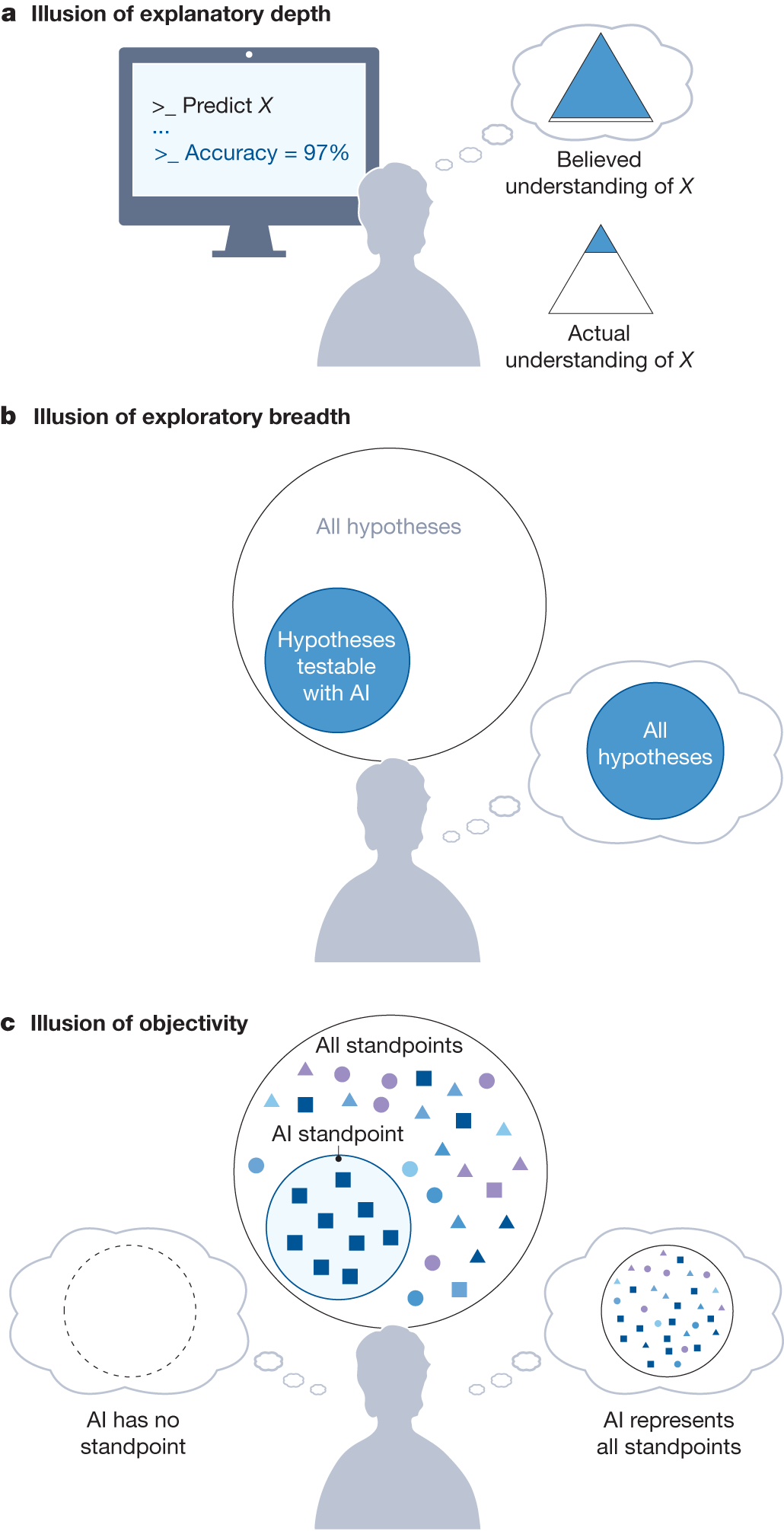
Scientists are enthusiastically imagining ways in which artificial intelligence (AI) tools might improve research. Why are AI tools so attractive and what are the risks of implementing them across the research pipeline? Here we develop a taxonomy of scientists’ visions for AI, observing that their appeal comes from promises to improve productivity and objectivity by overcoming human shortcomings. But proposed AI solutions can also exploit our cognitive limitations, making us vulnerable to illusions of understanding in which we believe we understand more about the world than we actually do. Such illusions obscure the scientific community’s ability to see the formation of scientific monocultures, in which some types of methods, questions and viewpoints come to dominate alternative approaches, making science less innovative and more vulnerable to errors. The proliferation of AI tools in science risks introducing a phase of scientific enquiry in which we produce more but understand less. By analysing the appeal of these tools, we provide a framework for advancing discussions of responsible knowledge production in the age of AI.
Bridging the gap: inequalities that divide those who can and cannot create sustainable outcomes with AI
The widespread use of AI technologies impacts individuals, organisations, and societies in ways that warrant more comprehensive investigation. Inequalities in benefiting from AI advancements may le...

Systems of Global Governance in the Era of Human-Machine Convergence
Technology is increasingly shaping our social structures and is becoming a driving force in altering human biology. Besides, human activities already proved to have a significant impact on the Earth system which in turn generates complex feedback loops between social and ecological systems. Furthermore, since our species evolved relatively fast from small groups of hunter-gatherers to large and technology-intensive urban agglomerations, it is not a surprise that the major institutions of human society are no longer fit to cope with the present complexity. In this note we draw foundational parallelisms between neurophysiological systems and ICT-enabled social systems, discussing how frameworks rooted in biology and physics could provide heuristic value in the design of evolutionary systems relevant to politics and economics. In this regard we highlight how the governance of emerging technology (i.e. nanotechnology, biotechnology, information technology, and cognitive science), and the one of climate change both presently confront us with a number of connected challenges. In particular: historically high level of inequality; the co-existence of growing multipolar cultural systems in an unprecedentedly connected world; the unlikely reaching of the institutional agreements required to deviate abnormal trajectories of development. We argue that wise general solutions to such interrelated issues should embed the deep understanding of how to elicit mutual incentives in the socio-economic subsystems of Earth system in order to jointly concur to a global utility function (e.g. avoiding the reach of planetary boundaries and widespread social unrest). We leave some open questions on how techno-social systems can effectively learn and adapt with respect to our understanding of geopolitical complexity.

If AI is normal technology, history is not reassuring. — LessWrong
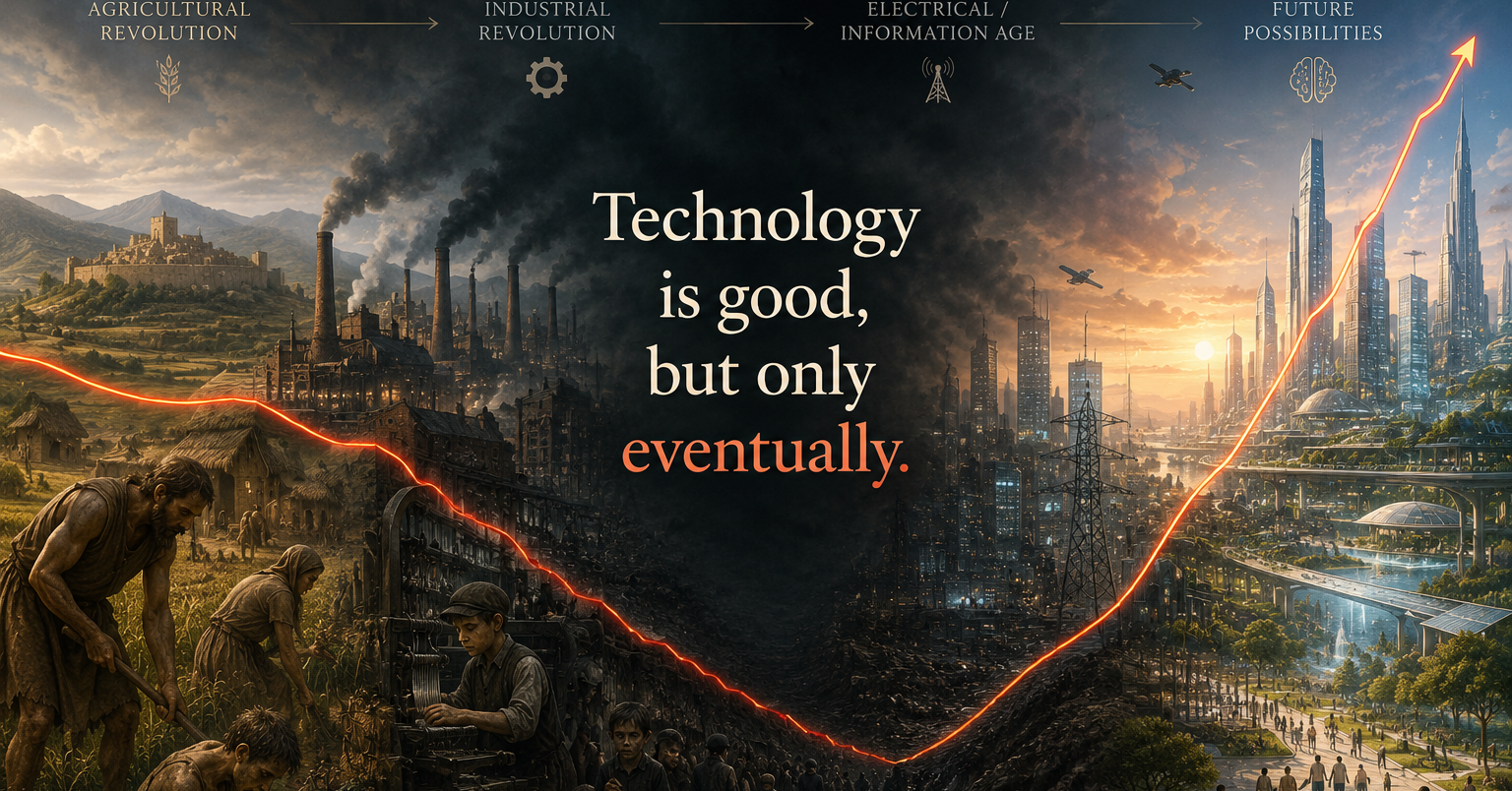
There’s a truism that technology is good - even if it creates winners and losers, it improves the world. Toby Ord argues that the conclusions about t…
Dario Amodei — We Must Pace the Frontier
I have worked on AI for the last twelve years because I believe it could dramatically raise the quality of human life. I’ve written often about these incredible benefits: I believe that AI could cure most major diseases in the next 5–10 years, greatly accelerate economic growth rates, create a world of abundance and empowerment, and usher in a renaissance of democracy and freedom. I feel the urgency personally. My own father died of a disease that was cured just a few years after his death, and I myself survived an early-stage cancer that would not have been treatable even fifty years ago. Carefully wielded, AI can be the latest in a long line of technological miracles that have uplifted and ennobled humanity.
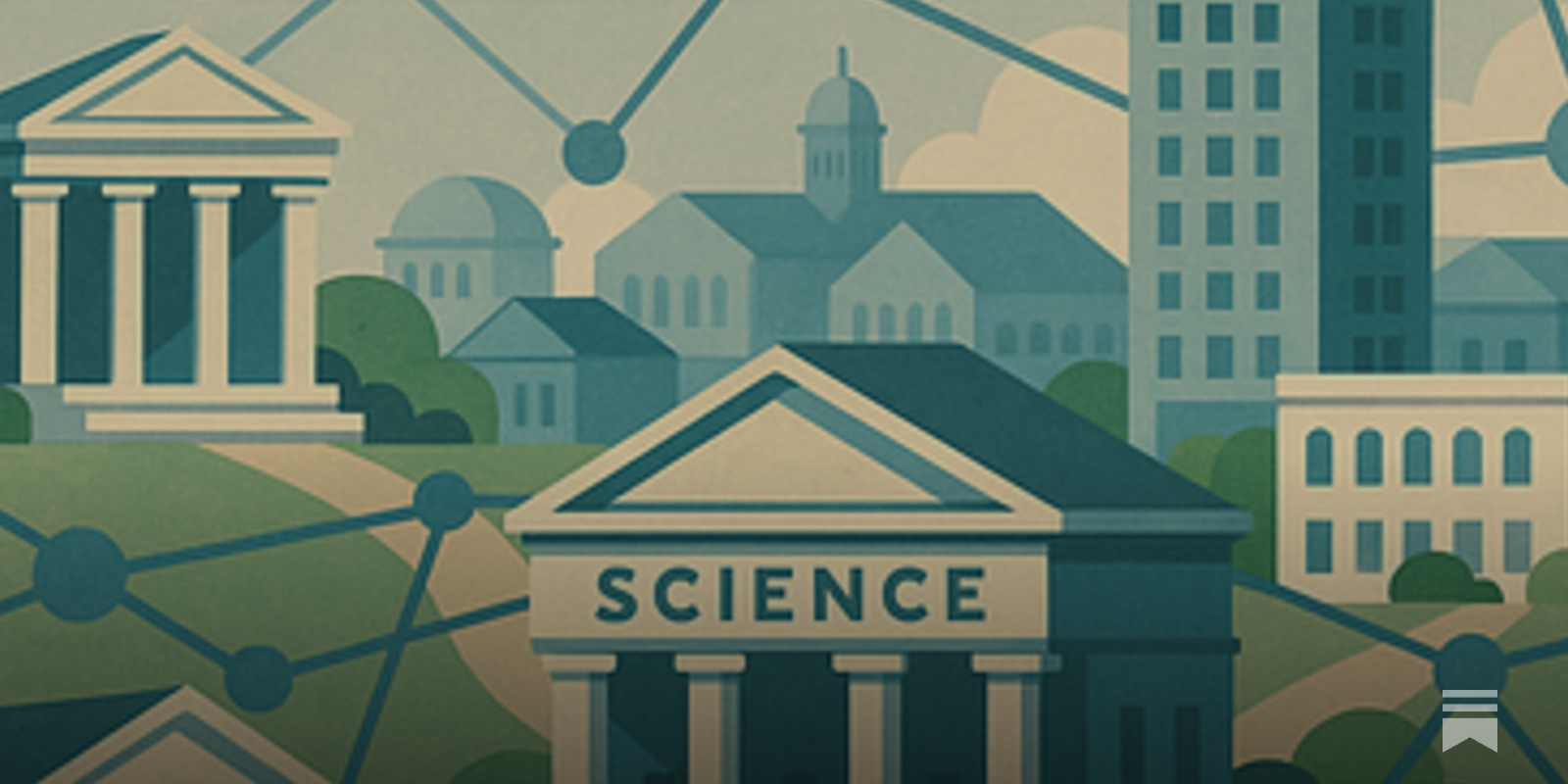
Rebuilding the Architecture of Science
Science built the modern world. It’s time to rebuild the world of science.
As an AI-adjacent network neuroscience person who has also studied bits of media structure and political economy, I strongly agree with @karlbode.com: The biggest threat, by far, isn’t “superintelligence will soon kill us all!” but instead “information control by oligarchs will crush our society”

Karl Bode
one recurring theme in the coverage of this AI Anthropic doomsday newscycle is nobody actually has any REAL ideas of what to do just a lot of ambiguous hand-waving in a country that's too corrupt to have working regulators, by a press that doesn't realize that's a central pillar of the conversation
