


On Thursday, April 16, China’s National Bureau of Statistics (NBS) announced that China’s real GDP growth in the first quarter of 2026 was 5.0%.
Le ralentissement de la croissance chinoise dans une perspective historique
Traduction française du billet "How severe is China’s growth slowdown (in historical perspective)?" de Branko Milanovic

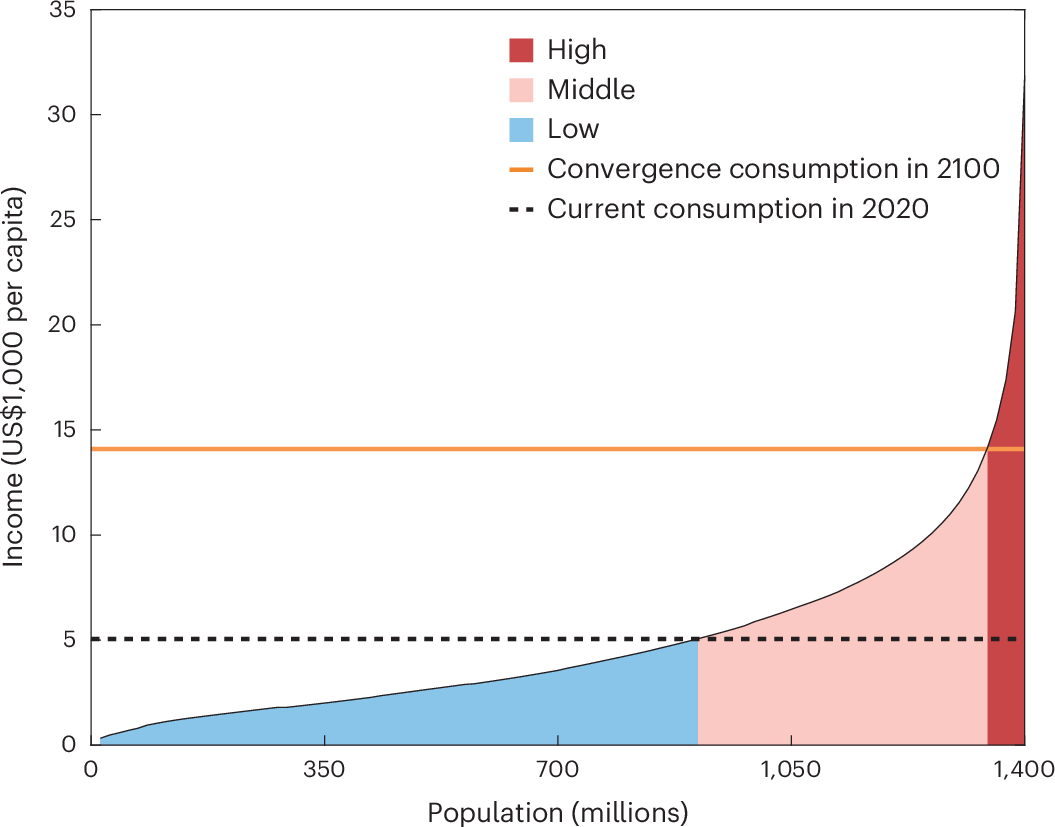
On the relevance of post-growth in China
Post-growth refers to approaches prioritizing human well-being and ecological sustainability over gross domestic product expansion as a primary objective of economic policy. While it is widely discussed in the global north and generally targeted at high-income countries, its relevance to China remains underexplored and largely absent from academic discourse. This Perspective discusses China’s position in a possible global post-growth transition and explores convergence and difference between post-growth principles and development priorities in China. We consider how China’s concepts of ‘high-quality development’ and ‘ecological civilization’ could integrate post-growth principles, and vice versa. Understanding China’s context is crucial for a collaborative, effective approach to sustainability and global equity.
China’s bigger, better batteries
It’s the world’s fastest-growing power technology — and Beijing is dominant

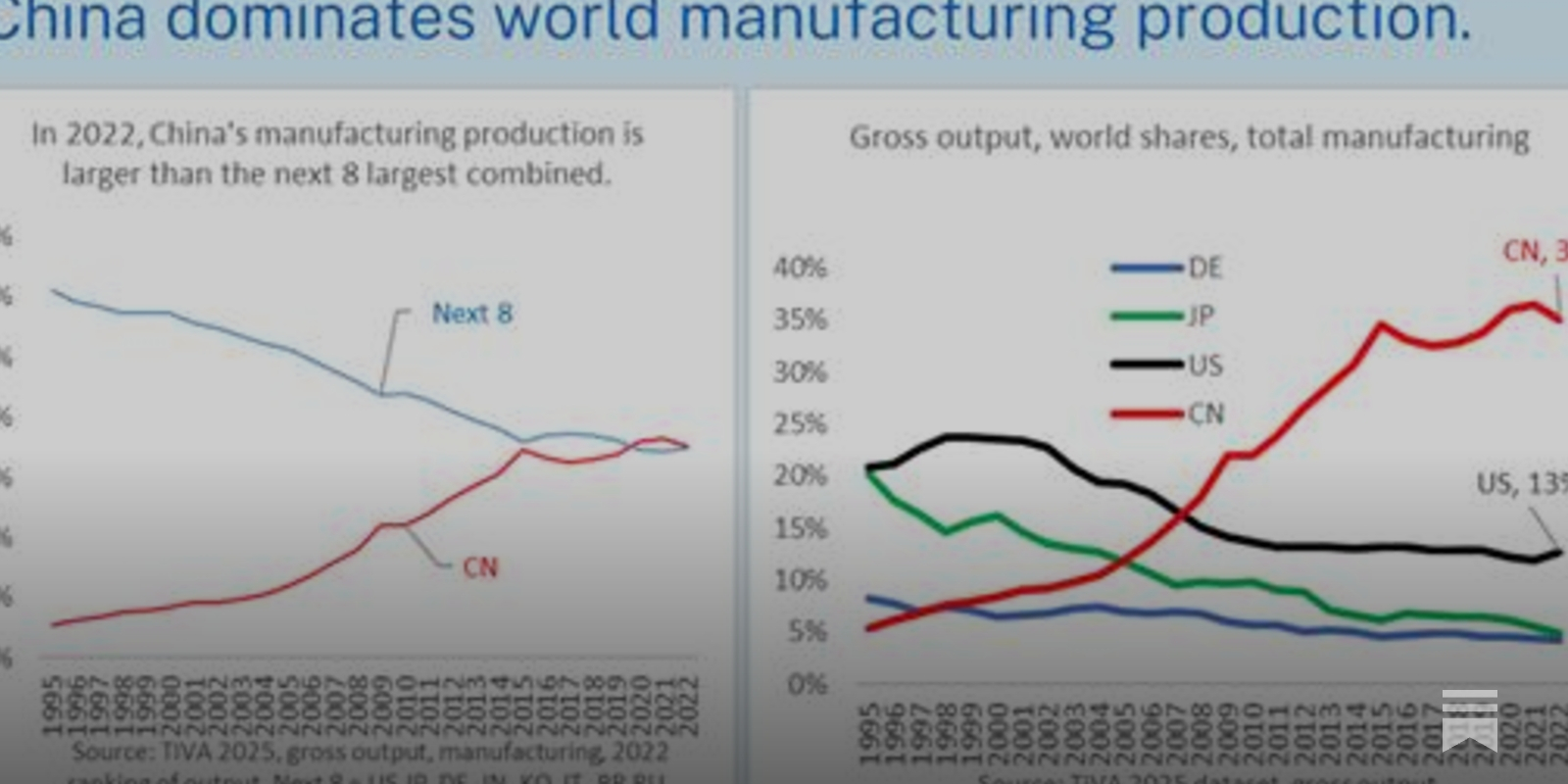
China’s globalisation paradox.
How can China dominate abroad while becoming less export-dependent?
Les changements dans la répartition des revenus en Chine, en Inde et aux Etats-Unis entre 2018 et 2023 : les effets de la pandémie, puis le retour à la normale
Traduction française de "Changes in income distributions in China, India and the United States, 2018-23" de Branko Milanovic

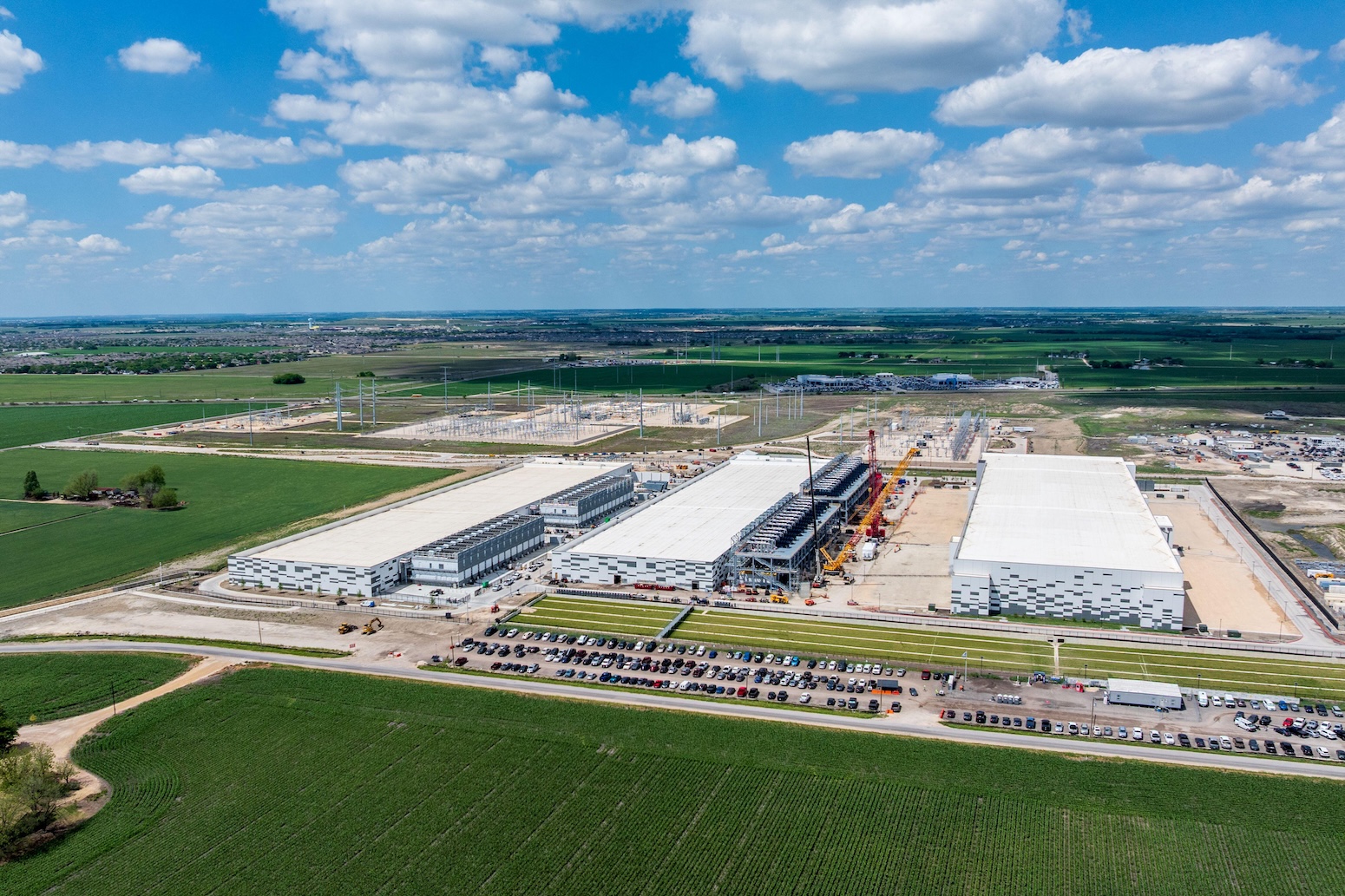
AI boom means US is now ‘investing more’ in fossil-fuel power than China - Carbon Brief
The “data-centre boom” is driving a surge in gas investment in the US, pushing its fossil-power spending ahead of China, according to the IEA
Le paradoxe de la mondialisation de la Chine
Traduction française du billet de blog "China’s globalisation paradox. How can China dominate abroad while becoming less export-dependent?" de Richard

China
The most important story of 2014 that most people ignored was the Chinese economy overtaking the US economy. (This is using the purchasing power parity metric, which incorporates differences in...


Opinion | Why China won’t own next-generation manufacturing
With its massive investments, China is only accelerating the demise of its manufacturing industry.

Gauging the Strength of China’s Economy in Uncertain Times
An update on China’s recent economic performance and policy changes, focusing on aggregate credit as a measure to gauge policy stimulus.

What Does a Chinese Superpower Look Like? Nothing Like the U.S.
Xi Jinping has a truly global vision.

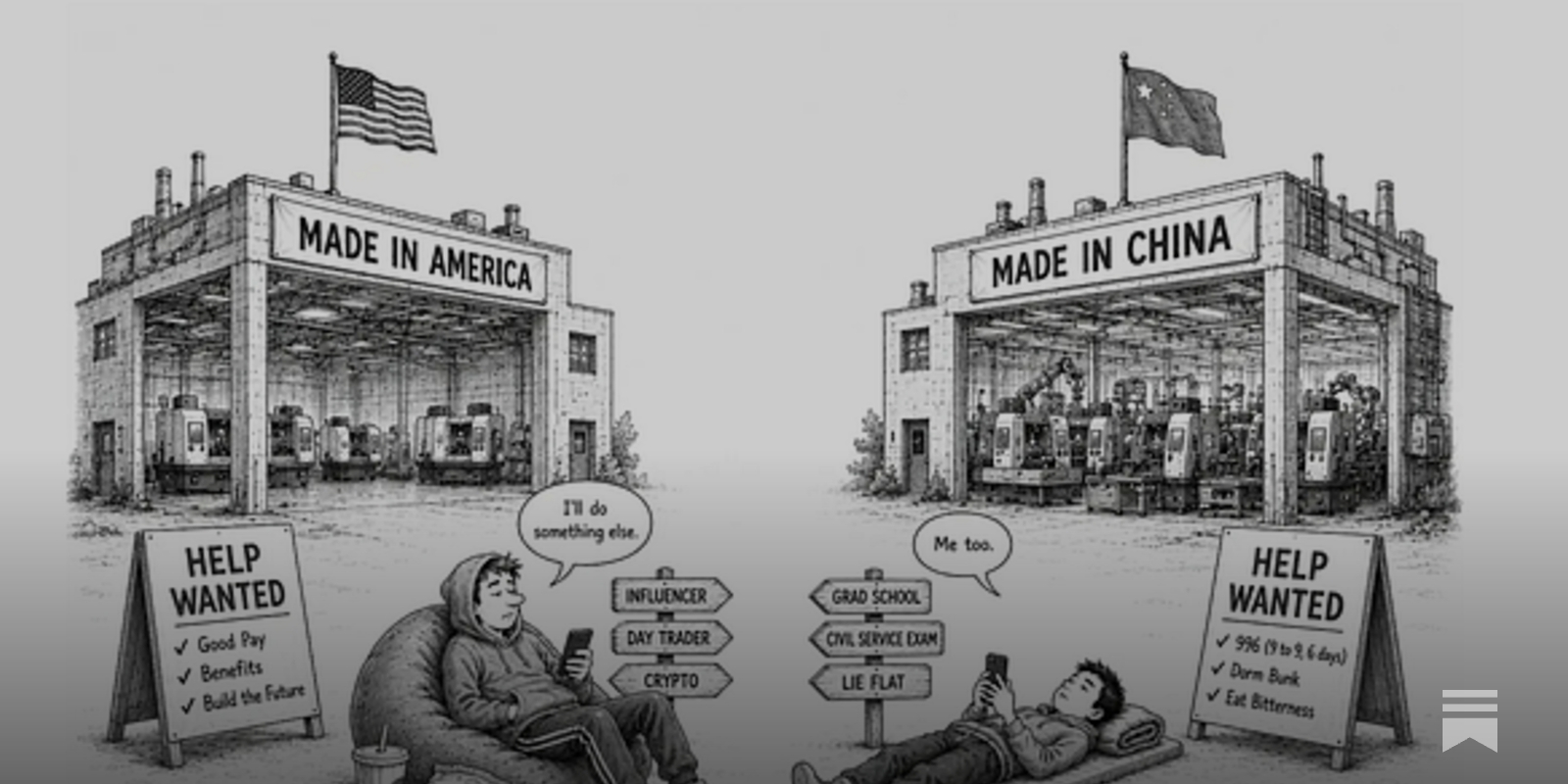
Nobody Wants The Jobs
10,000 US boomers retire every day. China has 12.22 million new grads and 19% youth unemployment. Both superpowers are quietly running out of the one thing they can't import.
Why is China able to produce advanced tech despite middle income?
10 votes, 18 comments. In 2026 AD, it is no doubt that China is able to pump out advanced technological products on large scale. What is striking to…
Sᴜɴʀɪsᴇ Oᴀᴛʜ 十 Tʜᴇ Sʏʟʟᴀʙᴜꜱ (ORI) - CC0 on Twitter / X
I am actually very pessimistic regarding the idea that China could be governed by any structure except the top-down (plus situational anarchic) imperial system it has had for millennia. The Chinese social consciousness is *much* smaller in scope than the Western one.— Sᴜɴʀɪsᴇ Oᴀᴛʜ 十 Tʜᴇ Sʏʟʟᴀʙᴜꜱ (ORI) - CC0 (@sunriseoath) October 14, 2026
