

If you’re an open source maintainer lucky enough to have a significant number of contributors you need to learn to mentor efficiently. First timer issues are not the right good way to get people involved in your project nor mentoring individual first-time contributors. Instead, do things that help all of them.
How to manage casual contributors to open source projects
Try these strategies to better utilize contributions from your project's episodic volunteers.

How to become an amazing contributor (to an open source project)
It's a busy morning here in New York City. My email inbox is full of pleasant surprises. The first is a patch for one of my open source projects. A second will appear this afternoon. A third should come late at night—or maybe tomorrow–from a new contributor. Alongside my day job, I contribute and manage open source projects. The number of projects I work on has grown from a couple of small tools to well over a dozen in the last three years. Open source has become a great way to learn new technology, experiment with modern software development practices, and, of course, meet other like-minded engineers. I find that seeing great contributors send working and tested code provides a unique feeling of accomplishment, as powerful as having many satisfied users of my own applications or strong revenues posted by the employer that pays my bills.
The Human Infrastructure of Open Science: Why Mentorship Matters More Than Ever
The transformation of academia into a more open and inclusive ecosystem depends not only on new policies or technologies but also on a fundamental shift in how we nurture early-career researchers through mentorship. This values resilience and integrity as much as productivity. Introduction In the vast, often complex, competitive, and

Ten simple rules for helping newcomers become contributors to open projects
Citation: Sholler D, Steinmacher I, Ford D, Averick M, Hoye M, Wilson G (2019) Ten simple rules for helping newcomers become contributors to open projects. PLoS Comput Biol 15(9): e1007296. https://doi.org/10.1371/journal.pcbi.1007296
Twelve tips for growing communities around your open source project | Ben Balter
Publishing code isn't enough. Twelve practical tips to attract users, welcome contributors, and grow a healthy open source community.
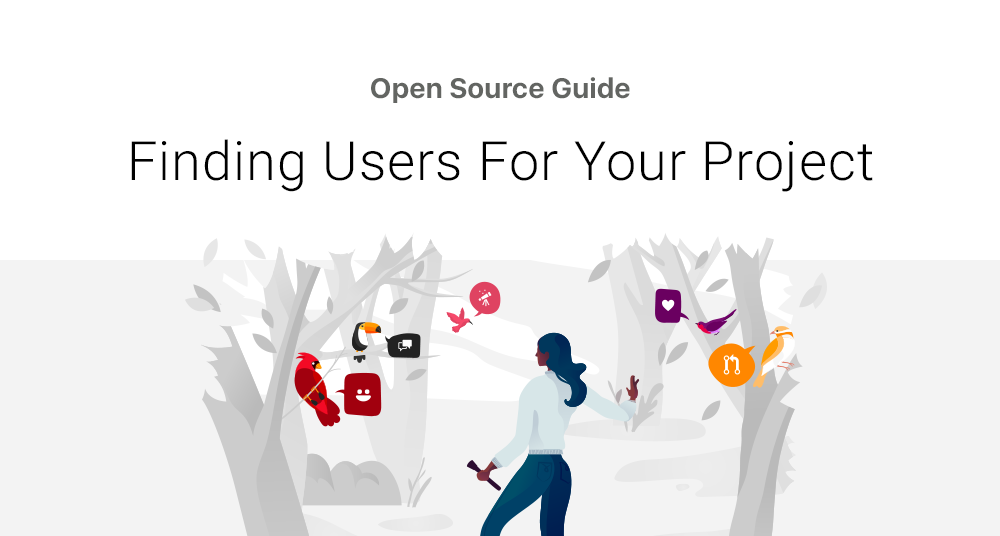
Finding Users for Your Project
Help your open source project grow by getting it in the hands of happy users.
Helping new coders contribute to Open Source
Contributing to open source projects is a great way to learn and gain experience, but the barrier could be lower for new coders if we put additional supports in place.

How Do Individual Contributors Get Stuck? A Primer
Technology, startups, programming, technical management and software architecture
Why your Open Source Project might lack (my?) contribution (1)
"In this article I describe some things to consider when maintaining

Growing a contributor base in modern open source
In the Node.js project, new contributors account for ~50% of all contributors per month.
The Minimally-nice Open Source Software Maintainer
Being involved in open source software is rewarding, yeah? You start off contributing to your favorite project, and it feels so heartwarming when that project’s maintainers recognize your effort. Then a few years later you somehow end up responsible for that project, and maybe some satellite projects, and people are clamoring for your attention, and your inbox is never empty, and it’s exhausting and terrifying, and the skills necessary to cope with all the personalities involved are entirely different from the skills you used to get your foot in the door in the first place.
The Minimally-nice Open Source Software Maintainer
Being involved in open source software is rewarding, yeah? You start off contributing to your favorite project, and it feels so heartwarming when that project’s maintainers recognize your effort. Then a few years later you somehow end up responsible for that project, and maybe some satellite projects, and people are clamoring for your attention, and your inbox is never empty, and it’s exhausting and terrifying, and the skills necessary to cope with all the personalities involved are entirely different from the skills you used to get your foot in the door in the first place.
Keep Your Friends Close — Open Tech Strategies | Blog
One of the insider secrets of free and open source software (FOSS) is that most of the rules a project uses on a day-to-day basis are not found in the software’s license. There are contribution guidelines, which are enforced by the project only taking contributions that meet them. There are codes of conduct, which are a condition of community participation. There are endorsements, official membership, a voice in setting the project roadmap, and all kinds of other benefits that attach to varying types of community participation. In each case, entirely external to the license, there are official rules and unwritten norms that govern how participants gain the benefits of joining the civic life of a project.
Robot Pedantry, Human Empathy
Homebrew was the first open source project I’ve maintained where I’ve had to review and merge contributions from other users. Homebrew is also one of the most active community projects on GitHub with a consistently small team of maintainers (always under thirty in total, always under ten doing work every week). As a result I’ve had to figure out over the last twelve years how best to manage large numbers of contributions from users in pleasantly and efficiently for both maintainers and contributors.
Open-Source Contribution: The Ultimate Guide | Built In
How to get into open-source contribution according to these experts.
