

Danilo Bzdok is a computer scientist and medical doctor by training with a unique dual background in systems neuroscience and machine learning algorithms. After training at RWTH Aachen University (Germany), Université de Lausanne (Switzerland) and Harvard Medical School, Bzdok completed two doctoral degrees, one in neuroscience at Forschungszentrum Jülich in Germany, and another in computer science (machine learning statistics) at INRIA–Saclay and the Neurospin brain imaging centre in Paris. Danilo is currently an associate professor at McGill University’s Faculty of Medicine and a Canada CIFAR AI Chair at Mila – Quebec Artificial Intelligence Institute. His interdisciplinary research centres around narrowing knowledge gaps in the brain basis of human-defining types of thinking in order to uncover key computational design principles underlying human intelligence.
The brain in the machine: How AI could help explain how we think | IBM
Scientists are using large AI models to predict patterns of brain activity at scale, a development that researchers say is pushing neuroscience toward a new kind of digital imaging.

Cog Neuro Hub OPMEG Workshop
Mystified magicians of the mind
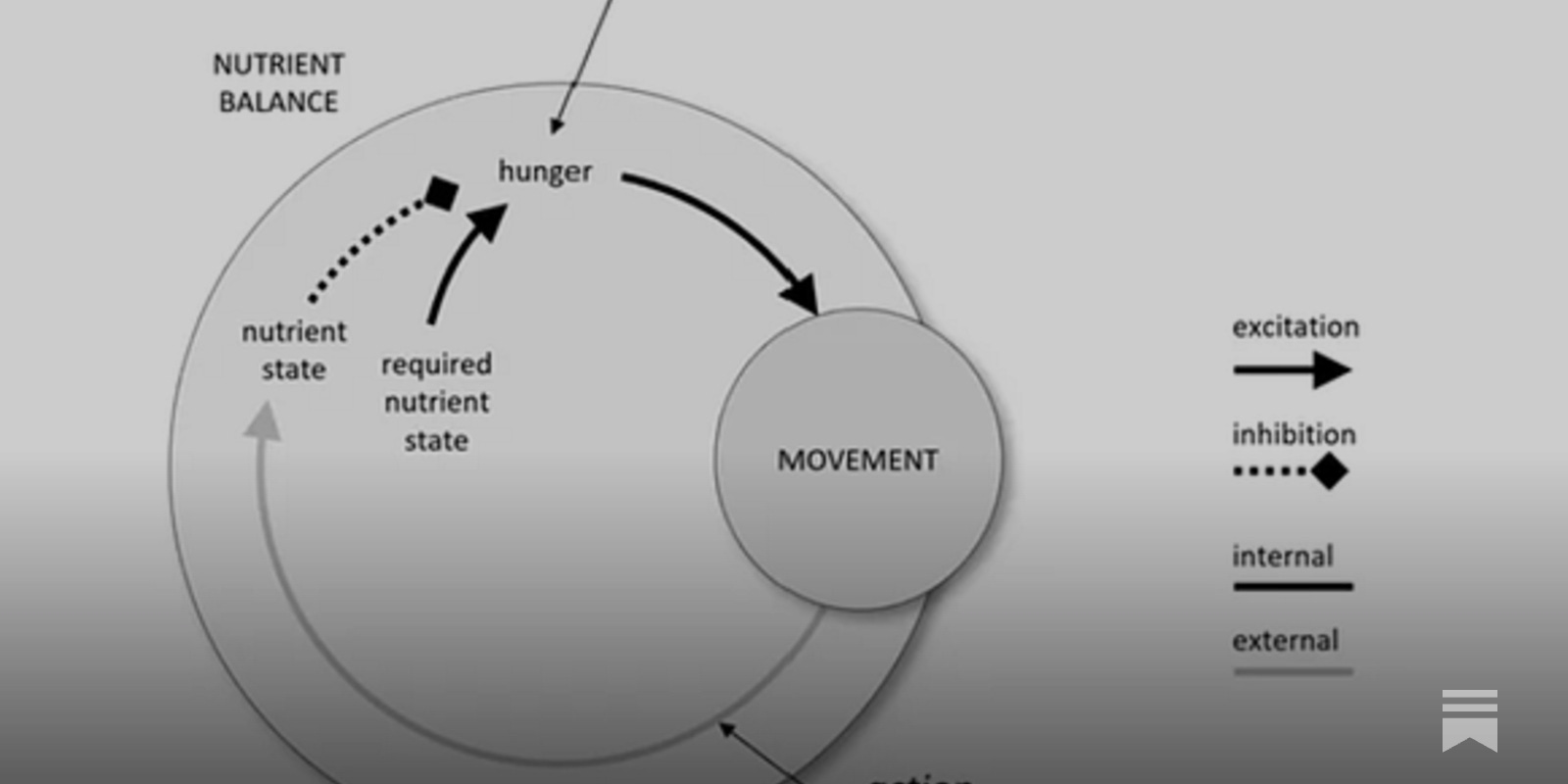
My conversation with neuroscientist Paul Cisek
AI: A Guide for Thinking Humans | Melanie Mitchell | Substack
I write about interesting new developments in AI. Click to read AI: A Guide for Thinking Humans, by Melanie Mitchell, a Substack publication with tens of thousands of subscribers.
The Fabric and the Brain
Articulating agent ecologies with high-personality planetary computation

NeuroAI
Neuroscience, cognitive science, and AI are all questing for principles that help generalization. Learn more through a live, synchronous program designed for focused, hands-on learning.
The Global Brain Algorithm
<p>This is a collection of explanations on the global brain algorithm. We explain core concepts in simple terms that help to understand the algorithms as a whole.</p>
GitHub - AIM-KannLab/BrainIAC | Giovanni Giulietti
One of the biggest hurdles in neuroimaging AI has always been the scarcity of labeled data, especially for rare conditions. But a recent study published in Nature Neuroscience introduces a potential solution: BrainIAC (Brain Imaging Adaptive Core). Unlike traditional models that are trained for one specific task, BrainIAC is a "foundation model", a large-scale AI model trained on vast amounts of data that can perform many different tasks and be adapted to specific applications. It was pretrained on a massive dataset of 48965 brain structural MRI sequences (T1w, T2w, FLAIR, T1CE) using self-supervised learning, allowing it to understand the "big picture" of brain anatomy across different ages and conditions. It has been tested across seven diverse and clinically meaningful applications: - brain age prediction - IDH mutation classification - Mild Cognitive Impairment (MCI) classification - diffuse glioma overall survival prediction - MR sequence classification - time-to-stroke prediction - tumor segmentation BrainIAC consistently outperformed traditional supervised learning approaches and other medical-specific models. The real "magic" happens in low-data scenarios. While traditional AI usually needs thousands of examples, BrainIAC can adapt to new tasks using only a few samples. BrainIAC can be used for structural brain MRI analysis through two main methods: - Web Usage (BrainIAC platform): the easiest way to use BrainIAC, providing a user-friendly interface to upload structural brain MRI data and run inference. - Local usage (GitHub repository): for more advanced and customized analysis. It allows complete control over the data preprocessing, model training, and inference pipelines. It requires Python 3.9+ and NVIDIA GPU with CUDA 11.0+. 🔗 BrainIAC paper: https://lnkd.in/dq6Gprgt 🔗 BrainIAC web platform https://lnkd.in/dpreadMp 🔗 BrainIAC GitHub repo: https://lnkd.in/duwSEg4V #MedicalAI #Neuroscience #HealthTech #BrainIAC #Radiology #Innovation #DeepLearning #PrecisionMedicine

#neuroscience #ai #python #opensource #neuroai | Jean-Rémi King | 34 comments
⚡ We're happy to release NeuralSet: a fast, simple, and scalable Python framework for Neuro-AI. Already supports: 🧠 fMRI, EEG, MEG, iEEG, spikes… recordings 💬 text, 🔊 audio, ▶️ video, 🏞️ image… embeddings 📦 `pip install neuralset` 💻 Code: https://lnkd.in/eamwxBUY 📄 Paper: https://lnkd.in/epbreyDy Made possible thanks to: Hubert Banville, Katie Begany, Corentin Bel, Yohann Benchetrit, Teon Brooks, Marlène Careil, Simon Dahan, Stéphane d'Ascoli, Alexandre Défossez, Linnea Evanson, PhD, Pablo J. Diego Simón, Julien Gadonneix, Sophia Houhamdi, Shubh Khanna, Jarod Lévy, Pierre Orhan, Antoine Ratouchniak, Joséphine Raugel, Andrea Elena Santos Revilla, Alexis Thual, Lucy (Mingfang) Zhang, Jérémy RAPIN #Neuroscience #AI #Python #OpenSource #NeuroAI | 34 comments on LinkedIn
#neuroscience #ai #python #opensource #neuroai | Jean-Rémi King | 34 comments
⚡ We're happy to release NeuralSet: a fast, simple, and scalable Python framework for Neuro-AI. Already supports: 🧠 fMRI, EEG, MEG, iEEG, spikes… recordings 💬 text, 🔊 audio, ▶️ video, 🏞️ image… embeddings 📦 `pip install neuralset` 💻 Code: https://lnkd.in/eamwxBUY 📄 Paper: https://lnkd.in/epbreyDy Made possible thanks to: Hubert Banville, Katie Begany, Corentin Bel, Yohann Benchetrit, Teon Brooks, Marlène Careil, Simon Dahan, Stéphane d'Ascoli, Alexandre Défossez, Linnea Evanson, PhD, Pablo J. Diego Simón, Julien Gadonneix, Sophia Houhamdi, Shubh Khanna, Jarod Lévy, Pierre Orhan, Antoine Ratouchniak, Joséphine Raugel, Andrea Elena Santos Revilla, Alexis Thual, Lucy (Mingfang) Zhang, Jérémy RAPIN #Neuroscience #AI #Python #OpenSource #NeuroAI | 34 comments on LinkedIn
How AI coding is reshaping theoretical neuroscience
Agentic coding makes it possible to specify a neuroscience model in hours instead of months. Neuroscientists weigh in on that tectonic change.
Learning Outside the Brain: Integrating Cognitive Science and Systems Biology
Learning is commonplace in organisms such as ourselves and even in organisms as far distant as the bee and the octopus. Such learning is implemented by brains, or neuronal networks, and has been extensively studied within ethology, psychology, cognitive science, and neuroscience. Whether learning also takes place in nonneuronal settings has remained a matter of sustained controversy, too often dominated by ideological views. In this survey, I will explain how learning can be rigorously interpreted as a form of information processing and then explore the evidence for whether learning also takes place in organismal contexts outside the brain, such as physiology, development, and individual cells. I will try to explain why it is important to build bridges in this way between cognitive science and systems biology, why concepts and methods from various branches of engineering may be helpful in this task, and what the eventual impact may be on how we think about the organism.
#neuroscience #ai #python #opensource #neuroai | Jean-Rémi King
⚡ We're happy to release NeuralSet: a fast, simple, and scalable Python framework for Neuro-AI. Already supports: 🧠 fMRI, EEG, MEG, iEEG, spikes… recordings 💬 text, 🔊 audio, ▶️ video, 🏞️ image… embeddings 📦 `pip install neuralset` 💻 Code: https://lnkd.in/eamwxBUY 📄 Paper: https://lnkd.in/epbreyDy Made possible thanks to: Hubert Banville, Katie Begany, Corentin Bel, Yohann Benchetrit, Teon Brooks, Marlène Careil, Simon Dahan, Stéphane d'Ascoli, Alexandre Défossez, Linnea Evanson, PhD, Pablo J. Diego Simón, Julien Gadonneix, Sophia Houhamdi, Shubh Khanna, Jarod Lévy, Pierre Orhan, Antoine Ratouchniak, Joséphine Raugel, Andrea Elena Santos Revilla, Alexis Thual, Lucy (Mingfang) Zhang, Jérémy RAPIN #Neuroscience #AI #Python #OpenSource #NeuroAI
History of Neuroscience and AI: From neurons to the first artificial neural networks
Computational Psychiatry Needs Systems Neuroscience
This piece was originally published in The Transmitter. I am adapting it here with some additional context for readers of this newsletter.
1. New preprint resolving a conundrum in systems neuroscience with an AI scientist, and humans Reilly Tilbury, Dabin Kwon, @haydari.bsky.social, @jacobmratliff.bsky.social, @bio-emergent.bsky.social, @carandinilab.net, @kevinjmiller.bsky.social, @neurokim.bsky.social biorxiv.org/content/10.1101/2025.11.12.68…

Characterizing neuronal population geometry with AI equation discovery
www.biorxiv.org