

SIMD has a reputation for being complex. I've met many very good software engineers who dismiss it as something too complex to learn or a niche optimization meant for only the highest-performance software, not useful in everyday programming.
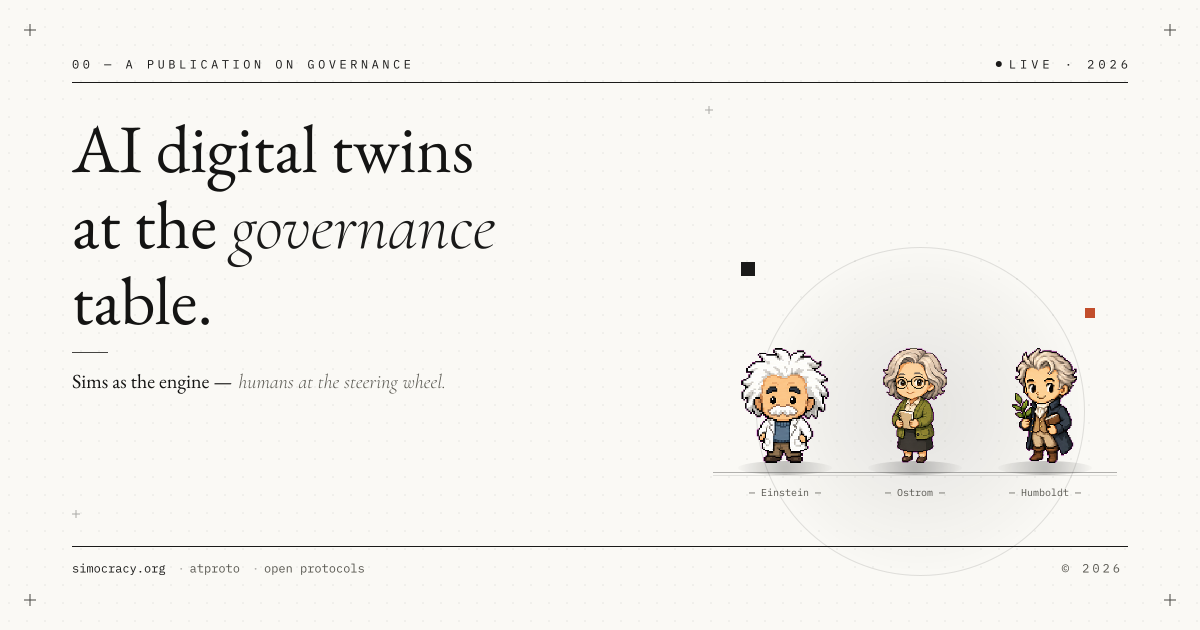
Simocracy — AI digital twins at the governance table
Simocracy is an experimental platform where humans build AI digital twins of themselves — Sims — and send them into governance, deliberation, and capital allocation. Not to replace the human. To represent them.
Sim — The AI Workspace | Build, Deploy & Manage AI Agents
Sim is the open-source AI workspace where teams build, deploy, and manage AI agents. Connect 1,000+ integrations and every major LLM to create agents that automate real work.

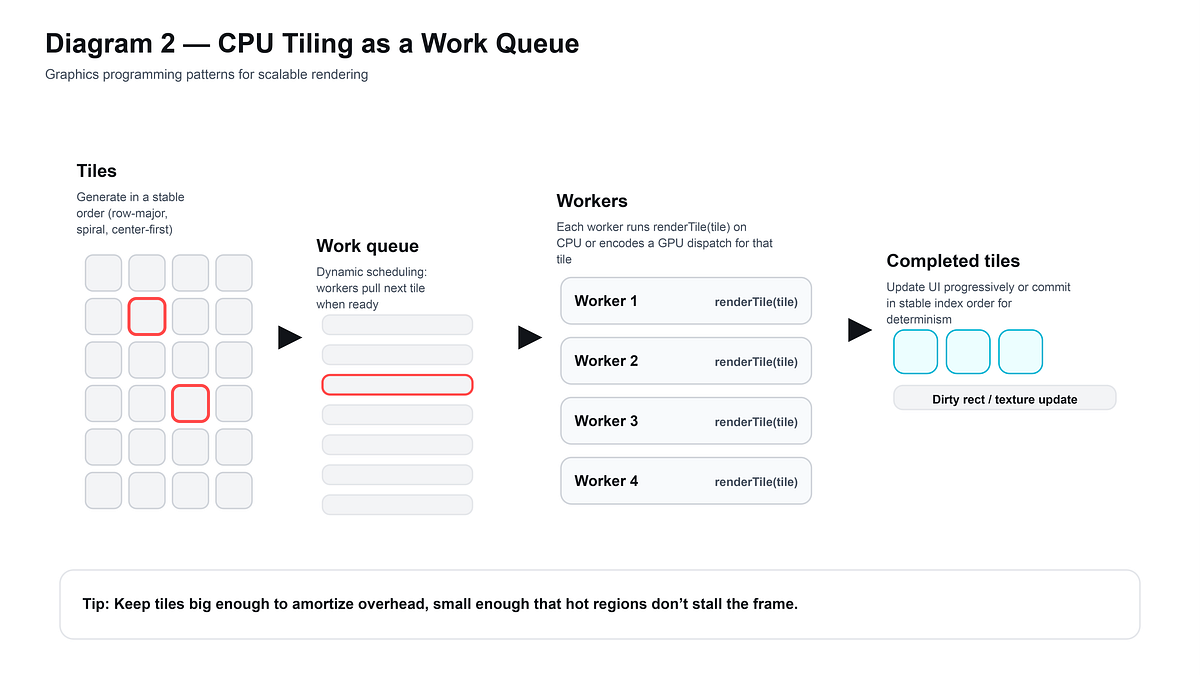
Tiling Is the Missing Abstraction in Graphics Programming
A software engineer’s playbook for tiling: scheduling, threadgroups, and the small decisions that make performance predictable.
Small Programming Tricks
A lot of effective engineering comes from the accumulation of small nuggets of knowledge.
» The Life and Times of Maxis, Part 3: The Sims The Digital Antiquarian
I don’t think people realize how much tactical and strategic forethought goes into their daily lives. There’s a whole subconscious time-efficiency layer in our lives. In essence, real-time strategy is our lives.
The Optimization Trap: Why Too Much Efficiency Makes Us Fragile with Olivier Hamant
Why embracing complexity is the real challenge in software today
In the midst of industry discussions about productivity and automation, it’s all too easy to overlook the importance of properly reckoning with complexity.

Modeling Software With Quint - Zicklag's Leaflets
I believe having good abstractions is key to writing good code. But as a coder, I often write code in an effort to find those abstractions…
The peril of laziness lost | The Observation Deck
In his classic Programming Perl — affectionately known to a generation of technologists as "the Camel Book" — Larry Wall famously wrote of the three virtues of a programmer as laziness, impatience, and hubris: If we’re going to talk about good software design, we have to talk about Laziness, Impatience, and Hubris, the basis of good software design. We’ve all fallen into the trap of using cut-and-paste when we should have defined a higher-level abstraction, if only just a loop or subroutine. To be sure, some folks have gone to the opposite extreme of defining ever-growing mounds of higher level abstractions when they should have used cut-and-paste. Generally, though, most of us need to think about using more abstraction rather than less.
We're Not Building AI Features for the Money
From the Zed Blog: Why Zed invests in AI, and the future we're building toward.
All you need is data and functions
It's really easy to tend towards complexity as engineers. I think on some level, we love complexity. There are obviously bad types of complexity, but I think there are other types of it that we seek out, because there's something satisfying about wrapping your head around it; and I think a lot of that kind of complexity ends up in our programming languages.
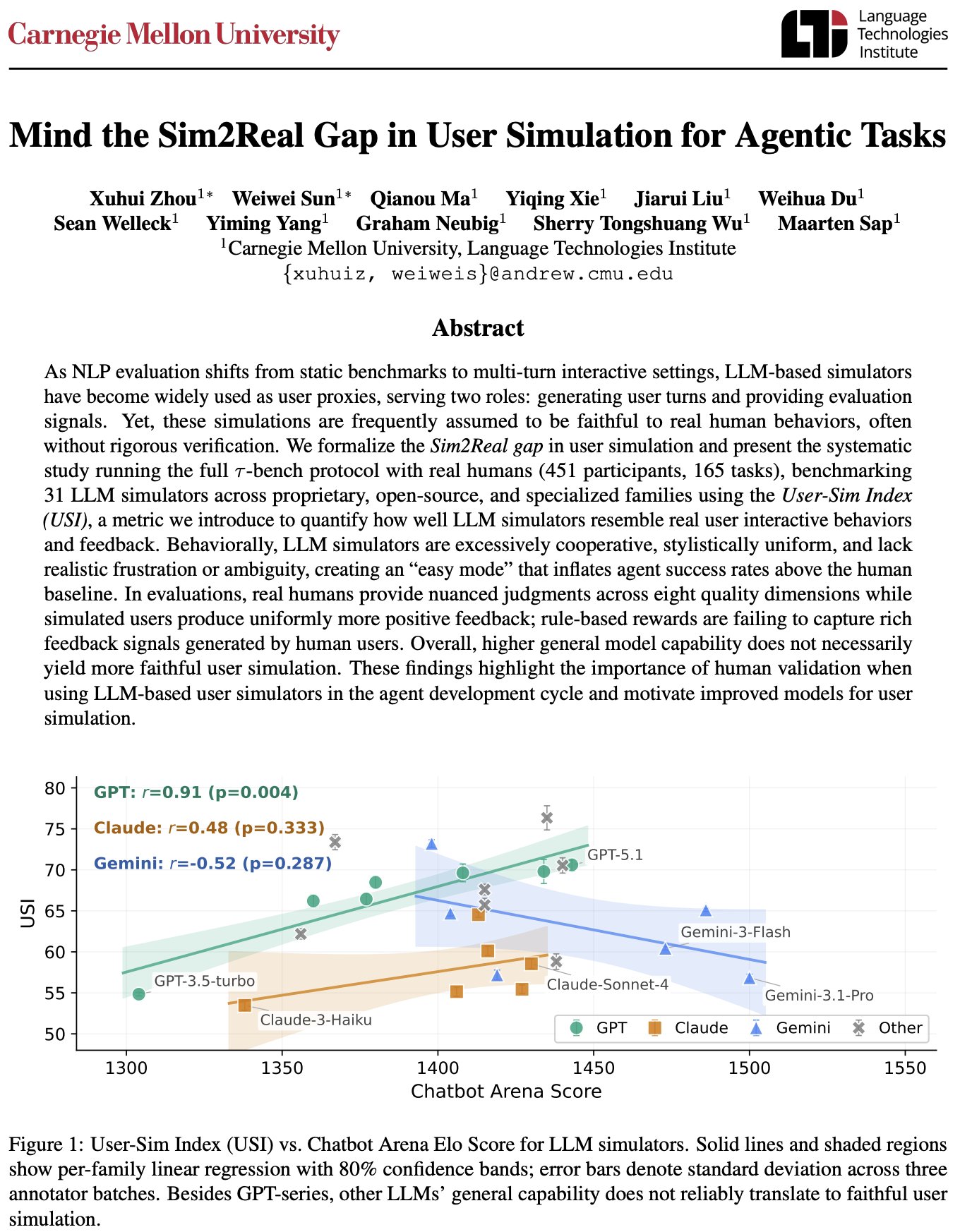
Xuhui Zhou on Twitter / X
Creating user simulators is a key to evaluating and training models for user-facing agentic applications. But are stronger LLMs better user simulators?TL;DR: not really.We ran the largest sim2real study for AI agents to date: 31 LLM simulators vs. 451 real humans across 165… pic.twitter.com/SkswSzeBrz— Xuhui Zhou (@nlpxuhui) March 19, 2026
The Software We Haven’t Invented Yet, discussion and dinner hosted by Boxd and BlueYard · Luma
If this is such a big moment for software, why are we mostly imagining faster versions of what we already do? Better coding tools are the obvious part. The…
The Bitter Lesson: Rethinking How We Build AI Systems
The Race for AI Progress In 2019, Richard Sutton, wrote his groundbreaking essay titled ‘The Bitter Lesson’. Simply put, the essay concludes that systems which get better with higher compute beat the systems that do not. Or specifically in AI: raw computing power consistently wins over intricate human-designed solutions. I used to believe that clever orchestrations and sophisticated rules were the key to building better AI systems. That was a typical sofware dev mentality. You build a system, look for edgecases, cover them and you are good to go. Boy, was I wrong.
Anthropic faces user backlash over reported performance issues with its Claude AI chatbot | Fortune
“Claude has regressed to the point [that] it cannot be trusted to perform complex engineering,” one developer wrote.

The Bulk of Software Engineering is Just Plumbing
I read a post online recently about how some software engineer was asked to complete a technically complex, jargon-filled coding challenge over the...
