

SIMD has a reputation for being complex. I've met many very good software engineers who dismiss it as something too complex to learn or a niche optimization meant for only the highest-performance software, not useful in everyday programming.
Legendary Productivity And The Fear Of Modern Programming | TechCrunch
JavaScript master Douglas Crockford once said that software is the most complex thing that humans have ever created. It’s made up of intricate bits and bytes pieced together like virtual puzzles. The greatest programming minds are capable of using software to multiply massive integers that are bigger than the universe.

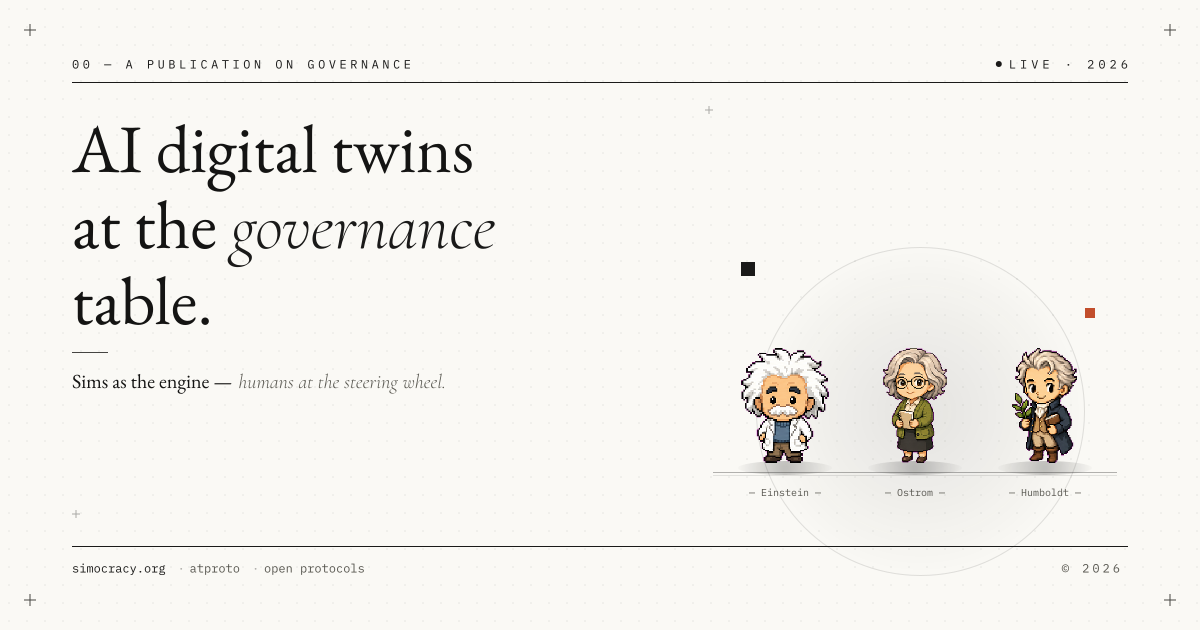
Simocracy — AI digital twins at the governance table
Simocracy is an experimental platform where humans build AI digital twins of themselves — Sims — and send them into governance, deliberation, and capital allocation. Not to replace the human. To represent them.
Sim — The AI Workspace | Build, Deploy & Manage AI Agents
Sim is the open-source AI workspace where teams build, deploy, and manage AI agents. Connect 1,000+ integrations and every major LLM to create agents that automate real work.

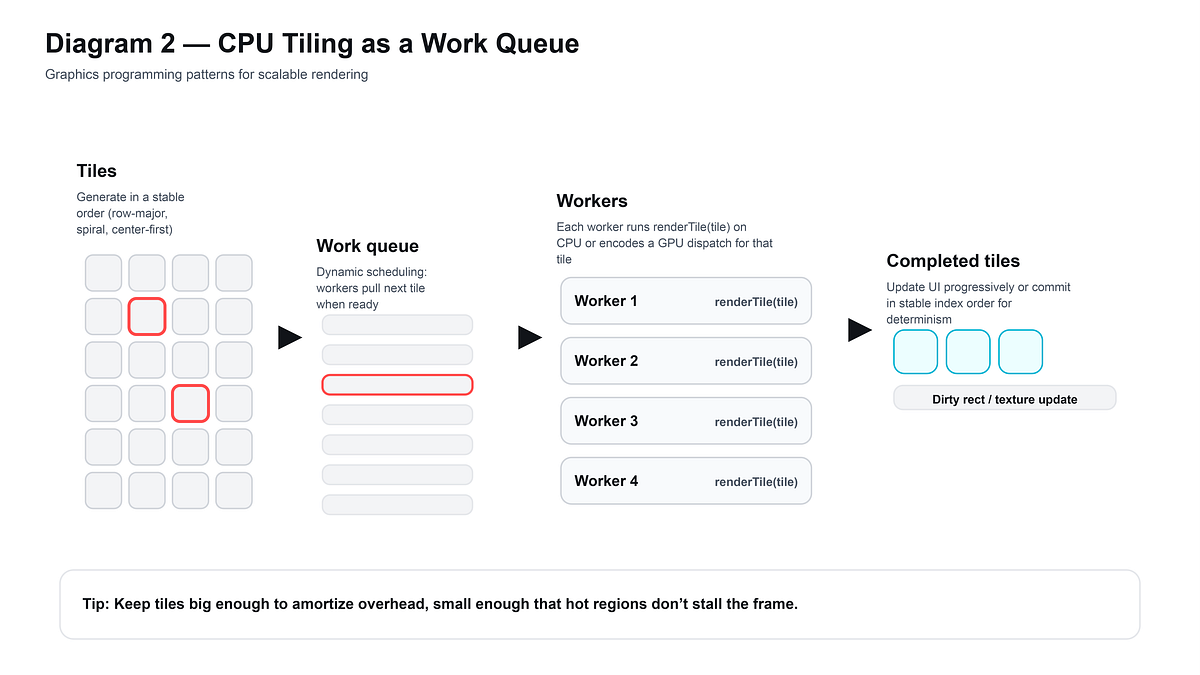
Tiling Is the Missing Abstraction in Graphics Programming
A software engineer’s playbook for tiling: scheduling, threadgroups, and the small decisions that make performance predictable.
Introducing SIMD.js – Mozilla Hacks - the Web developer blog
SIMD stands for Single Instruction Multiple Data, and is the name for performing operations on multiple data elements together. For example, a SIMD add instruction can add multiple values, in ...

Small Programming Tricks
A lot of effective engineering comes from the accumulation of small nuggets of knowledge.
» The Life and Times of Maxis, Part 3: The Sims The Digital Antiquarian
I don’t think people realize how much tactical and strategic forethought goes into their daily lives. There’s a whole subconscious time-efficiency layer in our lives. In essence, real-time strategy is our lives.
Beyond Solo AI: How Pair-Programming with Claude Code Transforms Team Development | Maxitect Blog
Max is a former architect turned software engineer. He blogs about topics related to computational design, software, data science and more.
Learn To Code, It’s Harder Than You Think
TL;DR: All the evidence shows that programming requires a high level of aptitude that only a small percentage of the population possess. The...
The Optimization Trap: Why Too Much Efficiency Makes Us Fragile with Olivier Hamant
Why embracing complexity is the real challenge in software today
In the midst of industry discussions about productivity and automation, it’s all too easy to overlook the importance of properly reckoning with complexity.

Modeling Software With Quint - Zicklag's Leaflets
I believe having good abstractions is key to writing good code. But as a coder, I often write code in an effort to find those abstractions…
Full-breadth Developers
The software industry is at an inflection point unlike anything in its brief history. Generative AI is all anyone can talk about. It has rendered entire product…

The peril of laziness lost | The Observation Deck
In his classic Programming Perl — affectionately known to a generation of technologists as "the Camel Book" — Larry Wall famously wrote of the three virtues of a programmer as laziness, impatience, and hubris: If we’re going to talk about good software design, we have to talk about Laziness, Impatience, and Hubris, the basis of good software design. We’ve all fallen into the trap of using cut-and-paste when we should have defined a higher-level abstraction, if only just a loop or subroutine. To be sure, some folks have gone to the opposite extreme of defining ever-growing mounds of higher level abstractions when they should have used cut-and-paste. Generally, though, most of us need to think about using more abstraction rather than less.
Andrej Karpathy on Twitter / X
I've never felt this much behind as a programmer. The profession is being dramatically refactored as the bits contributed by the programmer are increasingly sparse and between. I have a sense that I could be 10X more powerful if I just properly string together what has become…— Andrej Karpathy (@karpathy) December 26, 2025
» Zork on the PDP-10 The Digital Antiquarian
One distinguishing trait of hackers is the way they never see any program as completely, definitively done; there are always additions to be made, rough edges to be smoothed. Certainly Adventure, impressive as it was, left plenty of room for improvement. On top of all that, though, one also has to consider that Adventure came to MIT from Don Woods of Stanford’s AI Lab, perhaps the only computer-science program in the country with a stature remotely comparable to that of MIT. MIT students are fiercely proud of their alma mater. If Stanford had done the adventure game first, MIT’s Dynamic Modeling Group could still do it better. And it didn’t hurt that the heritage of Project MAC and the Laboratory for Computer Science, not to mention the DMG itself, gifted them with quite some tools to bring to bear on the problem.