

Since the end of the Second World War, we have come to expect continual growth in computing power and the rapid development of digital technology. This dynam...
Intelligence Per Watt
From 1946 to 2009, computing efficiency—performance per watt—doubled every 1.5 years. This trend, documented by Koomey and colleagues, transformed where computing could happen. Workloads migrated from mainframe rooms to desktops, then laptops, then pockets. The transition from centralized time-sharing to personal computing didn't occur because PCs surpassed mainframes in raw performance. It occurred when efficiency gains made computing capable enough within the power constraints of personal devices.
Programmed Inequality
In 1944, Britain led the world in electronic computing. By 1974, the British computer industry was all but extinct. What happened in the intervening thirty y...
LotusNotes
I tend to focus on the origin of the computer within the military. Particularly in the early days of digital computing, the military was a key customer, and fundamental concepts of modern computing arose in universities and laboratories serving military contracts. Of course, the war would not last forever, and computing had applications in so many other fields—fields that, nonetheless, started out as beneficiaries of military largesse.

The Digital Sublime: Myth, Power, and Cyberspace
Interpreting the myths of the digital age: why we believed in the power of cyberspace to open up a new world.The digital era promises, as did many other te

Permacomputing and the Dance of Repair Amid the Vestiges of Digital Obsolescence « Performing the Internet
Assuming this is an AI generated image for ELECTRONICS < > ECOLOGIES series
Computer: A History of the Information Machine
Computer: A History of the Information Machine is a history of computing written by Martin Campbell-Kelly and William Aspray first published in 1996. It follows the history of "information machines" from Charles Babbage's difference engine through Herman Hollerith's tabulating machines to the invention of the modern electronic digital computer. A revised 2nd edition published in 2004 included new material on the Internet and World Wide Web, while the updated 3rd edition published in 2013 includes contributions from historians Nathan Ensmenger and Jeffrey Yost. The 3rd edition extends the story to include recent phenomena such as social networking and revises the discussion of early history to reflect new insights from the literature.

zach lieberman on Twitter / X
Today I was able to weave a line from Myron Krueger in a talk I gave : Computation is the medium of our lifetimes - it’s not just a technical medium but a cultural medium as well. We should explore the culture of computation.— zach lieberman (@zachlieberman) April 10, 2024
The Computer for the 21st Century
Specialized elements of hardware and software, connected by wires, radio waves and infrared, will be so ubiquitous that no one will notice their presence

Liberatory Computing
We live under a capitalist mode of computing. The tools, languages, techniques, and assumptions of digital systems are structured by economic forces that shape not just what we can do, but what we can imagine doing. By separating production from use, producing inflexible software, and slicing up computing into siloed apps, your agency is held back by a tech industry that profits from a population rendered computationally passive.
Liberatory Computing
We live under a capitalist mode of computing. The tools, languages, techniques, and assumptions of digital systems are structured by economic forces that shape not just what we can do, but what we can imagine doing. By separating production from use, producing inflexible software, and slicing up computing into siloed apps, your agency is held back by a tech industry that profits from a population rendered computationally passive.
Digital Degrowth: Radically Rethinking our Digital Futures
We are fast approaching the point of “peak digital”, with the continued mass production and excessive consumption of digital technologies set to become a key driver of climate crisis, ecological breakdown and ongoing societal instability.<br /> <br /><i>Digital Degrowth</i> is a call to completely rethink our digital futures in these fast-changing times. It explores how degrowth thinking and alternate forms of “radically sustainable computing” might support ambitions of sustainable, scaled-down and equitable ways of living with digital technologies. Neil Selwyn proposes a rebalancing of digital technology use: digital degrowth is not a call for simply making reduced use of the digital technologies that we already have – rather it is an argument to reimagine digital practices that maximise societal benefits with minimal environmental and social impact. Drawing on illustrative examples from across computer science, hacker and environmental activist communities, this book examines how core degrowth principles of conviviality, autonomy and care are already being used to reimagine alternate forms of digital technology.<br /> <br />Original and stimulating, this is essential reading for students and scholars of media and communication, sustainability studies, political ecology, computer/data sciences, and across the social sciences.

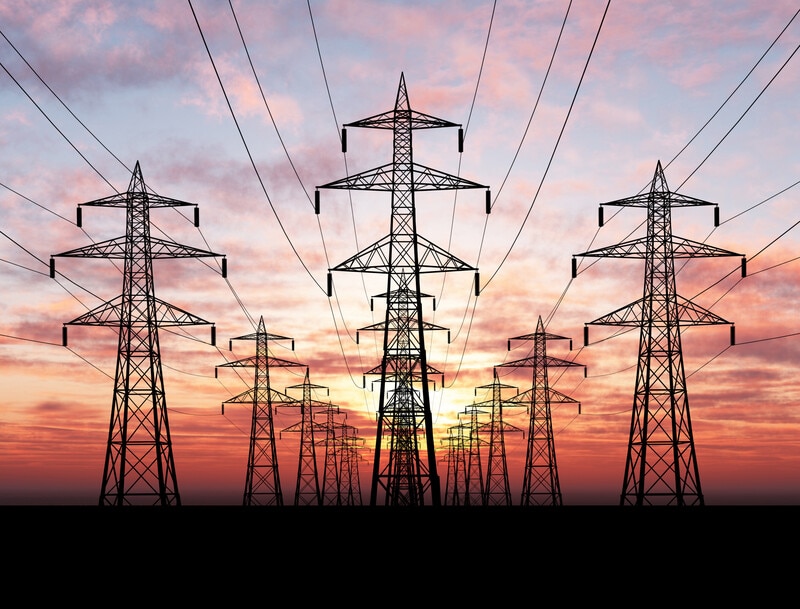
Are Africa’s power grids ready for the AI data centre boom?
African countries should plan for the AI economy by developing power and digital systems together, and treating data centres as strategic infrastructure.
SimPolitics
For more than six decades, the public has been promised that computers will revolutionize politics, both nationally and internationally. In SimPolitics, Fenw...

Digitalization
Abstract “Digitization” and “digitalization” are two conceptual terms that are closely associated and often used interchangeably in a broad range of literatures. This entry considers each term in detail and argues that there is analytical value in explicitly making a clear distinction between them. The entry defines digitization as the material process of converting analog streams of information into digital bits. It defines digitalization as the way many domains of social life are restructured around digital communication and media infrastructures.