


Peer production describes a unique form of global collaboration that is responsible for creating some of the most vital parts of the internet. Information ec...
Peer Production
How a unique form of working together has built—and is critical to sustain—our age of information. Peer production describes a unique form of global collaboration that is responsible for creating some of the most vital parts of the internet. Information ecosystem powerhouses like Wikipedia and the Linux operating system were founded on principles of open cooperation, and only exist today due to the contributions of thousands, and in some cases, millions of people. In Peer Production, Benjamin Mako Hill, Christian Pentzold, and Aaron Shaw describe the central role that peer production plays in today’s information environment, and how it is a much broader phenomenon than the handful of famous projects that are now household names. The book offers three core ideas: peer production functions as a critical mode of collaborative knowledge production; represents a novel type of social collaboration; and has unique advantages over previous forms of collaboration. The authors show that peer production is not just the foundation of the internet as we know it, but also the engine driving the global digital economy to generative AI. Finally, the book also charts the uncertain future of peer production as it confronts new threats and a changing digital landscape.

From Linux to Wikipedia: How Volunteers Build the Internet
Peer production is responsible for some of the most valuable online resources, challenging the authority of firms, markets, and government bureaucracies.

Spritely and Veilid: Exciting Projects Building the Peer-to-Peer Web
While there is a surge in federated social media sites, like Bluesky and Mastodon, some technologists are hoping to take things further than this model of decentralization with fully peer-to-peer
Local-First Peer-to-Peer Infrastructure: Create, Collaborate, and Publish Without the Cloud
Introducing PeerSky | P2P Labs
After 3.5 years, #PeerSky v1.0.0 is finally here 🎉 Create information. Share it directly with peers. Access it anywhere. Even when the internet goes down. All power corrupts. Power should be distributed. PeerSky is more than a browser; it's a new foundation for the web. That's how we save the internet and build better societies, one peer at a time. Try it out! 👉 https://lnkd.in/d7qp_93B
Peerlist | The Professional Network for builders to show and tell!
Peerlist is a professional network where you can showcase your proof of work, and get hired by the best companies.

Peer-to-Peer Republic
A movement, open republic of humans building peer-to-peer systems that redistribute power and reimagine the internet as a public good, not a product a platform sells.
Peersky (@peersky@mastodon.social)
Attached: 1 video After 3.5 years, #PeerSky v1.0.0 is finally here 🎉 Create information. Share it directly with peers. Access it anywhere. Even when the internet goes down. All power corrupts. Power should be distributed. PeerSky is more than a browser; it's a new foundation for the web. That's how we save the internet and build better societies, one peer at a time. Try it out! 👉 https://peersky.p2plabs.xyz/

Peer Production in Citizen Science: A Community-Centered Approach on the Example of Personal Science
Citizen science encompasses a wide range of practices where online collaboration for knowledge production plays a significant role. However, the study of forms of online collaboration other than crowdsourcing in citizen science has remained largely unexplored. This thesis aims to fill this gap by investigating peer production as a form of collaboration in online citizen science communities of practice. First, peer production theory was operationalized as a working model and used to analyze collaboration in citizen science case studies. This was followed by a comprehensive participatory design process for a specific use case involving the personal science community of practice. This process resulted in the creation of the “Personal Science Wiki”, an online space for consolidating community knowledge through peer production. Subsequently, a usability and card sorting study identified and resolved issues with the wiki implementation, and provided insights into mental models and content requirements regarding self-research knowledge. The lessons learned from the participatory design process were generalized as process recommendations for designing peer production solutions and knowledge management systems with communities of practice.
Hypermedia
Welcome to the Hypermedia Protocol: a decentralized publishing and discussion network
Join the Agregore Discord Server!
An off-grid dev kit for the peer to peer web. Browse and author without any central servers. | 216 members
Stigmergic Collaboration: A Theoretical Framework for Mass Collaboration
"This thesis presents an application-oriented theoretical framework for generalised and specific collaborative contexts with a special focus on Internet-based mass collaboration. The proposed framework is informed by the author's many years of collaborative arts practice and the design, building and moderation of a number of online collaborative environments across a wide range of contexts and applications. The thesis provides transdisciplinary architecture for describing the underlying mechanisms that have enabled the emergence of mass collaboration and other activities associated with 'Web 2.0' by incorporating a collaboratively developed definition and general framework for collaboration and collective activity, as well as theories of swarm intelligence, stigmergy, and distributed cognition. "Accompanying this creative arts thesis is a DVD-Rom which includes offline versions of the three Internet based collaborative environments designed, built and implemented in accordance with the frameworks for digital stigmergy and mass collaboration developed in the written work. The creative works in conjunction with the written thesis help to explore and more rigorously define the collaborative process in general, while testing the theory that stigmergy is an inherent component of collaborative processes which incorporate collective material production. "Supported by a range of contemporary examples of Internet activity, including the accompanying creative works, it is found that stigmergy is a deeply rooted mechanism inherent in not only traditional material collaborative processes, but a range of emerging online practices which may be broadly categorised as digital stigmergic cooperation and collaboration. This latter class enables the extreme scaling seen in mass collaborative projects such as Wikipedia.org, open source software projects and the massive, multiplayer environment, Second Life. This scaling is achieved through a range of attributes which are examined, such as the provision of a localised site of individualistic engagement which reduces demands placed upon participants by the social negotiation of contributions while increasing capacity for direct and immediate creative participation via digital workspaces. Also examined are a range of cultural, economic and sociopolitical impacts which emerge as a direct result of mass collaboration's highly distributed, non-market based, peer-production processes, all of which are shown to have important implications for the further transformation of our contemporary information and media landscape."
Issues · Peergos/Peergos
A p2p, secure file storage, social network and application protocol - Issues · Peergos/Peergos
Web of the People — Open Indie
Whether you think of web3 as the advent of peer-to-peer protocols, coin-operated blockchains or autocomplete-AI synthesizers, change is c...
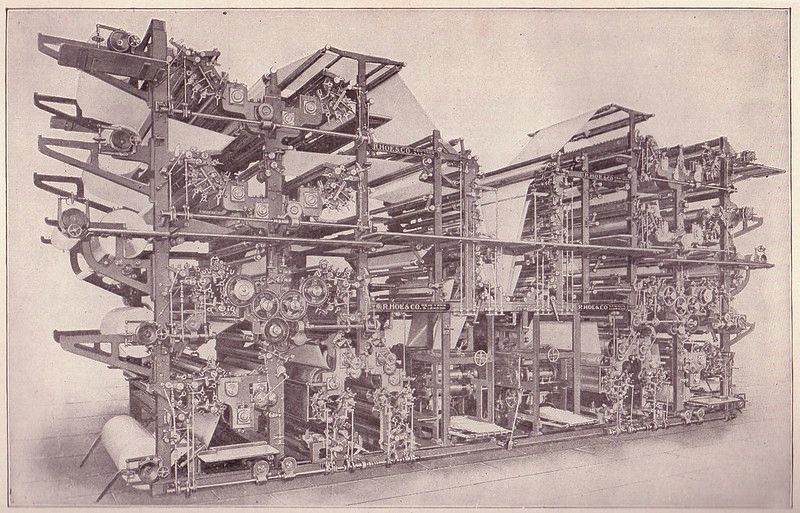
P2Pcollab
P2Pcollab aims to encourage collaboration and knowledge exchange among peer-to-peer researchers by offering a forum for discussing research and exchanging ideas, a collaborative knowledge base, and a bibliography.
CONTRIBUTING.md at main · yzzxyz.roomy.chat/coven
⌜ ᐸ ᐊ ᐯ Ⲷ Ⲡ ⌟ distributed p2p ml research platform