

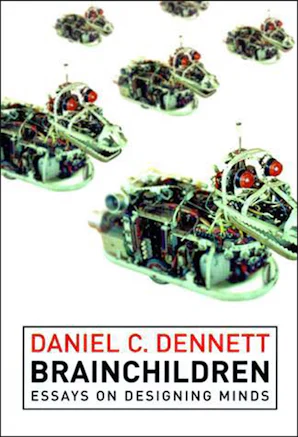
Minds are complex artifacts, partly biological and partly social; only a unified, multidisciplinary approach will yield a realistic theory of how they came i...
The Triadic Mind: How Language Reveals the Limits of Human Cognition
Languages are the most complex symbolic systems humans have ever created. Yet children acquire them effortlessly, without formal…

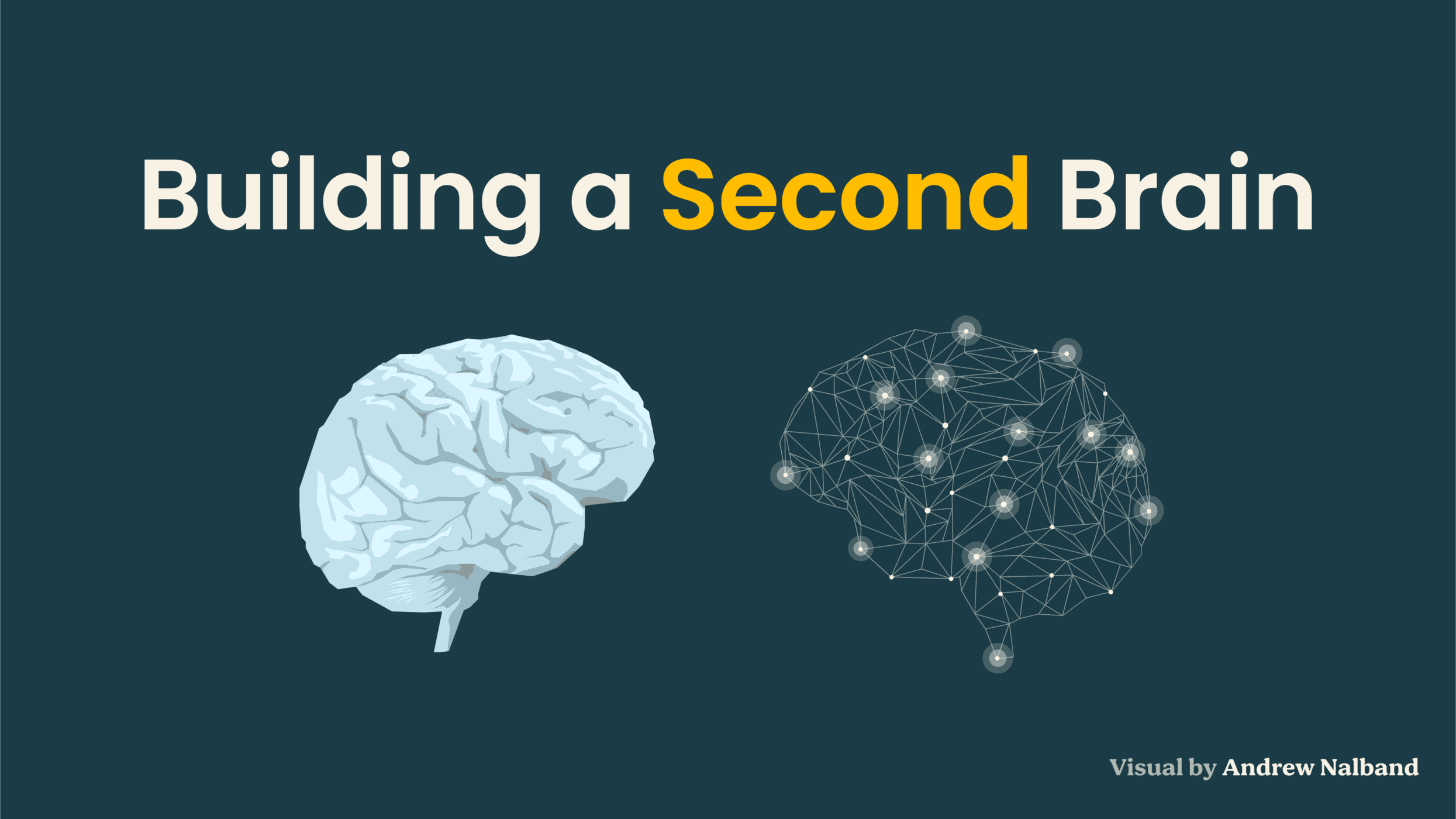
Building a Second Brain: The Definitive Introductory Guide
This is an introduction to Building a Second Brain, the proven method to organize your digital life and unlock your creative potential
This Is Your Brain on Podcasts (Published 2016)
Different people’s brains absorb a compelling story in the roughly the same complicated pattern, using many parts of the brain, researchers found.

Welcome: Mapping the Architecture of Autistic Cognition
Most people experience their minds as opaque.

BrainMind
At this important juncture in neuroscience, the BrainMind ecosystem is combining the most talented of these groups in novel ways to collectively shepherd, support, and fund ideas that can be translated from labs into interventions that will benefit humanity.

Cultivating a state of mind where new ideas are born
Solitary work, creativity and larval ideas

Nurturing our humanity: how domination and partnership shape our brains, lives, and future
Nurturing Our Humanity offers a new perspective on our …

Introducing The Psyche Network
The brain's 7D sandcastles could be the key to consciousness | New Scientist
We’ve glimpsed mind-bending geometric structures that fleetingly encode our thoughts, memories and feelings – and could solve the greatest mystery of all

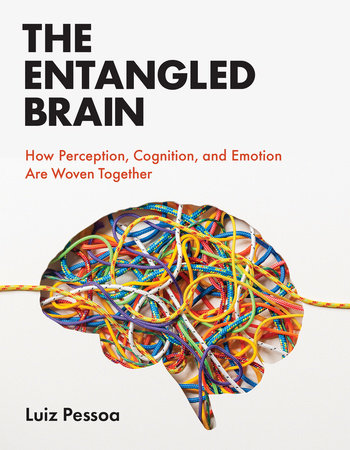
The Entangled Brain: How Perception, Cognition, and Emotion Are Woven Together
A new vision of the brain as a fully integrated, networked organ.Popular neuroscience accounts often focus on specific mind-brain aspects like addiction, c
Six Ways to Think Long-term: A Cognitive Toolkit for Good Ancestors
None of these six ways is enough alone to create a long-term revolution of the human mind — a fundamental shift in our perception of time. But together — and when practised by a critical mass of people and organisations — a new age of long-term thinking could emerge out of their synergy.

Technological Approach to Mind Everywhere: An Experimentally-Grounded Framework for Understanding Diverse Bodies and Minds
Synthetic biology and bioengineering provide the opportunity to create novel embodied cognitive systems (otherwise known as minds) in a very wide variety of chimeric architectures combining evolved and designed material and software. These advances are disrupting familiar concepts in the philosophy of mind, and require new ways of thinking about and comparing truly diverse intelligences, whose composition and origin are not like any of the available natural model species. In this Perspective, I introduce TAME-Technological Approach to Mind Everywhere-a framework for understanding and manipulating cognition in unconventional substrates. TAME formalizes a non-binary (continuous), empirically-based approach to strongly embodied agency. TAME provides a natural way to think about animal sentience as an instance of collective intelligence of cell groups, arising from dynamics that manifest in similar ways in numerous other substrates. When applied to regenerating/developmental systems, TAME suggests a perspective on morphogenesis as an example of basal cognition. The deep symmetry between problem-solving in anatomical, physiological, transcriptional, and 3D (traditional behavioral) spaces drives specific hypotheses by which cognitive capacities can increase during evolution. An important medium exploited by evolution for joining active subunits into greater agents is developmental bioelectricity, implemented by pre-neural use of ion channels and gap junctions to scale up cell-level feedback loops into anatomical homeostasis. This architecture of multi-scale competency of biological systems has important implications for plasticity of bodies and minds, greatly potentiating evolvability. Considering classical and recent data from the perspectives of computational science, evolutionary biology, and basal cognition, reveals a rich research program with many implications for cognitive science, evolutionary biology, regenerative medicine, and artificial intelligence.

Extended mind thesis
In philosophy of mind, the extended mind thesis says that the mind does not exclusively reside in the brain or even the body, but extends into the physical world.[1] The thesis proposes that some objects in the external environment can be part of a cognitive process and in that way function as extensions of the mind itself. Examples of such objects are written calculations, a diary, or a personal computer; in general, it concerns objects that store information. The hypothesis considers the mind to encompass every level of cognition, including the physical level.
Stanford scientists discover the human brain may actually be two separate organs
Scientists have found that the human brain develops from two distinct cellular systems, suggesting that evolution fused together two ancient nervous systems with very different jobs. The discovery also allowed researchers to grow human hindbrain neurons in the lab, opening new possibilities for studying ALS, spinal muscular atrophy, and other brainstem diseases.
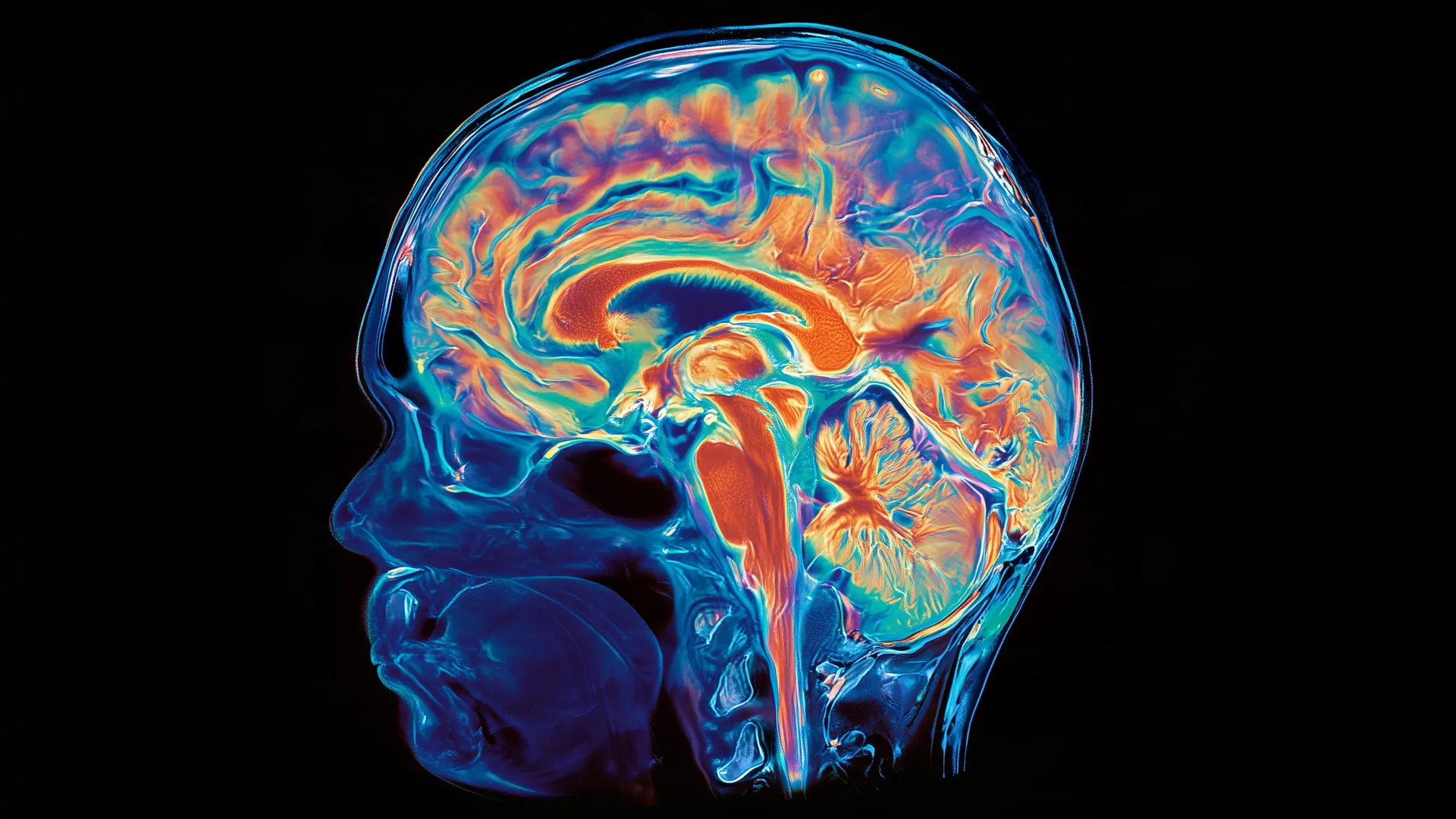
1. New preprint resolving a conundrum in systems neuroscience with an AI scientist, and humans Reilly Tilbury, Dabin Kwon, @haydari.bsky.social, @jacobmratliff.bsky.social, @bio-emergent.bsky.social, @carandinilab.net, @kevinjmiller.bsky.social, @neurokim.bsky.social biorxiv.org/content/10.1101/2025.11.12.68…

Characterizing neuronal population geometry with AI equation discovery
www.biorxiv.org