

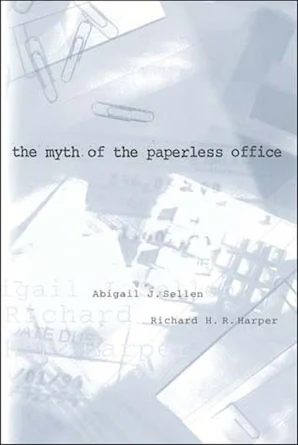
Over the past thirty years, many people have proclaimed the imminent arrival of the paperless office. Yet even the World Wide Web, which allows almost any co...
Why we should fear a cashless world | Dominic Frisby
Poor people and small businesses rely on cash. A contactless system will likely entrench poverty and pave the way for terrifying levels of surveillance

The Washington Post sold Democracy. Now it needs a new line of business.
A leading American newspaper enters a new era.
Long Live the Web: A Call for Continued Open Standards and Neutrality
The Web is critical not merely to the digital revolution but to our continued prosperity—and even our liberty. Like democracy itself, it needs defending

Digital Minimalism | The Paper Pilot
The Paper Pilot's digital garden of thoughts on philosophy, politics, and sociology
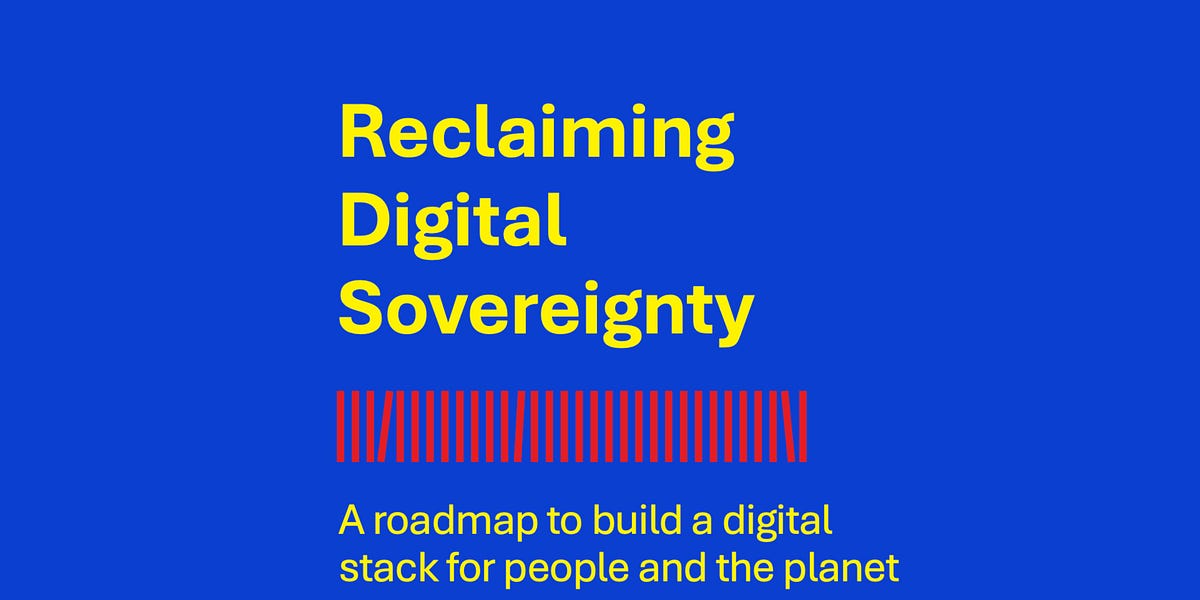
Why we must reclaim digital sovereignty
A new white paper envisions a radically different technological future
Fast Capitalism | Mavs Open Press Open Access Journals | University of Texas at Arlington
Fast Capitalism is an academic journal aimed at describing the current moment of capitalism. We publish peer reviewed scholarship and essays about the impact of rapid information and communication technologies on self, society and culture in the 21st century. Our authors examine how heretofore distinct social institutions, such as work and family, education and entertainment, have blurred to the point of near identity in an accelerated, post-Fordist stage of capitalism. This makes it difficult for people to shield themselves from subordination and surveillance. The working day has expanded; there is little down time anymore. People can 'office' anywhere, using laptops and cells to stay in touch. But these invasive technologies that tether us to capital and control can also help us resist these tendencies. People use the Internet as a public sphere in which they express and enlighten themselves and organize others; information technologies afford connection, mitigate isolation, and even make way for social movements. We are convinced that the best way to study an accelerated media culture and its various political economies and existential meanings is dialectically, with nuance, avoiding sheer condemnation and ebullient celebration. We seek to shape these new technologies and social structures in democratic ways. We look at technology, Artificial Intelligence (AI), global flows, political economy, culture and cultural studies, social theory, political theory, intersectionality, and the envionrment.
We’re in the middle of a perfect storm for rollback of the “open web” and burgeoning online surveillance
Looking at fallout of the KOSA hearings today — and subsequent commentary — I remain optimistic for the development of social technology & communication but I’m beginning to think the ope…

Governable Stacks against Digital Colonialism
Critics have been converging around the logic of colonialism to describe the Internet economy. If we are serious about the laden language of the colonial, we should be ready to learn from struggles against pre-digital empires and colonial regimes. Although acts of insurrection may attract more attention, one thing leaders and theorists of anticolonial resistance have stressed persistently is the centrality of self-governance in everyday life as both a means and end of their movements. But the dominant platforms for online communities are not well-suited for durable self-governing. Resistance often relies on the same colonial firms it opposes. What would community-governed technologies look like? This paper introduces the concept of “governable stacks”, a framework for self-governing as resistance to digital colonialism.
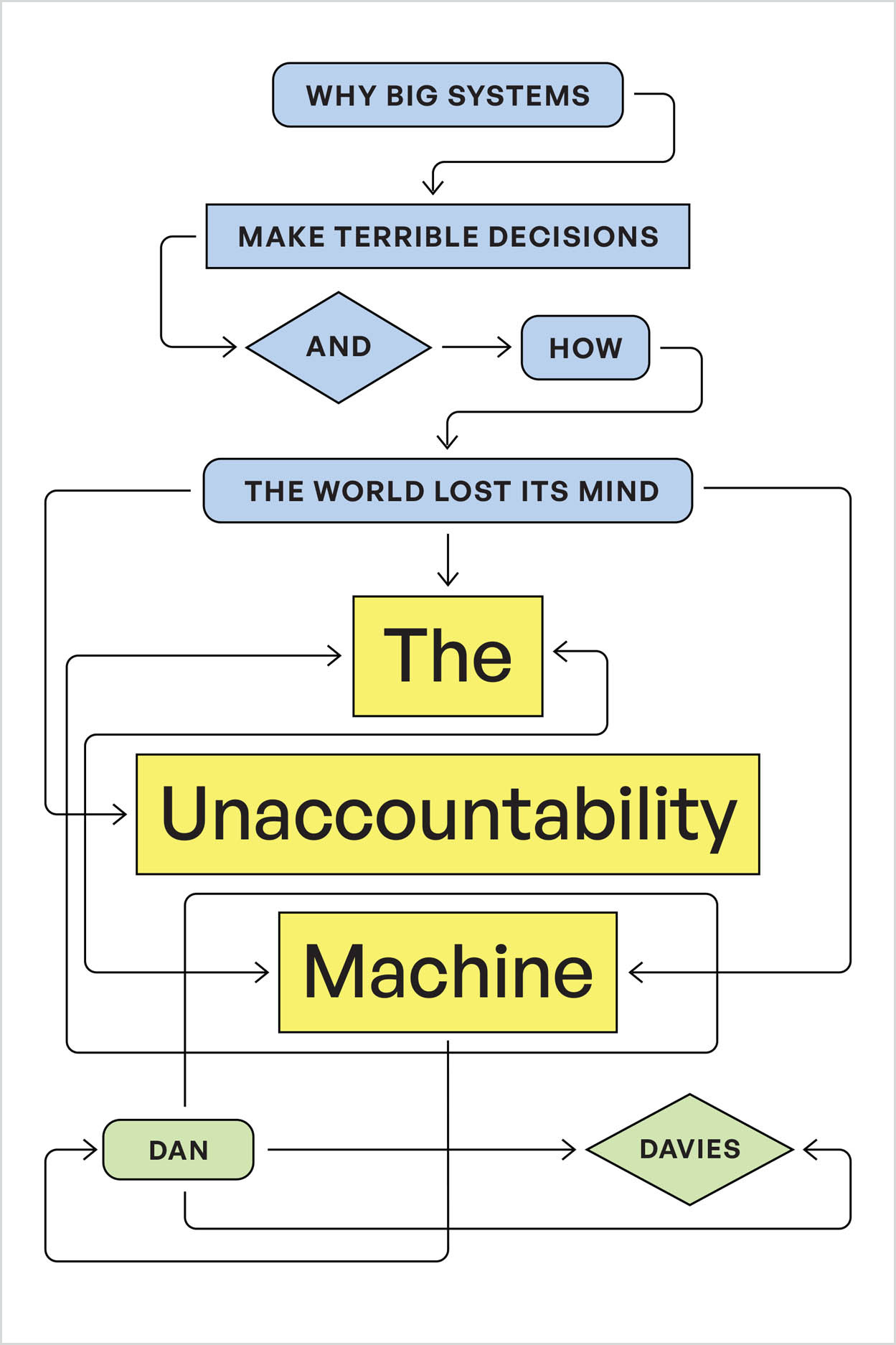
The Unaccountability Machine: Why Big Systems Make Terrible Decisions—and How the World Lost Its Mind
Longlisted for the 2024 Financial Times Book of the Year. How life and the economy became a black box—a collection of systems no one understands, producing outcomes no one likes. Passengers get bumped from flights. Phone menus disconnect. Automated financial trades produce market collapse. Of all the challenges in modern life, some of the most vexing come from our relationships with automation: a large system does us wrong, and there’s nothing we can do about it. The problem, economist Dan Davies shows, is accountability sinks: systems in which decisions are delegated to a complex rule book or set of standard procedures, making it impossible to identify the source of mistakes when they happen. In our increasingly unhuman world—lives dominated by algorithms, artificial intelligence, and large organizations—these accountability sinks produce more than just aggravation. They make life and economy unknowable—a black box for no reason. In The Unaccountability Machine, Davies lays bare how markets, institutions, and even governments systematically generate outcomes that no one—not even those involved in making them—seems to want. Since the earliest days of the computer age, theorists have foreseen the dangers of complex systems without personal accountability. In response, British business scholar Stafford Beer developed an accountability-first approach to management called “cybernetics,” which might have taken off had his biggest client (the Chilean government) not fallen to a bloody coup in 1973. With his signature blend of economic and journalistic rigor, Davies examines what’s gone wrong since Beer, including what might have been had the world embraced cybernetics when it had the chance. The Unaccountability Machine is a revelatory and resonant account of how modern life became predisposed to dysfunction.
SimPolitics
For more than six decades, the public has been promised that computers will revolutionize politics, both nationally and internationally. In SimPolitics, Fenw...

Weizenbaum examines computers and society - The Tech
An article from the Tuesday, April 9, 1985 issue of The Tech - MIT's oldest and largest newspaper and the first newspaper published on the Internet.
Social Media Vs Democracy
ĐApps: What Web 3.0 Looks Like
As we move into the future, we find increasing need for a zero-trust interaction system. Even pre-Snowden, we had realised that entrusting our information to arbitrary entities on the internet was fraught with danger. However, post-Snowden the argument plainly falls in the hand of those who believe that large organisations and governments routinely attempt to stretch and overstep their authority. Thus we realise that entrusting our information to organisations in general is a fundamentally broken model. The chance of an organisation not meddling with our data is merely the effort required minus their expected gains. Given they tend to have an income model that requires they know as much about people as possible the realist will realise that the potential for convert misuse is difficult to overestimate.
An Attack on Tech Freedom, an Assault on Dissent
We live in a world of surveillance states, militarized police, and crackdowns on dissent. Meanwhile, corporate behemoths will often ally with the state to shut down dissident speech or aid and abet surveillance. In this context, it’s important for independent groups to develop and maintain encrypted communications platforms and independent web hosting. But the Trump...

Kill the Internet | The Paper Pilot
The Paper Pilot's digital garden of thoughts on philosophy, politics, and sociology

W Don't Have Time
@wdonthavetime.selfhosted.social
"Trust community, not wealth" Holding power accountable on the open social web. woosh.link/wdonthavetime.selfhosted.soci…