

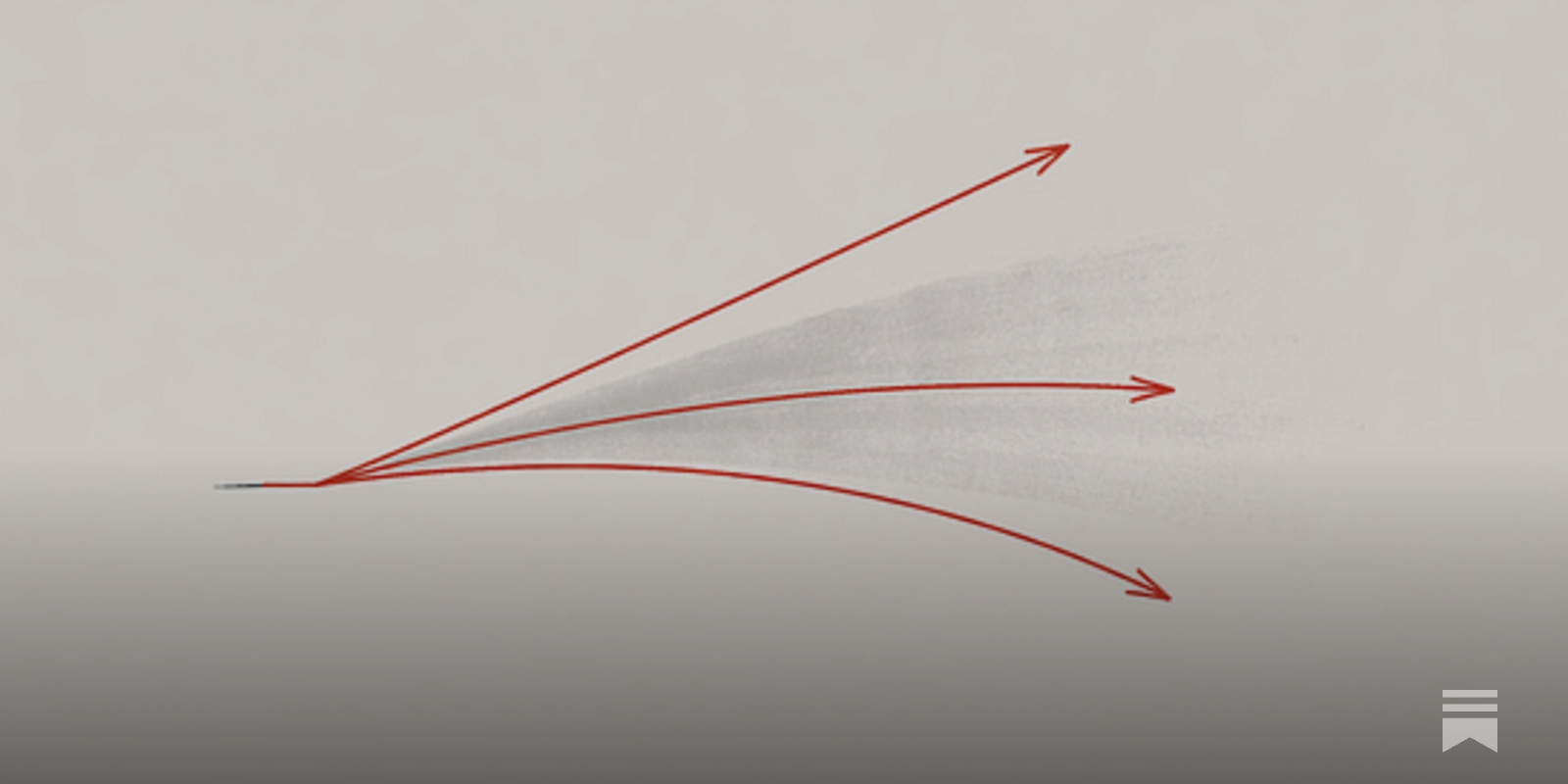
Central banks are abandoning fan charts and embracing scenarios — but the theoretical foundation is still missing
The Quiet Rewiring of American Finance
Stablecoins, Treasury markets, and the most significant shift in financial infrastructure that almost nobody is discussing.


The Future of Money: How the Digital Revolution Is Tran…
A cutting-edge look at how accelerating financial chang…

Six Rules for Effective Forecasting
Reprint: R0707K The primary goal of forecasting is to identify the full range of possibilities facing a company, society, or the world at large. In this article, Saffo demythologizes the forecasting process to help executives become sophisticated and participative consumers of forecasts, rather than passive absorbers. He illustrates how to use forecasts to at once broaden understanding of possibilities and narrow the decision space within which one must exercise intuition. The events of 9/11, for example, were a much bigger surprise than they should have been. After all, airliners flown into monuments were the stuff of Tom Clancy novels in the 1990s, and everyone knew that terrorists had a very personal antipathy toward the World Trade Center. So why was 9/11 such a surprise? What can executives do to avoid being blindsided by other such wild cards, be they radical shifts in markets or the seemingly sudden emergence of disruptive technologies? In describing what forecasters are trying to achieve, Saffo outlines six simple, commonsense rules that smart managers should observe as they embark on a voyage of discovery with professional forecasters. Map a cone of uncertainty, he advises, look for the S curve, embrace the things that don’t fit, hold strong opinions weakly, look back twice as far as you look forward, and know when not to make a forecast.
Attention Is All You Need #2: This Time Is Different
What can we learn from the 2007 Global Financial Crisis and the 1990’s dot-com bubble?


How Our Company Learned to Make Better Predictions About Everything
We all make bets about the future, whether we call them that or not. We select a career based on perceptions about its prospects; we take on projects based on what we think we can accomplish; we hire employees based on how we predict they will perform. We don’t have an option not to make predictions in our work lives, but we do have an option to try and make better ones. At Twitch, employees have worked to create a culture of forecasting based on the research of Philip Tetlock. Although employees were skeptical at first, most have come to embrace the practice of making frequent numerical forecasts.

Opinion | We’re Measuring the Economy All Wrong (Published 2018)
The official statistics say that the financial crisis is behind us. It's not.

A Map of the New Normal by Jeff Rubin | Penguin Random House Canada
NATIONAL BESTSELLER“A great read. I give [A Map of the New Normal] two thumbs up—way up.” —Policy MagazineBestselling economist Jeff Rubin warns that the spiraling inflation of the past few years is the front of a perfect storm of war, supply-chain disruption, geopolitical realignment, domestic upheaval, and energy scarcity that will change everything.

The end of theory? AI and ignorance in financial markets
AI’s growing role in finance challenges traditional expectations of transparency and theoretical understanding. While machine learning (ML) models enhance financial decision-making, they remain largely agnostic to established financial theories, producing knowledge and ignorance in ways that differ from traditional models like VaR, DCF, and Black-Scholes. This essay explores the decoupling of AI models from theoretical financial knowledge and the resulting forms of ignorance. Using 22 semi-structured interviews, we investigate how ML models generate epistemic uncertainties. We focus on causal ignorance: AI systems, including those supported by XAI, fail to provide genuine causal explanations. Because understanding causation is inherently theoretical, AI-driven finance remains theory-agnostic and marked by theoretical ignorance. We explore how this ignorance differs from that of traditional models and what it implies for the role of theory in finance. Finally, we present three possible scenarios for the future of theory in finance and outline directions for further research.
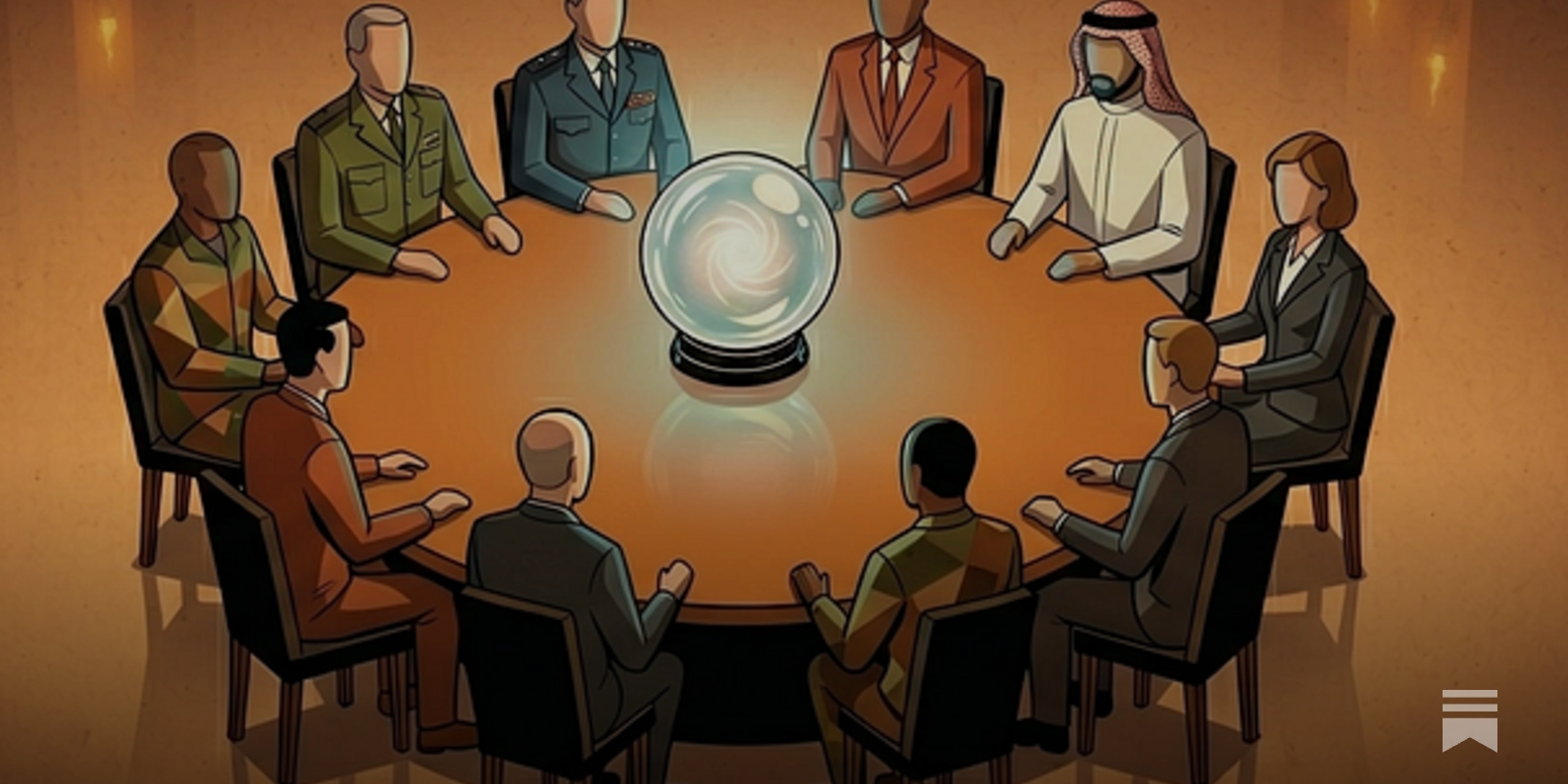
The Expert Trap and the Next War
what forecasting failure tells us about the future
Building the Open Internet - Gnosis
In an era where technology increasingly divides rather than unites, Gnosis stands at the intersection of possibility and purpose. What began as a prediction market in 2015 has evolved into the backbone of decentralized finance and now emerges as something far more revolutionary: the architect of a truly open internet.

Has Wall Street Been Tamed? (Published 2016)
Critics say nothing has changed, but the truth is that American banks really are taking on less risk.

Home - Financial Times
News, analysis and opinion from the Financial Times on the latest in markets, economics and politics
