


Building community spaces, a brief history of feminist organization in tech, and what comes next.
Feminist Technology
Feminist technology is not related to one specific community of practice, but it has been a field of research and has led to and is still leading to practices that are very valuable in the context of sustainable tech.
Feminist Computer Science Education: "'Women in Computing' As Problematic": A Summary
I've long been interested in why, despite so much organized effort, there percentage of women in CS has been so stagnant. One hypothesis I h...
Resources for allies | Geek Feminism Wiki | Fandom
A lot of people want to support women in geek communities, but aren't sure where to start, or don't know whether what they're doing is wanted or appreciated. The following resources offer...

A Case for Feminism in Programming Language Design
As part of the Digital Library's transition to Open Access, new features for researchers are available in the Premium Edition. Click here to learn more.

Glitch feminism: a manifesto
"A new manifesto for cyberfeminism. The divide between the digital and the real world no longer exists: we are connected all the time. How do we find out who we are within this digital era? Where do we create the space to explore our identity? How can we come together and create solidarity? The glitch is often dismissed as an error, a faulty overlaying, but, as Legacy Russell shows, liberation can be found within the fissures between gender, technology and the body that it creates. The glitch offers the opportunity for us to perform and transform ourselves in an infinite variety of identities. In Glitch Feminism, Russell makes a series of radical demands through memoir, art and critical theory, and the work of contemporary artists who have travelled through the glitch in their work. Timely and provocative, Glitch Feminism shows how the error can be a revolution"--Publisher's website

Why Open-Source Needs More Feminism | Built In
In open source, as in life, hidden labor goes unrewarded.

Wired women : gender and new realities in cyberspace
Come in, CQ: the body on the wire / Ellen Ullman -- The memoirs of a token: an aging Berkeley feminist examines Wired / Paulina Borsook -- How hard can it be? / Karen Coyle -- Closure was never a goal in this piece / Judy Malloy and Cathy Marshall -- Estrogen brigades and "big tits" threads: media fandom online and off / Susan Clerc -- Elites, lamers, narcs and whores: exploring the computer underground / Netta "grayarea" Gilboa -- We are geeks, and we are not guys: the systers mailing list / L. Jean Camp -- Not for the faint of heart: contemplations on Usenet / Judy Anderson "yduJ" -- The price of admission: harassment and free speech in the wild, wild West / Stephanie Brail -- Sex, fear and condescension on campus: cybercensorship at Carnegie Mellon / Donna M. Riley -- Cocktails and thumbtacks in the old West: what would Emily Post say? / Laurel A. Sutton -- "So please stop, thank you": girls online / Michele Evard -- MUDder? I hardly know 'er: adventures of a feminist MUDder / Lori Kendall -- Like magic, only real / Tari Lin Fanderclai -- Coming apart at the seams: sex, text and the virtual body / Shannon McRae; Includes bibliographical references; Ellen Ullman shares an email courtship - Paulina Borsook exposes gender attitudes at the digerati's magazine of record - Karen Coyle on overcoming macho stereotypes - Judy Malloy and Cathy Marshall reflect on their art/research collaboration - Susan Clerc and the zeal of media fandom - Netta Gilboa explores hackers' attitudes toward women - Jean Camp on the Internet's safe havens - Judy Anderson's advice on dodging Usenet flames - Stephanie Brail seeks the line between free speech and harassment - Donna Riley reveals the story of the Clitoral Hoods - Laurel Sutton and the nuances of netiquette - Michele Evard takes news-groups to the fifth grade - Lori Kendall wonders if gender is meaningless online - Tari Lin Fanderclai on MUDs as a powerful teaching tool - Shannon McRae takes a look at "virtual sex"

A Future for Intersectional Black Feminist Technology Studies
Neoliberal narratives of digital technologies and the internet have flourished in information and internet studies and suggest that the web is a panacea of social liberation and empowerment.

Thoughts on Cyberpositionality: The Construction of Digital Communities in Digital Spaces, Damien Patrick Williams
I found Rebecca Monteleone, Martin Perez Comisso, and Elma Hajric’s “Cyberpositionality: Sociotechnical Location in the Digital Age” (2024) to be an extremely timely and important article which can…

When Women Stopped Coding
For decades, the share of women majoring in computer science was rising. Then, in the 1980s, something changed.

When Women Stopped Coding
For decades, the share of women majoring in computer science was rising. Then, in the 1980s, something changed.
Governable spaces: a feminist agenda for platform policy
A proposal, informed by feminist theory, for a policy agenda of “governable spaces” across the domains of social media, gig economies, and network infrastructure.

In the AI Boom, a Room of Their Own
FoundHer House, an all-female hacker house started by two students at the USC Iovine and Young Academy, aims to accelerate the growth of female-led, AI-driven tech startups.

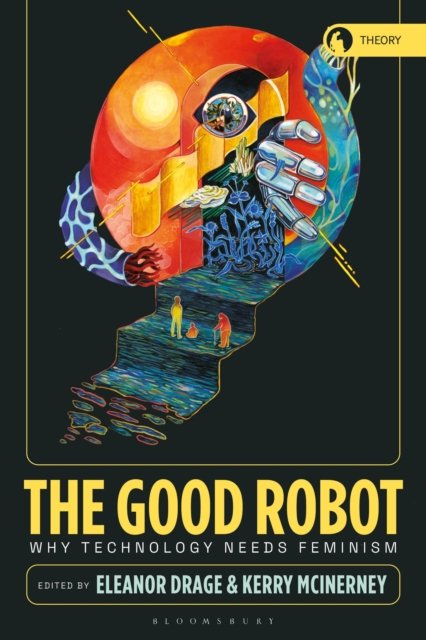
Good Robot
What is good technology? Is ‘good’ technology even possible? And how can feminism help us work towards it? The Good Robot addresses these crucial questions through the voices of leading feminist thinkers, activists and technologists. Each thinker provides a snapshot of key challenges, questions and provocations in the field of feminism and technology. While the question of whether various AI and technological advances can be ethical is not new, the embedded nature of feminist perspectives pulls out whether this perceived ‘goodness’ or ‘wrongness’ might actually impact our lives in the 21st century. This book explores both the radical possibilities of technology to disrupt practices of patriarchy, colonialism, racism and beyond but also provides a significant critique of how we can contain the ethical possibilities of entities we cannot predict. In exploring unjust technological practices and engaging critical voices in the tech industry, the existing moral issues are brought to light as well as the possible ethical quagmires. This book opens a new space of discussion on digital technologies – one that insists that the future of AI is an urgent feminist issue.
Hackers: Heroes of the Computer Revolution
A mere fifteen years ago, computer nerds were seen as m…

Feminist Computing

The Master's Tools Will Never Dismantle the Master's House - Oct. 29, 1979 - Archives of Women's Political Communication - Iowa State University
philarchive.org

The AI of tech bros degrades and dehumanizes women. But what if we made it feminist? - The Boston Globe
Queens of Code
Tech's right turn : the rise of reactionary politics in Silicon Valley and online

Coalition Politics: Turning the Century