


Rescuing a field from disappearing
Boundless learning: the continuum of web literacy
There are a lot of people who think that our educational system is broken. I tend to think of it as problematic rather than broken—because it still works for some people, just not everyone. Wouldn&…

Webmaker Whitepaper
“[O]ur world changed in April 1993 when the Mosaic 1.0 browser was released to the general public. We need new forms of education. We need to reform our learning institutions, concepts, and modes of assessment for our age. Now, anyone with access to the World Wide Web can go far beyond the passive consumer model to contribute content on the Web. We can customize and remix, alone or in collaboration with others, located anywhere on the Web. That Do-It-Yourself potential for connected, participatory, improvisational learning requires new skills, what many are calling new “literacies”.”
Learn web development | web.dev

My journey to the heart of the forgotten internet
Slowly but surely, huge swaths of the internet are vanishing. But the artefacts of the early web are still out there, and they have lessons for the future.

Building Experiences That Work Like The Web - Toolness
The Death of Software Development
The job of software developer is dead. You might still be coding, but the profession as you knew it is gone.


Learning/WebLiteracyStandard/Legacy/WebLiteraciesWhitePaper - MozillaWiki
We're proposing a new Learning Standard for Web Literacy Find out more >>>
Weird things engineers believe about Web development
I wrote most of this post sometime in 2022 but I think it holds up alright in 2024 so I decided to publish it for posterity. I don’t really like doing posts like this—I’d much rather share some innocuous learnings or tips but it turns out I have opinions too 😓 Sorry! 2024-02-21: I’ve added a few reflections at the end of the post. 2024-04-27: Developpez.com has produced a French translation of this post. Since I quit Mozilla and went back to full-time Web development, I’ve discovered a few surprises. It turns out Web development is actually pretty hard, Web developers are actually very smart, and some of these frameworks and techniques we mocked as browser engineers aren’t so bad. Oops. At the same time, it turns out some Web developers have ideas about browsers and the Web that, as a former browser engineer and standards editor, I’m a bit dubious of. Here are a few of the things that surprised me.


Goodbye, forever, probably.
I’m leaving developer relations and developer education. Rather than disappear completely unannounced, I wanted to tell you why.

It's time to rebuild the web
The web was never supposed to be a few walled gardens of concentrated content owned by a few major publishers; it was supposed to be a cacophony of different sites and voices.

Facebook just taught us all how to build websites
Sometimes in software development, we take giant leaps.
Welcome to the Post-Naive Internet Era
The grand idealism of the free and open internet might be over for now, but in its place falls a more practical mindset. Just like Silicon Valley’s entrepreneurs are entering their “Hard Tech” era, the people building web alternatives are also entering their Post-Naive Era. Here are the names to know.
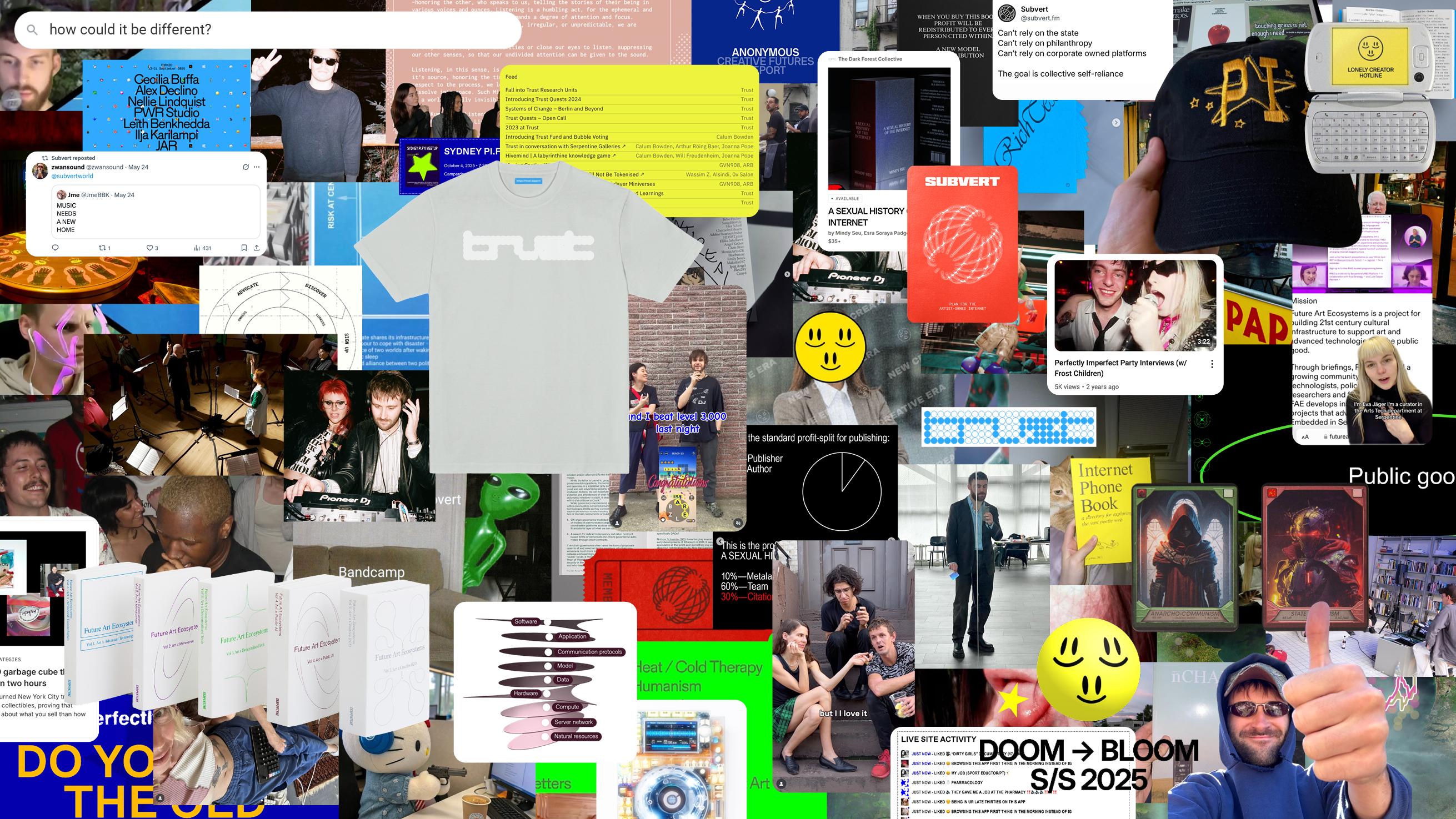
Welcome to the Post-Naive Internet Era
The grand idealism of the free and open internet might be over for now, but in its place falls a more practical mindset. Just like Silicon Valley’s entrepreneurs are entering their “Hard Tech” era, the people building web alternatives are also entering their Post-Naive Era. Here are the names to know.
The new new web | TechCrunch
Over the last five years, almost everything about web development has changed. Oh, the old tech still works, your WordPress and Ruby On Rails sites still
