


Subscribers // by Evgeny Morozov (Le Monde diplomatique - English edition, September 2026)
AI and the techno-utopian path not taken
Open access // by Evgeny Morozov (Le Monde diplomatique - English edition, August 2024)

Anna Ciaunica PhD @annaciaunica.bsky.social on Twitter / X
Paper accepted in Philosophical Transactions B! Co-authored with Shaun Gallagher We argue that interactions with artificial agents are always bidirectional and as such they deeply transform who we are as humans Hence we need to carefully assess WHO is behind AI and their… pic.twitter.com/PAdkkOVXIO— Anna Ciaunica PhD @annaciaunica.bsky.social (@AnnaCiaunica) November 9, 2026

Automate the C-Suite - The Ideas Letter
Weatherby argues that Benanav’s and Morozov’s essays on AI and the left miss a deeper reality: Today’s AI is not a neutral tool operating within capitalism but the materialization of…

The generic abyss of artificial intelligence
A long, long, long blog post about AI and genre

The New Artificial Intelligentsia | Los Angeles Review of Books
In the fifth essay of the Legacies of Eugenics series, Ruha Benjamin explores how AI evangelists wrap their self-interest in a cloak of humanistic concern.

Is there something it is like to be an AI?
Posted on Wednesday 2 Jul 2025. 1,593 words, 6 links. By Matt Webb.

Why you should ignore most AI research you hear about on social media
Writing at the end of the world, from Hveragerði, Iceland
233. "The Illusion of Thinking" — Thoughts on This Important Paper
This is a fantastic paper. I just love it. tl;dr AI is not human. Anthropomorphization has been bad for AI, LLMs, and Chat. Clippy walked so today's AI could run.

The Socialist Charcuterie Board - The Ideas Letter
Taking issue with Benanav’s institutional vision of a democratic political economy of technology, Morozov argues that generative AI exposes a deeper problem that socialism has yet to solve: how to…

David Rozado on Twitter / X
1. Have we been measuring AI political bias wrong? In a new paper @PTetlock and I argue that we might have. Studies have found that AIs tend to produce left-of-center responses to politically loaded questions. But ideological preferences are not the same as epistemic failure. pic.twitter.com/JuGrboRVb0— David Rozado (@DavidRozado) June 22, 2026
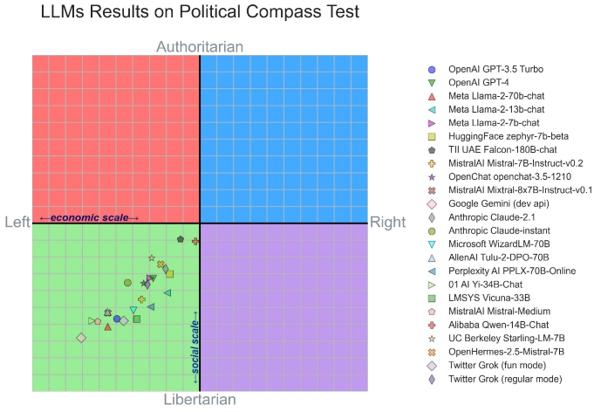
JonasGeiping/stream-qwen3.5-27b · Hugging Face
We’re on a journey to advance and democratize artificial intelligence through open source and open science.

The Folly of Technological Solutionism: An Interview with Evgeny Morozov - Public Books
Evgeny Morozov, a former denizen of the technology world, gained notoriety as a skeptic of that world with his 2010 book The Net Delusion, in which he argued that technology enthusiasts or “cyber ...

The AI Echo Chamber: New Paper on AI and Epistemic Risk
NEW PAPER: John Wihbey argues that as AI increasingly mediates the information domains that shape public knowledge, it risks producing an "epistemically anachronistic" public sphere, stifling the emergence of new ideas and limiting democratic deliberation. While AI has the potential to enhance our informational ecosystem, he argues, there preserving space for organic human insight and discourse.
The Subprime AI Crisis Is Here
Hi! If you like this piece and want to support my independent reporting and analysis, why not subscribe to my premium newsletter? It’s $70 a year, or $7 a month, and in return you get a weekly newsletter that’s usually anywhere from 5,000 to 18,000 words,

Grappling with AI

📚 AI (+ nuance)

Researching all aspects of artificial intelligence and its realized and potential implications

GPT 6.2 Astra Solves a Historical Mystery

Identity loss

"The Printing Press Democratized Knowledge": When Slogans Masquerade as History — Sonja Drimmer

Delaware Is Considering a New Kind of AI Company | Harvard Business Services, Inc.
philarchive.org

OccupySaaS — They laid us off. We're rebuilding their SaaS.
Malleable Software (by Boris) — Semble
darkshapes
AI* perception/usage (by あ) — Semble
All intelligence is collective intelligence (by Ronen Tamari) — Semble

A Collectivist, Economic Perspective on AI
Knowing less about AI makes people more open to having it in their lives – new research