


Eva Swidler is an environmental political economist and social historian. She teaches at Goddard College and the Curtis Institute of Music. The Marxist analysis of work under capitalism has long... READ MORE
CMV: The labor theory of value is flawed
72 votes, 407 comments. This might be an obscure topic, however, in some—largely Marxist circles— the approach seems to motivate much of the dialogue…
Labor-Value Commodity Chains: The Hidden Abode of Global Production - Monthly Review
Intan Suwandi is a frequent contributor to Monthly Review. This article is adapted from her book, Value Chains: The New Economic Imperialism, winner of the 2018 Paul M. Sweezy-Paul A.... READ MORE

Writings and rehearsals by Nathan Schneider
Welcome. I’m a professor of media studies at the University of Colorado Boulder, where I direct the Media Economies Design Lab and teach and learn from our students. I’ve written a book each on online democracy, cooperative enterprise, the Occupy movement, and God, and I’ve edited ones about solidarity economies, crypto, and co-ops. Reporting articles for both magazines and academic journals keeps my notebooks filled. Working with others to build a democratic economy keeps me accountable.
Cognitive Capitalism - Public Seminar
There are broadly three ways of thinking historically about capitalism. One draws on Marx’s value theory and pretty much treats...Read More

Radical expectations: how the New Left changed economics
In the 1970s radical economists campaigned to reform their discipline and their universities. They became journalists and activists, moving beyond academia, to forge new models of public engagement and collaborative knowledge in economic life. Radical Expectations tells the story of how these economists set out to make economics more democratic. It traces their campaign to bring protest movements to the campuses, triggering the emergence of an alternative understanding of expertise directed at validating and empowering the perspectives and voices of women, Black Americans, labor activists, and the urban poor. It shows how a radical identity formed and how radicals helped reform disciplinary institutions. Furthermore, it argues that the radical economics' legacy was the development of a language and models of expert-lay collaboration that empowers direct action in economic affairs. The book is about the community of radical economists who championed the promise of change and what came of it

Power: A Primer for Perplexed Economists
Let's Assume an Unfettered Marketplace of Ideas! Or Actually, Let's Not.

Techno-capitalism, Crisis Epistemology, and Disaster Ableism: How (not) to Respond to Generative AI in Higher education (My presentation @ #PhiDisSocCh6)
Introduction Techno-capitalism is a social system dominated by technology-driven capital, in which technological development is a primary vehicle for wealth concentration. Professors are currently …

Labor Market Adaptation | Windfall Policy Atlas
How can workers, firms, and education systems adapt to an AI-transformed economy?

Meredith Whittaker on Twitter / X
Now that even Goldman, Sequoia, and other major investors are calling it, it's good to remember that the shakiness of the AI market, and the mismatch between capex and ROI, has been clear for a long time to those of us who look closely at the political economy of AI. https://t.co/dLLNAcW5Sn— Meredith Whittaker (@mer__edith) July 30, 2024
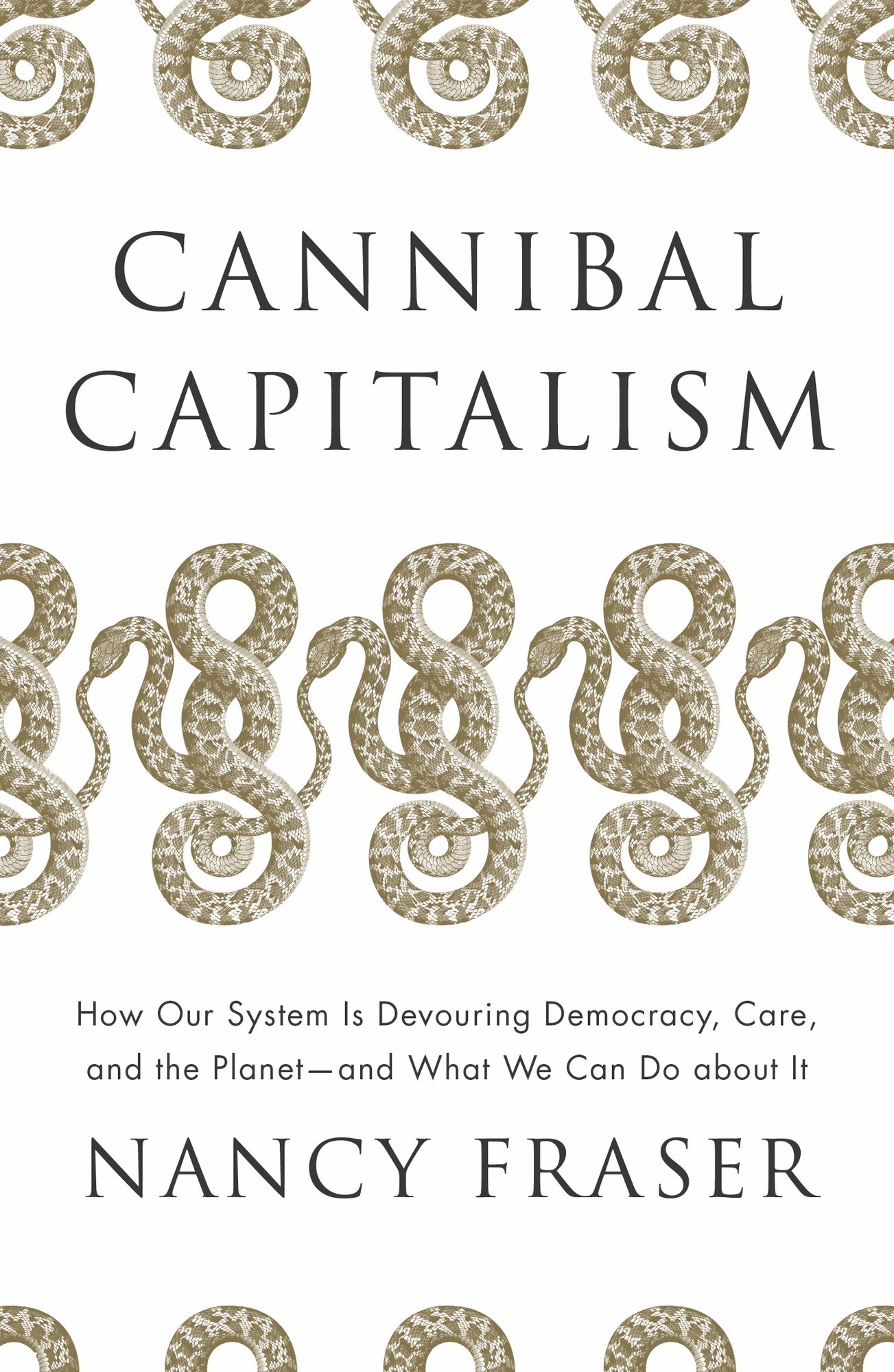
Cannibal Capitalism
Shortlisted for the Deutscher Memorial Prize 2023 Capital is currently cannibalizing every sphere of life-guzzling wealth from nature and racialized populations, sucking up our ability to care for each other, and gutting the practice of politics. In this tightly argued and urgent volume, leading Marxist feminist theorist Nancy Fraser charts the voracious appetite of capital, tracking it from crisis point to crisis point, from ecological devastation to the collapse of democracy, from racial violence to the devaluing of care work. These crisis points all come to a head in Covid-19, which Fraser argues can help us envision the resistance we need to end the feeding frenzy. What we need, she argues, is a wide-ranging socialist movement that can recognize the rapaciousness of capital - and starve it to death.
A Growing Gender Divide in the AI Economy — The Honest Economist
The article argues that AI is reshaping gender inequality even before the pay gap visibly widens. Women are more concentrated in clerical and administrative roles where AI can restructure work, while men are more concentrated in technical, AI-complementary roles. Among college graduates, the exposur

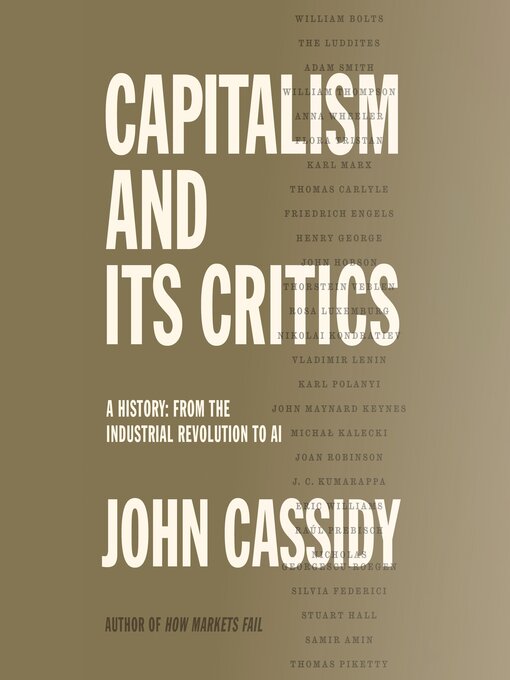
Capitalism and Its Critics: A History
A Financial Times Most Anticipated Book of 2025A sweeping, dramatic history of capitalism as seen through the eyes of its fiercest critics. At a time when artificial intelligence, climate change, and inequality are raising fundamental questions about the economic system, Capitalism and Its Critics provides a kaleidoscopic history of global capitalism, from the East India Company and Industrial Revolution to the di...
We Found The Radical Solution That Could End Corporate Monopolies
Socialized Proof of Work — Open Indie
There’s an increasing obsession with “humanness” these days: Humanness in the age of AI Worldcoin: a solution in search of its problem (...

Work, Justice, and Collective Capital Institutions: Revisiting Rudolf Meidner and the Case for <span style="font-variant:small-caps;">Wage‐Earner</span> Funds
ABSTRACT This article makes the case for a specific variety of what we call Collective Capital Institutions (CCIs), by returning to the idea of Wage‐Earner Funds (WEFs) – a 1970s Swedish policy proposal designed gradually to shift ownership and control over parts of the economy to democratically controlled institutions. We identify two attractive rationales in favour of such a scheme and argue that both can fruitfully be transposed to the current worldwide economic situation. The egalitarian rationale is that WEFs could help in the pursuit of equality by giving a wider set of people a stake in collectively owned companies and a right to their profits. The democratic rationale is that WEFs redistribute not only these profits, but also the power over economic decisions made within companies. We then contrast such schemes for collective capital ownership with the similar but much more privatised proposals set out in, for instance, John Rawls's idea of a ‘property‐owning democracy’. We argue that CCIs ultimately are more likely to contribute to the development of the ‘sense of justice’ within society that is needed for a stable just society. We conclude that CCIs deserve a great deal more exploration in academic and political discussions of egalitarian economic systems.

if there's one conclusion that the study of both labor history and imperialism converge on, it is that the richest people in the world are happy to burn money on control, power, impunity. and the "everything is about profit" version of anti-capitalism does not survive serious contact with either

Leonard Pierce
Adding to this thread: it’s a common mistake (I’ve made it myself, many times) to think of the motivations of the capitalist elites as essentially mercantilist: that is, that they are largely still motivated *entirely* by profit and loss, selling product, etc. This has not been true for a while.
