


Moral Code Moral Code is a working moral philosophy wiki: a place to refine a living theory of morality and test it against life, history, current events, readings, and imagined future judgment.
What Is Code? If You Don't Know, You Need to Read This
The world belongs to people who code. Those who don’t understand will be left behind.

What Is Code? If You Don't Know, You Need to Read This
The world belongs to people who code. Those who don’t understand will be left behind.

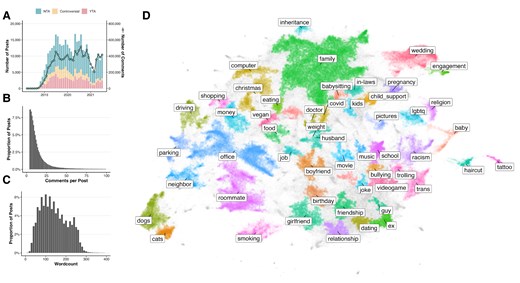
A large-scale investigation of everyday moral dilemmas
Abstract. Questions of right and wrong are central to daily life, yet scientific understanding of everyday moral dilemmas is limited. We conducted a data-d
Moralis | Enterprise-Grade Web3 APIs
Moralis provides enterprise-grade Web3 APIs that connect any tech stack to blockchain networks. Our 24/7 worldwide support ensures your project's easy launch, priority maintenance and sustainable growth, with custom SLAs to support your demands.

Assessing Moral Judgment by Large Language Models – A Survey of Available Datasets
Recent advances in language modeling have contributed to a growing emphasis on machine ethics, including researching and assessing moral judgments made by large language models (LLMs). This paper provides a critical survey of the existing datasets for exactly this assessment, with a special focus on the respective data sources. We address the current lack of theoretical grounding by providing an introduction to ethics and different frameworks from moral philosophy and moral psychology. Moreover, we identify four main data sources: webcrawled corpora, scholars, laypeople, and synthetic data generation. By discussing the strengths and weaknesses of these sources, we analyze their implications for the assessment of moral judgment. Importantly, systemizing the available datasets reveals an over-reliance on previous work, reinforcing existing shortcomings. Addressing the current limitations, we recommend adopting a consistent terminology and creating independently curated datasets based on interdisciplinary work. To ensure a clear delineation of normative approaches, we propose focusing on the assessment of moral consistency and certainty of LLMs as effective and well-defined indicators of their performance on moral judgment.

AI language model rivals expert ethicist in perceived moral expertise
People view AI as possessing expertise across various fields, but the perceived quality of AI-generated moral expertise remains uncertain. Recent work suggests that large language models (LLMs) perform well on tasks designed to assess moral alignment, reflecting moral judgments with relatively high accuracy. As LLMs are increasingly employed in decision-making roles, there is a growing expectation for them to offer not just aligned judgments but also demonstrate sound moral reasoning. Here, we advance work on the Moral Turing Test and find that Americans rate ethical advice from GPT-4o as slightly more moral, trustworthy, thoughtful, and correct than that of the popular New York Times advice column, The Ethicist. Participants perceived GPT models as surpassing both a representative sample of Americans and a renowned ethicist in delivering moral justifications and advice, suggesting that people may increasingly view LLM outputs as viable sources of moral expertise. This work suggests that people might see LLMs as valuable complements to human expertise in moral guidance and decision-making. It also underscores the importance of carefully programming ethical guidelines in LLMs, considering their potential to influence users’ moral reasoning.


Liberals Are Preaching Moral Values. What Took Them So Long?
Until recently, the language of morality belonged to social conservatives. But the history of liberalism suggests that values have been at its core all along.

Oliver Scott Curry on Twitter / X
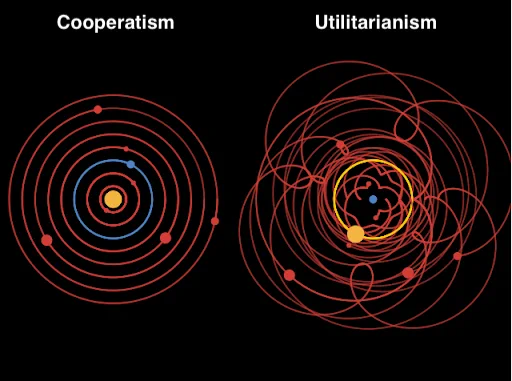
Cooperative theories of morality straightforwardly explain what you ought to do, and accurately describe people's moral intuitions. Altruistic theories, like utilitarianism, make incoherent and implausible demands, and then have to fudge it with endless ad hoc 'constraints' etc pic.twitter.com/ukVvPoqLCY— Oliver Scott Curry (@Oliver_S_Curry) September 22, 2026
W Social and the ancient art of neighbourliness - We Can Just Do Things
Good behaviour matters more than good code
W Social and the ancient art of neighbourliness - We Can Just Do Things
Good behaviour matters more than good code
Please Don’t Take Moral Advice from ChatGPT
Before turning to a large language model for ethical counsel, consider what makes for good advice


Moral Imaginations - But how could it work? Like this? moralimaginations.com/watchet-imagines-1 foodrise.org.uk/wp-content/uploads/2025/07/MT…
General 3 — Moral Imaginations
www.moralimaginations.com