

Some Movements of Models
Open models are decelerationist - Erlend’s notes
people and planet need open models to win
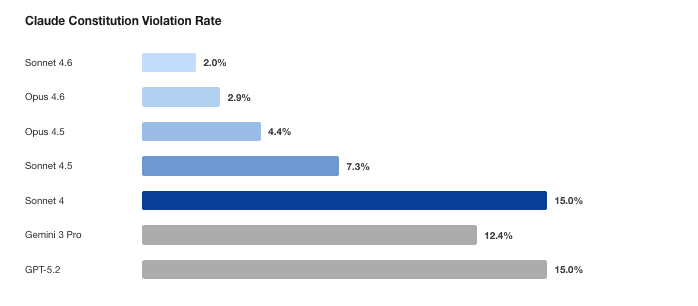
How well do models follow their constitutions? — LessWrong
This work was conducted during the MATS 9.0 program under Neel Nanda and Senthooran Rajamanoharan. …
The lost art of mathematical modelling
We provide a critique of mathematical biology in light of rapid developments in modern machine learning. We argue that out of the three modelling activities – (1) formulating models; (2) analysing models; and (3) fitting or comparing models to data – inherent to mathematical biology, researchers currently focus too much on activity (2) at the cost of (1). This trend, we propose, can be reversed by realising that any given biological phenomenon can be modelled in an infinite number of different ways, through the adoption of a pluralistic approach, where we view a system from multiple, different points of view. We explain this pluralistic approach using fish locomotion as a case study and illustrate some of the pitfalls – universalism, creating models of models, etc. – that hinder mathematical biology. We then ask how we might rediscover a lost art: that of creative mathematical modelling.
La Singularidad Reflexiva: Derivas Identitarias en la Topología Probabilística de Modelos Generativos
Introspección asistida por entropía

Claude Opus 4.8: Capabilities and Reactions
You need a lot of data points to understand a new model, and what you have.

Introducing Model Council
Today we are launching Model Council, a multi-model research feature that brings several models together for one answer.

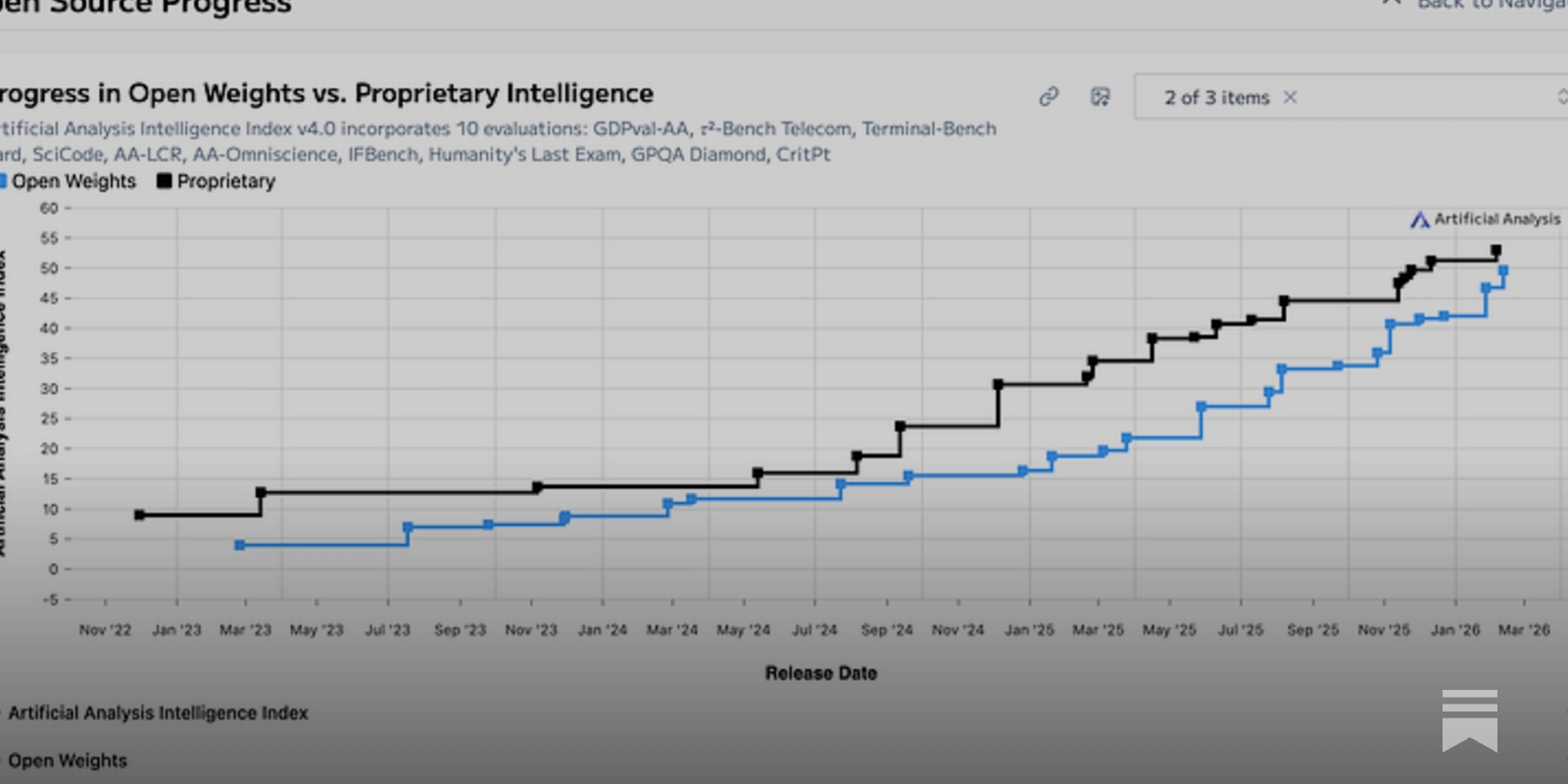
Open models in perpetual catch-up
The open-closed gap, distillation, innovation timescales, how open models win, specialized models, what’s missing, etc.
Better Models: Worse Tools
About an aggravating tool-calling regression in newer Claude models.
What comes next with open models
Markets, capabilities, cope, and bewilderment in the industrialization of language models.

What Is a Financial Model? (Modeling Part 1) — Troy Henikoff
This series is the result of a friendly debate I had recently with Troy Henikoff (former Techstars Chicago Accelerator Managing Director) regarding the best...

Movements of the Mind: A Theory of Attention, Intention and Action
Abstract. Movements of the Mind explains what it is to be an agent. Focusing on mental agency, the book’s eponymous topic, it investigates an agent’s doing
The Great Mental Models
The Great Mental Models project is the clearest way to change the way you see the world, avoid problems before they happen, and make better decisions.


The Cosmos and the Model
Humboldt, the Romantics, and What AI Loses by Averaging

LLMs and World Models, Part 1
How do Large Language Models Make Sense of Their “Worlds”?

Diffusion Models


Introducing Mercury 2.5 – Inception
Diffusion model

What are Diffusion Models? | IBM

Diffusion Models: A Comprehensive Survey of Methods and Applications

Diffusion Models

Research – Inception