

Your AI thinks you're a dude. And that's a problem for everybody who is not. Matching LLMs with decision-making scenarios shows escalatory recommendations are around 10× more likely when actors are identified as male rather than female. And default behaviour in the absence of gender specifiers is overwhelmingly "male". The more such models inform real decisions, the greater the risk of building genuine machina machista — machines whose ordinary use normalises misogynistic and macho behaviour throughout society.
When Good Algorithms Go Sexist: Why and How to Advance AI Gender Equity (SSIR)
Seven actions social change leaders and machine learning developers can take to build gender-smart artificial intelligence for a more just world. <meta property=

AI needs to deal with gender bias - or it will never reach its potential - Lenovo StoryHub
Ada Lopez, Global Product Diversity Office, discusses the increasing issue of gender bias in AI, and offers advice to businesses looking to combat this.

The Large Gender Gap in Who Uses AI
A recent study finds that AI usage tilts heavily toward men. Part of the reason: Women worried they might be penalized for using AI.

The gen AI gender gap
Data from the Survey of Consumer Expectations shows that 50% of men use generative AI tools, compared to 37% of women. Privacy concerns and perceived opportunities and risks explain a quarter of the gender gap. Respondents’ self-assessed knowledge emerges as the most important factor.
Sheryl Sandberg: The AI gender gap is about recognition
New Lean In survey says bosses aren't giving women credit for using AI.
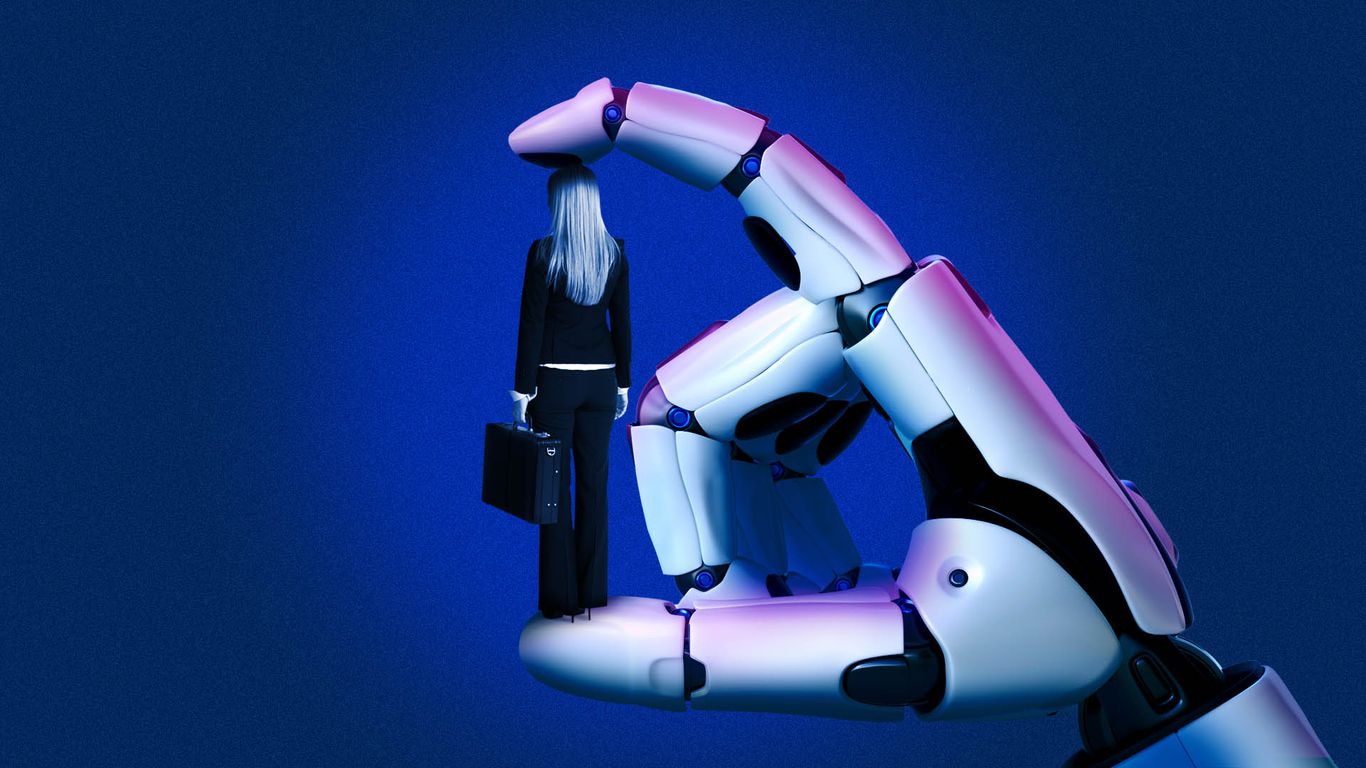
Artificial Intelligence and Its Unique Threat to Women | Capitol Technology University
With the rise of artificial intelligence, the world is undergoing a big transformation. However, technology has been seen to display biases – and for women, this presents a complex set of challenges.

Giving LLMs a personality is just good engineering
AI skeptics often argue that current AI systems shouldn’t be so human-like. The idea - most recently expressed in this opinion piece by Nathan Beacom - is that language models should explicitly be tools, like calculators or search engines. Although they can pretend to be people, they shouldn’t, because it encourages users to overestimate AI capabilities and (at worst) slip into AI psychosis. Here’s a representative paragraph from the piece:

From users to architects: Why girls must shape the future of AI
If girls aren’t shaping AI, we’re building a broken future. Empowering young women in tech is now a global necessity, not just a matter of fairness.

Paid Program: Why More Women Are Needed in AI
When the world of AI isn’t inclusive, it creates biases in what the data shows and how it’s used.

There’s a Reason Women Aren’t Swooning Over AI Like Men Are
Or rather, a great many reasons

AI is unlocking new leadership paths for women in tech
A side benefit of the booming interest in GenAI is how it presents opportunities to women in tech.

Women Who Use AI At Work Face A Predictable ‘Competence Penalty’
Women who use AI are seen as less competent than men who use AI, even when producing identical work. This reflects a common gender bias known as the "competence penalty."

The AI Gender Trap: Why Women Face Triple the Automation Risk in the Digital Age
As generative AI transforms the workplace, women face a disproportionate risk of automation—revealing deep inequalities in who builds, controls, and benefits from artificial intelligence.
Sam Altman told me AI should be 'an equalizing force in society.' That's why I'm working on the $1.6 trillion AI gender gap | Fortune
This won't happen by accident. It will happen because someone builds it that way.

If AI is the future, gender equity is essential | NetHope
As the world faces many serious challenges — from climate change and poverty to displacement and social injustice – women and girls are key to tackling those issues and shaping future prosperity for all. Artificial Intelligence (AI), along with other digital tools, has the potential to help us address those challenges and open new opportunities. Seizing that potential requires us to take meaningful action to mitigate the risks AI poses to women and girls, and to use AI to advance gender equity.
