

This article was recently published in the Rcpp Gallery, and demonstrates using the RcppParallel package to aggregate to an output vector. It extends directly from previous demonstrations of single-valued aggregation, through providing necessary details to enable aggregation to a vector, or by extension, to any arbitrary form.
mp | C++ templates and Rcpp
C++ templates are really useful. Templates allow you to code a function able to accept arguments of different types that can't necessarily be known until compile time. There is, however, no such thing as an Rcpp template -- all inputs and outputs must have defined types. This blog entry is about how to maximise the usefulness of C++ templates in an Rcpp context.
mp | The allcontributors package
An alternative implementation in R of the original 'allcontributors.org' to acknowledge all contributors in your 'README' (or elsewhere). The original is intended to help acknowledge all contributions including those beyond the contents of an actual repository, such as community or other or less-tangible organisational contributions. This version only acknowledges tangible contributions to a repository, but automates that task to a single function call, in the hope that such simplicity will spur greater usage.
mp | What are matrices in R?
If everything in R is a vector, then what is a matrix? This entry will demonstrate that even matrices are vectors, and that processing of matrices can in certain circumstances be considerably more efficient if they are treated as simple vectors.
Packrat parsing: | Proceedings of the seventh ACM SIGPLAN international conference on Functional programming
For decades we have been using Chomsky's generative system of grammars, particularly context-free grammars (CFGs) and regular expressions (REs), to express the syntax of programming languages and protocols. The power of generative grammars to express ...

Varv: Reprogrammable Interactive Software as a Declarative Data Structure
This summary was generated using automated tools and was not authored or reviewed by the article's author(s). It is provided to support discovery, help readers assess relevance, and assist readers from adjacent research areas in understanding the work. It is intended to complement the author-supplied abstract, which remains the primary summary of the paper. The full article remains the authoritative version of record. Click here to learn more.

Bitwuzla
An SMT solver for bit-vectors, floating-points, arrays and uninterpreted functions.
mp | debugging in R with a single command
There are several great references for how to debug C or C++ code in R, but descriptions of how to start a debugger are often not so informative. This post describes how to start a debugging session in R with a single command.
Memory Efficient RL | Unsloth Documentation
We're excited to introduce more efficient reinforcement learning (RL) in Unsloth with multiple algorithmic advancements:

What's the best vector database for building AI products? | Liveblocks blog
Vector databases are the backbone of retrieval-augmented generation (RAG), a key technique enabling modern AI products to deliver accurate, context-aware answers from private data. This is our comprehensive comparison of leading vector databases, including Turbopuffer, Pinecone, Qdrant, pgvector, and many more.

Higher Dimensional Syntax - Eric Finster
Mixture-of-Experts (MoE): The Birth and Rise of Conditional Computation
What two decades of research taught us about sparse language models...
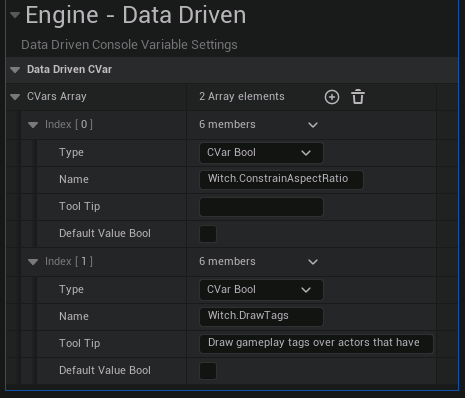
Unreal Scoop: Data-Driven CVars
If you use UE5, you might have noticed there’s a new-ish feature called Data-Driven Console Variables, and you might also have noticed that nothing comes up when you Google this. There’s not much to it, but in the interests of having something come up when you Google this, here’s what I’ve figured out about data-driven cvars.
Google's TurboQuant landed for vLLM.cpp's KV cache – but it's not just useful for KV! A possibly more impactful implementation is for quantizing embedding vectors for RAG. github.com/oaustegard/remex is a Python and Mojo for just that purpose.

GitHub - oaustegard/remex: Retrieval-validated embedding compression. 4-8x smaller vectors, proven recall. Based on TurboQuant (ICLR 2026).
github.com