

Modeling sequences of user behavior makes discovery feel alive
ProbablyFrens, Contextual Feeds and Intent-Based Discovery
It’s that time of the year—ETHDenver is just around the corner! Index will be there, and if you’re attending, we’d love to connect! But that’s not all—Index has been evolving, bringing new experiences to make discovery more intuitive and personalized.Meet ProbablyFrens: The Matchmaker AgentWe’re introducing Index’s Matchmaker Agent, an autonomous connector that helps you find the friendships, collaborations, and conversations that should already exist. Whether you’re looking for thought partn...

Sensors, not just bookmarks [Patterns of Sensemaking #1] - Cosmik Labs
First of a new series on sensemaking patterns we're observing on Semble
Sensors, not just bookmarks [Patterns of Sensemaking #1] - Cosmik Labs
First of a new series on sensemaking patterns we're observing on Semble
From Feeds to Trails
To design the future of social media, rethink the interface before the algorithm.
Semble Explore Feed and Follow Graph
Chasing RATs: Tracing Reading for and as Creative Activity
Creativity research has privileged making over the interpretive labor that precedes and shapes it. We introduce Reading Activity Traces (RATs), a proposal that treats reading -- broadly defined to include navigating, interpreting, and curating media across interconnected sources -- as creative activity both for future artifacts and as a form of creation in its own right. By tracing trajectories of traversal, association, and reflection as inspectable artifacts, RATs render visible the creative work that algorithmic feeds and AI summarization increasingly compress and automate away. We illustrate this through WikiRAT, a speculative instantiation on Wikipedia, and open new ground for reflective practice, reader modeling, collective sensemaking, and understanding what is lost when human interpretation is automated -- towards designing intelligent tools that preserve it.

Large-Scale Study of Curiosity-Driven Learning
Burda*, Edwards*, Pathak* et.al. (* equal contribution, alphabetical order) Large-Scale Study of Curiosity-Driven Learning. 2018.

Information foraging
Information foraging is a theory that applies the ideas from optimal foraging theory to understand how human users search for information. The theory is based on the assumption that, when searching for information, humans use "built-in" foraging mechanisms that evolved to help our animal ancestors find food. Importantly, a better understanding of human search behavior can improve the usability of websites or any other user interface.
Substack Writers Concerned as Subscriptions ‘Plummet’ Due to Follow Feature
Substack writers are expressing their concerns about the platform’s following feature on social media, which some argue is suppressing their subscription growth.

Understanding LSTM Networks -- colah's blog
Humans don’t start their thinking from scratch every second. As you read this essay, you understand each word based on your understanding of previous words. You don’t throw everything away and start thinking from scratch again. Your thoughts have persistence.
Has Substack’s subscription model really “maxed out?”
Scott Carney and Taylor Lorenz posted on Substack about downward subscriber trends they’re seeing. Carney pins it on subscription fatigue and feeling like “The only way to grow is to pillage the paid subscribers from other creators.” Lorenz questions Substack’s direction, saying “more and more like this app is becoming another social media feed.” When we recently wrote about writers who are leaving Substack, they mentioned control, pricing, and the social feature creep among their reasons for choosing competitors like Ghost and Behiiv. [Link: Writers are fleeing the Substack Tax | https://www.theverge.com/tech/927294/substack-tax-ghost-beehiiv | The Verge]

How the Bluesky Algorithm Works in 2026 (Feeds Guide)
How Bluesky's algorithm works in 2026: the Discover feed, custom feeds on the AT Protocol, the ranking signals that drive reach, and how to grow your account.
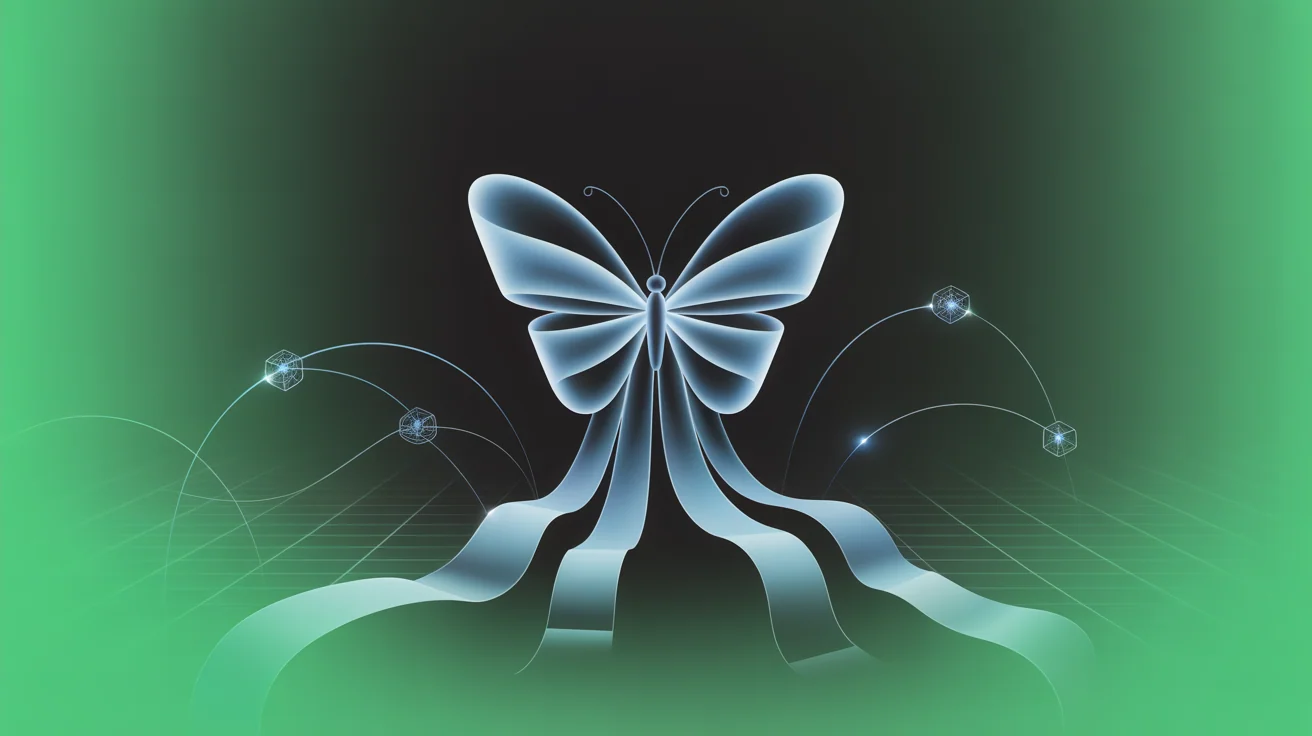
How to create reading experiences that "go beyond information transmission and toward reader transformation.” Great paper by @blue-phia.bsky.social @lepidopterane.bsky.social @yijunliu.bsky.social Sarah Sterman @sh1m.bsky.social @maxkreminski.bsky.social arxiv.org/abs/2606.04308 >

