© Copyright 1973 Pacific Journal of Mathematics. All rights reserved.
Introduction to Homotopy Theory- Part 4: Fibrations
Limits and Colimits in a Category of Lenses
Lenses are an important tool in applied category theory. While individual lenses have been widely used in applications, many of the mathematical properties of the corresponding categories of lenses have remained unknown. In this paper, we study the category of small categories and asymmetric delta lenses, and prove that it has several good exactness properties. These properties include the existence of certain limits and colimits, as well as so-called imported limits, such as imported products and imported pullbacks, which have arisen previously in applications. The category is also shown to be extensive, and it has an image factorisation system.

Algebraic Topology 1: Homotopy Equivalence
A Topological Picture Book, Rendered
Hand-hatched surfaces after the mid-century manner of Francis, Apéry, Hilbert–Cohn-Vossen. Drag to turn the model freely (shift-drag to roll it); scroll to approach.
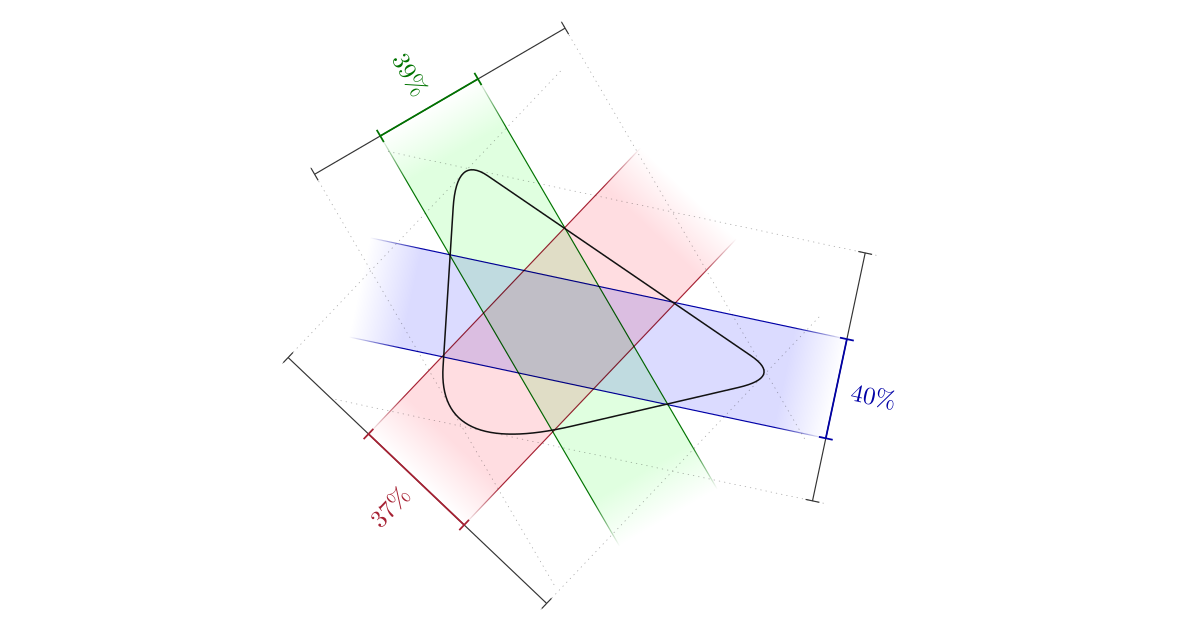
The Affine Plank Conjecture | Zaz Brown
An illustrated explanation of relative plank widths, an interactive visualization, and proofs for three planks.
A Quick Intro to Fiber Bundles (Hopf Fibration)
General Theory of Natural Equivalences
Samuel Eilenberg, Saunders MacLane, General Theory of Natural Equivalences, Transactions of the American Mathematical Society, Vol. 58, No. 2 (Sep., 1945), pp. 231-294
1. History of Algebraic Topology; Homotopy Equivalence - Pierre Albin
Categories for the Working Mathematician
Categories for the Working Mathematician provides an array of general ideas useful in a wide variety of fields. Starting from the foundations, this book illuminates the concepts of category, functor, natural transformation, and duality. The book then turns to adjoint functors, which provide a description of universal constructions, an analysis of the representations of functors by sets of morphisms, and a means of manipulating direct and inverse limits. These categorical concepts are extensively illustrated in the remaining chapters, which include many applications of the basic existence theorem for adjoint functors. The categories of algebraic systems are constructed from certain adjoint-like data and characterized by Beck's theorem. After considering a variety of applications, the book continues with the construction and exploitation of Kan extensions. This second edition includes a number of revisions and additions, including two new chapters on topics of active interest. One is onsymmetric monoidal categories and braided monoidal categories and the coherence theorems for them. The second describes 2-categories and the higher dimensional categories which have recently come into prominence. The bibliography has also been expanded to cover some of the many other recent advances concerning categories.
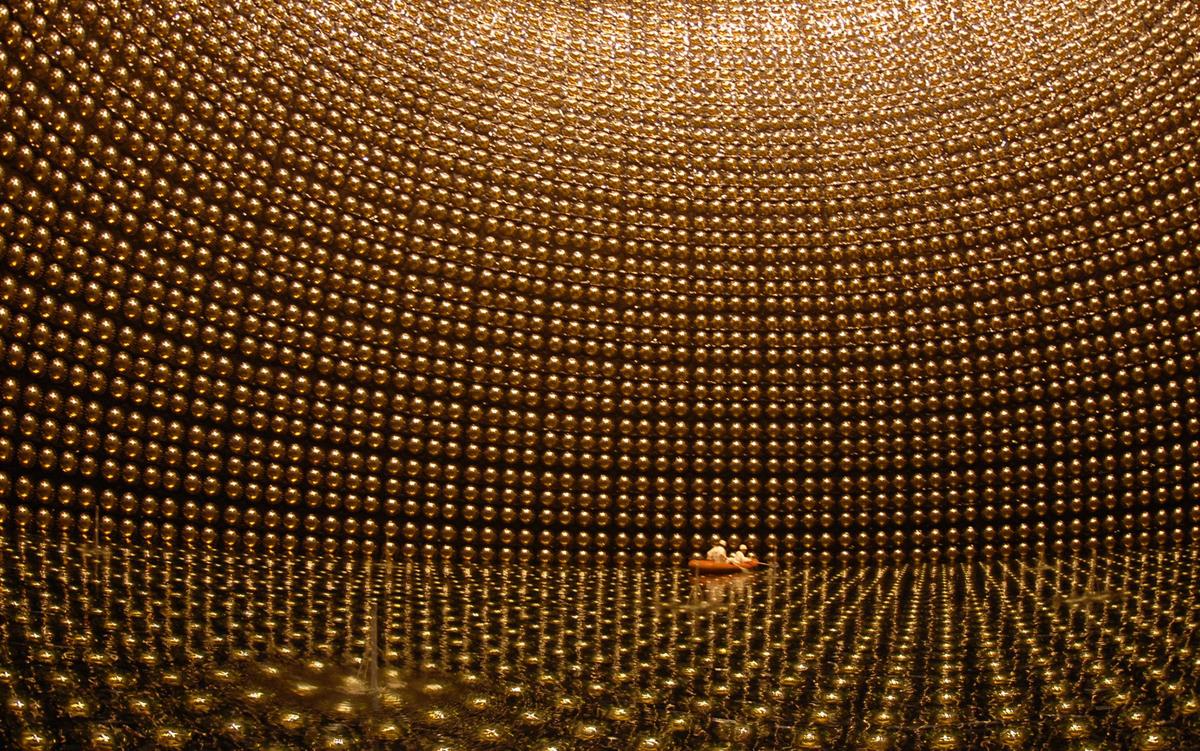
How physics at the roots of reality point to a grand unified theory | Aeon Essays
Physics displays an uncanny alignment at its very deepest levels. Is a grand theory of everything finally within reach?
Homotopical patch theory | ACM SIGPLAN Notices
Homotopy type theory is an extension of Martin-Löf type theory, based on a correspondence with homotopy theory and higher category theory. In homotopy type theory, the propositional equality type becomes proof-relevant, and corresponds to paths in a ...

Precision cosmology with voids in the final BOSS data
We report novel cosmological constraints obtained from cosmic voids in the final BOSS DR12 dataset. They arise from the joint analysis of geometric and dynamic distortions of average void shapes...
Cosmological constraints from the BOSS DR12 void size function
We present the first cosmological constraints derived from the analysis of the void size function. This work relies on the final BOSS DR12 data set, a large spectroscopic galaxy catalog, ideal for...
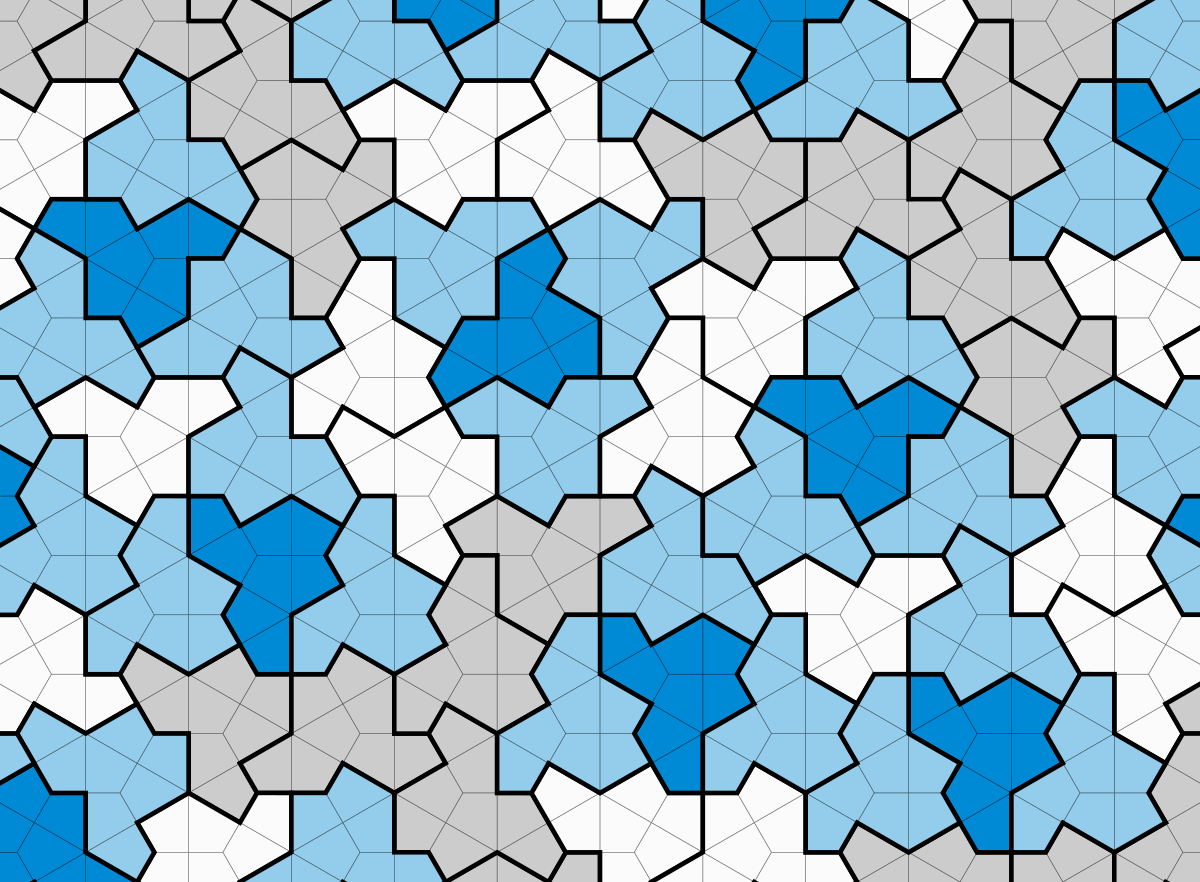
Notes on a strongly aperiodic monotile in $E^3$
We provide a clearer presentation of the Chair44 monotile, a new strongly aperiodic monotile in three-dimensional Euclidean space $E^3$.
Newfound Mathematical 'Einstein' Shape Creates a Never-Repeating Pattern
A new shape called an einstein has taken the math world by storm. The craggy, hat-shaped tile can cover an infinite plane with patterns that never repeat.