


Criticism and scrutiny are welcome. But why so much hostility? Why assume the worst about our motives? I honestly don’t understand. If we share the goal of better social media, let’s talk about how to get there.
DavidB (@david.eurosky.social)
"But why so much hostility?" Because WSocial has been dishonest since day one. The first time I heard of you, it was an ad saying that there was no European social media. Which was your first lie of a long series. "We're building a new social media." Another lie, you're a fork of Bluesky. And so on.

How to rage bait Americans
RIP social media. What comes next is messy.
As social media splinters, how can we keep the new online spaces from devolving into toxic pits of despair?

Digital Social Norm Enforcement: Online Firestorms in Social Media
Actors of public interest today have to fear the adverse impact that stems from social media platforms. Any controversial behavior may promptly trigger temporal, but potentially devastating storms of emotional and aggressive outrage, so called online firestorms. Popular targets of online firestorms are companies, politicians, celebrities, media, academics and many more. This article introduces social norm theory to understand online aggression in a social-political online setting, challenging the popular assumption that online anonymity is one of the principle factors that promotes aggression. We underpin this social norm view by analyzing a major social media platform concerned with public affairs over a period of three years entailing 532,197 comments on 1,612 online petitions. Results show that in the context of online firestorms, non-anonymous individuals are more aggressive compared to anonymous individuals. This effect is reinforced if selective incentives are present and if aggressors are intrinsically motivated.
Digital Social Norm Enforcement: Online Firestorms in Social Media
Actors of public interest today have to fear the adverse impact that stems from social media platforms. Any controversial behavior may promptly trigger temporal, but potentially devastating storms of emotional and aggressive outrage, so called online firestorms. Popular targets of online firestorms are companies, politicians, celebrities, media, academics and many more. This article introduces social norm theory to understand online aggression in a social-political online setting, challenging the popular assumption that online anonymity is one of the principle factors that promotes aggression. We underpin this social norm view by analyzing a major social media platform concerned with public affairs over a period of three years entailing 532,197 comments on 1,612 online petitions. Results show that in the context of online firestorms, non-anonymous individuals are more aggressive compared to anonymous individuals. This effect is reinforced if selective incentives are present and if aggressors are intrinsically motivated.
Sharing without clicking on news in social media
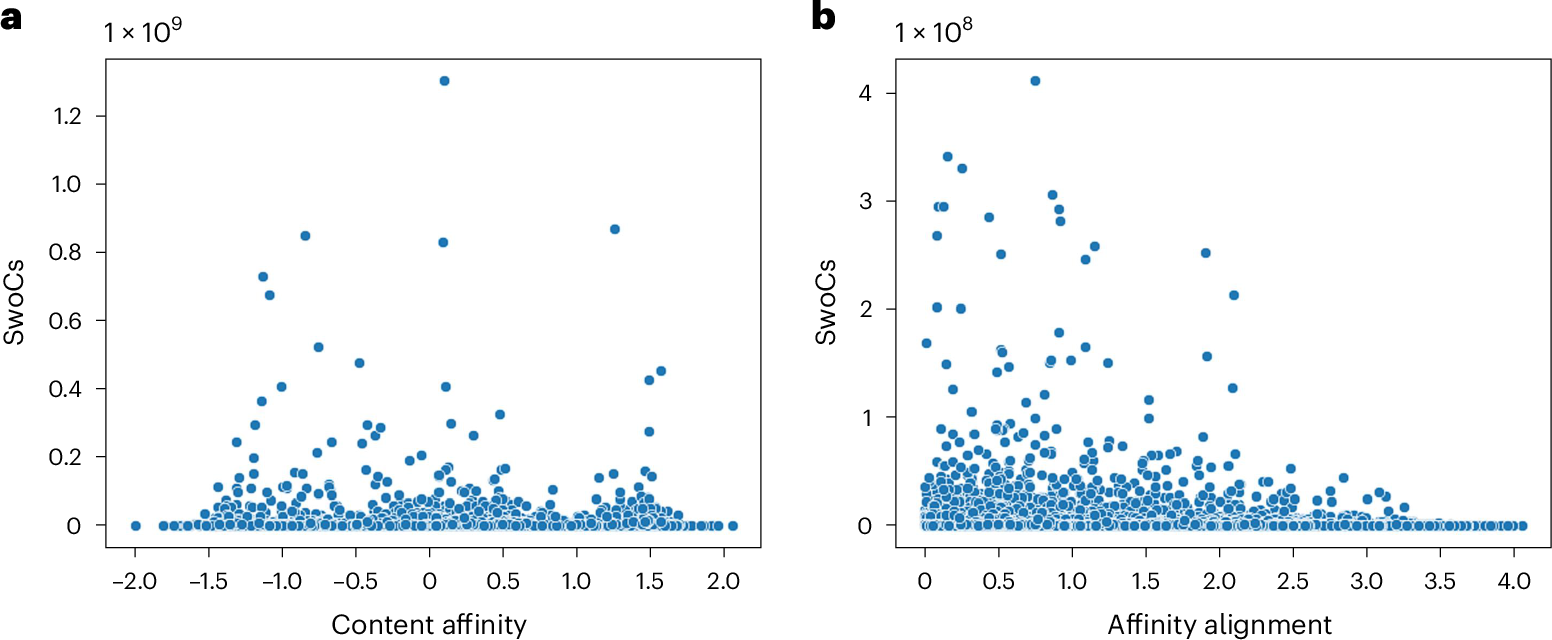
Social media have enabled laypersons to disseminate, at scale, links to news and public affairs information. Many individuals share such links without first reading the linked information. Here we analysed over 35 million public Facebook posts with uniform resource locators shared between 2017 and 2020, and discovered that such ‘shares without clicks’ (SwoCs) constitute around 75% of forwarded links. Extreme and user-aligned political content received more SwoCs, with partisans engaging in it more than politically neutral users. In addition, analyses with 2,969 false uniform resource locators revealed higher shares and, hence, SwoCs by conservatives (76.94%) than liberals (14.25%), probably because, in our dataset, the vast majority (76–82%) of them originated from conservative news domains. Findings suggest that the virality of political content on social media (including misinformation) is driven by superficial processing of headlines and blurbs rather than systematic processing of core content, which has design implications for promoting deliberate discourse in the online public sphere.
Why are we incentivized to make social media worse? What makes KPIs so meaningless? Perverse incentives! #incentives #socialmediastrategist #tokenmaxxing #tokenburn #algorithms
The social media discourse of engaged partisans is toxic even when politics are irrelevant
Abstract. Prevailing theories of partisan incivility on social media suggest that it derives from disagreement about political issues or from status compet
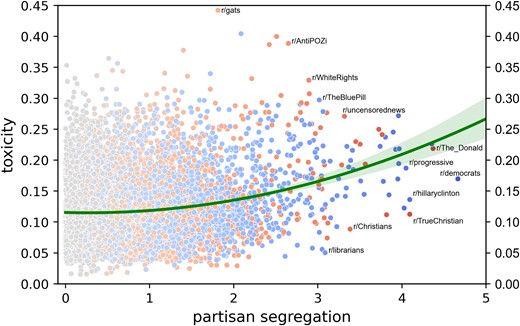
The social media discourse of engaged partisans is toxic even when politics are irrelevant
Abstract. Prevailing theories of partisan incivility on social media suggest that it derives from disagreement about political issues or from status compet
The Alt-Right Playbook: Why Don't You Respond to Criticism?
Free Our Feeds
Social media is broken: controlled by a handful of billionaires who shape what people see, say, and believe. These platforms profit from division, exploit user data, and lock people into closed systems.
People Across the Globe Increasingly Say Social Media Is Harming Democracy
Most think social media leads to manipulation and division, but they also say it informs people and gives them a voice in politics.
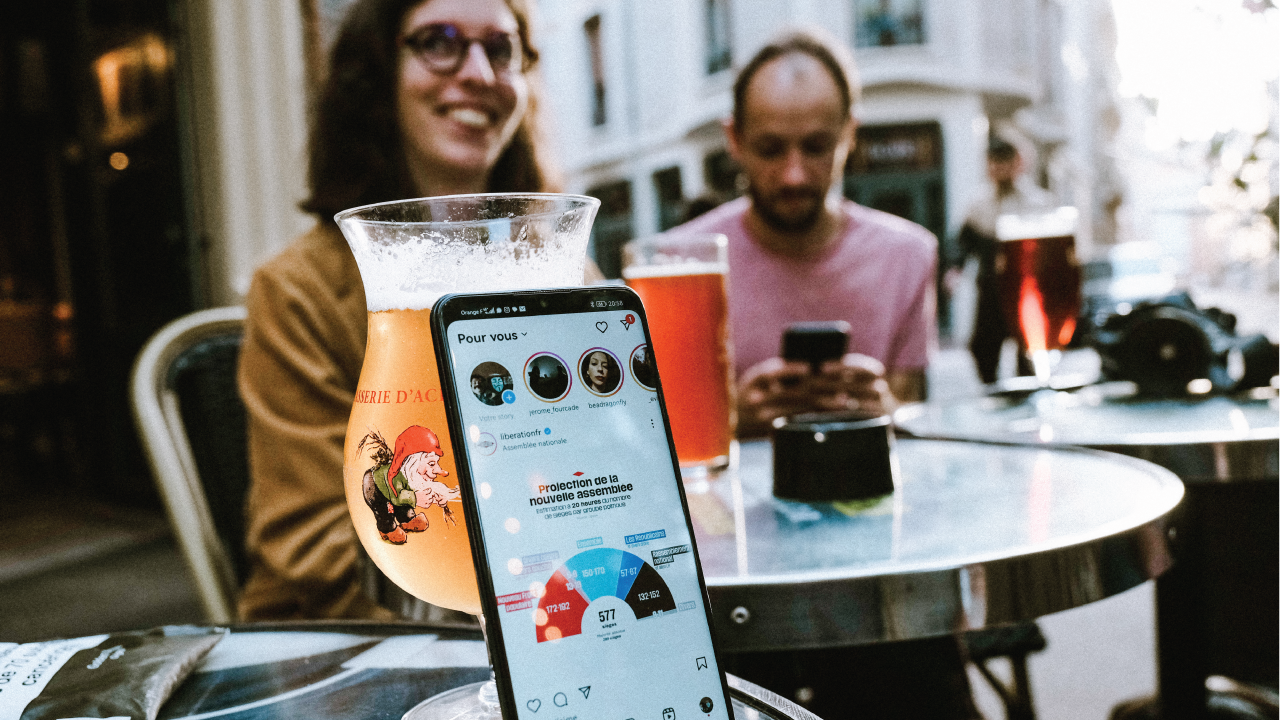
Is social media truly making us more politically polarized, or does it simply over-represent our most extreme opinions? In our new preprint, @small-schulz.bsky.social and I present *punishing evidence* that social media systematically overrepresents users’ most extreme political opinions. 1/n
Some thoughts on #WSocial, how they have been responding to criticism and why I believe they are showing the limits of free speech absolutism. I agree with @echna.bsky.social that "W Social seems to be on an X speedrun - without ever having been like Twitter." 🔗: aseachange.com/@elena/statuses/01M0SDV98GRDW…
![[3 media attachments] Dear friends,
Please gather around for a long post about #WSocial and how they are responding to critiques.
I have noticed a trend: W Social leaders and staunch supporters are ...](https://cdn.bsky.app/img/feed_thumbnail/plain/did:plc:vggsjzvhakoa7l2m2mguqv4w/bafkreihcldgcq7zjkfhikbwpjeqo6qqqw443ywuxo6rl2y6xh55tsszjim)
Elena Rossini on GoToSocial ⁂ (@elena@aseachange.com)
aseachange.comSocial media discourse is driven by false #polarization We find that: 1) ideologues post opinions more than moderates 2) extreme attitudes are posted more than moderate one 3) This replicates in 40 countries 4) Opinions that users post are more hostile than the beliefs they keep to themselves
🐝 Social Media (SB Commentary)

things I said about social media

Bee 🐝 (@sweetbee.vip)
Bee 🐝 (@sweetbee.vip)
Bee 🐝 (@sweetbee.vip)


