


Spanning the political chaos of 1920s Italy, Benito Mussolini transforms from socialist journalist to Italy’s brutal dictator, starting with his Blackshirts militia to the establishment of an authoritarian rule that would go on to set Europe aflame.
Mussolini: Son of the Century
Mussolini: Son of the Century is a biographical historical drama television series directed by Joe Wright, based on the 2018 novel M: Son of the Century by Antonio Scurati. Starring Luca Marinelli as Benito Mussolini, the series centers on the early political career of Mussolini in the 1920s. It premiered at the 81st Venice International Film Festival on 5 September 2024 and began airing on Sky Atlantic on 10 January 2025.

The Authoritarian Personality
This hugely influential study on the psychology of authoritarianism was written in answer to Hitler’s Germany—and now rings more relevant than ever as fascism and anti-Semitism sweep across America.What makes a fascist? Are there character traits that make someone more likely to vote for the far right? The Authoritarian Personality is not only one of the most significant works of social psychology ever written, it also marks a milestone in the development of Adorno’s thought, showing him grappling with the problem of fascism and the reasons for Europe’s turn to reaction. Over half a century later, and with the rise of right-wing populism and the reemergence of the far-right in recent years, this hugely influential study remains as insightful and relevant as ever.This new edition includes an introduction by Frankfurt School scholar Peter E. Gordon and contains the first-ever publication of Adorno’s subsequent critical notes on the project.“Adorno and his colleagues could easily have been describing Alex Jones’s paranoid InfoWars rants or the racist views expressed by many Trump supporters.” —New York Times
The 1918 Influenza Pandemic and the Rise of Italian Fascism: A Cross-City Quantitative and Historical Text Qualitative Analysis
Evidence linking past experiences of worsening health with support for radical political views has generated concerns about the consequences of the COVID-19 pandemic. The influenza pandemic that began in 1918 had a devastating health impact: 4.1 million Italians contracted influenza and about 500 000 died. We tested the hypothesis that deaths from the 1918 influenza pandemic contributed to the rise of Fascism in Italy. To provide a “thicker” interpretation of these patterns, we applied historical text mining to the newspaper Il Popolo d’Italia (Mussolini’s newspaper). Our observations were consistent with evidence from other contexts that worsening mortality rates can fuel radical politics. Unequal impacts of pandemics may contribute to political polarization. (Am J Public Health. 2022;112(2):242–247. https://doi.org/10.2105/AJPH.2021.306574 )

The 1918 Influenza Pandemic and the Rise of Italian Fascism: A Cross-City Quantitative and Historical Text Qualitative Analysis
Evidence linking past experiences of worsening health with support for radical political views has generated concerns about the consequences of the COVID-19 pandemic. The influenza pandemic that began in 1918 had a devastating health impact: 4.1 million Italians contracted influenza and about 500 000 died. We tested the hypothesis that deaths from the 1918 influenza pandemic contributed to the rise of Fascism in Italy. To provide a “thicker” interpretation of these patterns, we applied historical text mining to the newspaper Il Popolo d’Italia (Mussolini’s newspaper). Our observations were consistent with evidence from other contexts that worsening mortality rates can fuel radical politics. Unequal impacts of pandemics may contribute to political polarization. (Am J Public Health. 2022;112(2):242–247. https://doi.org/10.2105/AJPH.2021.306574)

Elon Musk: The Normalizer of Fascism
The world's richest man needs you to believe fascist parties are part of the democratic spectrum
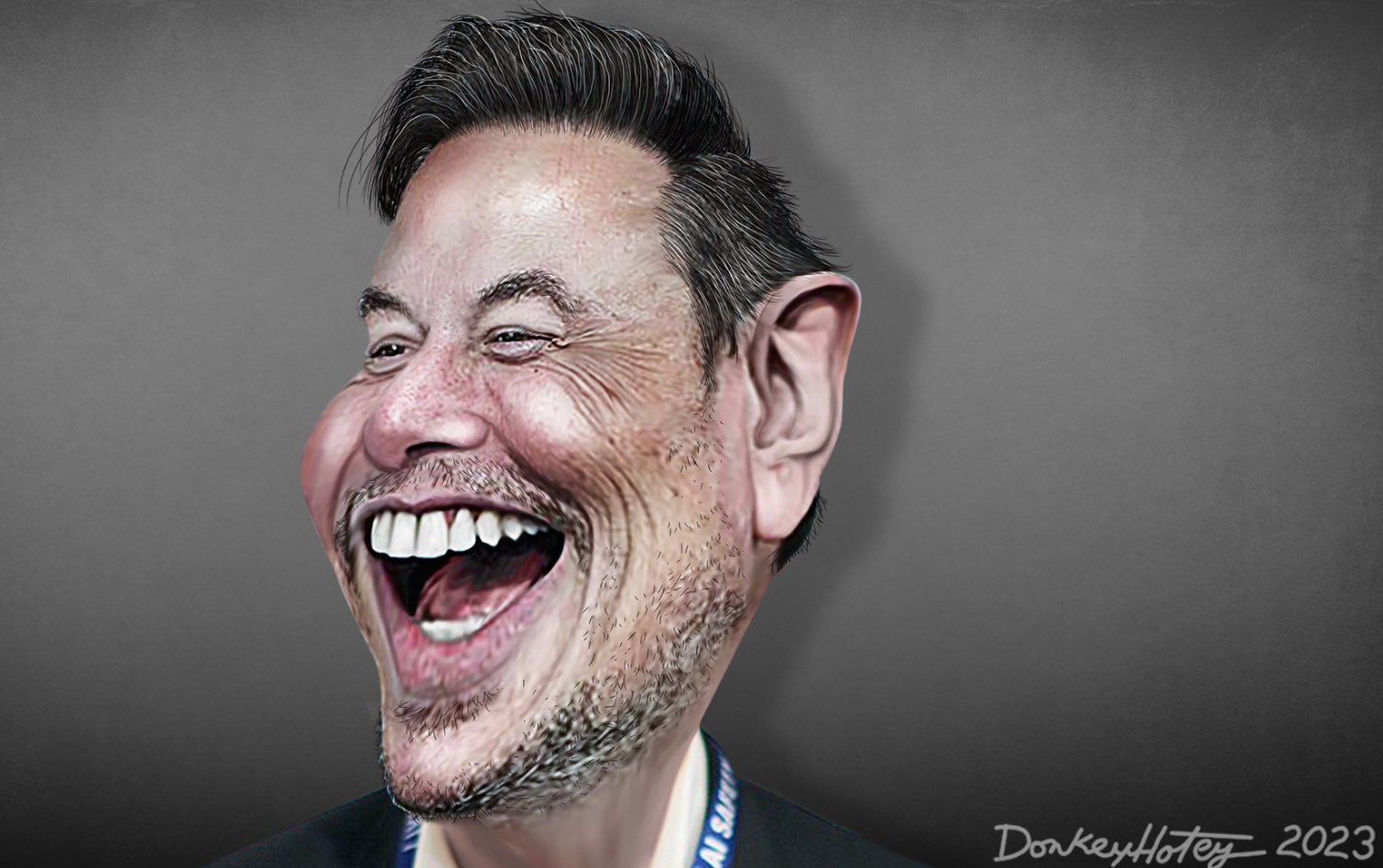
Here's a PDF Version of the CIA Guide to Sabotaging Fascism
A 404 Media reader made a PDF version of the World War II-era manual that's going viral right now.
Frédéric Le Moal, Histoire du fascisme, Paris, Perrin, 2018, 425 p.
Frédéric Le Moal, spécialiste de l’Italie, propose une nouvelle histoire du fascisme. Son projet ne consiste pas à livrer des faits inédits, ceux-ci étant généralement bien établis, mais à donner u...

Si chiude la storia di Autistici/Inventati: «Che mille collettivi si formino e altri mille server nascano»
A mezzanotte del 18 settembre gli attivisti smetteranno di erogare i loro servizi. L’unica decisione possibile per il collettivo designato dall’amministrazione Trump. Scompare, così, un importante pezzo della storia digitale italiana. Il 25 settembre, giorno in cui entreranno in vigore le sanzioni, sono previste mobilitazioni in varie città italiane. A Roma, indetto un corteo
Les Néo-fascismes européens et les mondes arabo-musulmans
Stéphane François et Nicolas Lebourg, « Le courant nationaliste-révolutionnaire et les mondes arabo-musulmans, de Maurice Bardèche à Christian Bouchet », Bernard Bruneteau et Yves Santamaria dir., …

Italy's Radical Solution to Extreme Inequality
Reflections on Habermas; Luzzato's "The First Fascist"
Reading, Watching 03.15.26
Ce que nos élus doivent à Mussolini
Il y a des tas de choses à raconter sur le système électoral français, mais nous allons nous attarder pour l’instant sur un point précis qui m’a interpellée le jour où j’en ai découvert l’existence e…

The Stories Fascism Fears Most
Banca Etica chieda conto a Bruxelles | il manifesto
Come può una decisione amministrativa straniera produrre conseguenze finanziarie immediate in Italia, se A/I non è stata dichiarata organizzazione terroristica né in Italia né nell’Unione europea?

The Names They Call Themselves
*Fascist* and *Nazi* weren’t slurs that were applied to the Italians and Germans by their political or military opponents. That’s what they called themselves. The job won’t be done, this era of madness will not end, until we make *the names Trump’s regime calls themselves* universally acknowledged slurs.

The Liberalism to Fascism Pipeline (Neoliberalism Explained)