


Imagining the universities of the future.How can we re-envision the university? Too many examples of what passes for educational innovation today—MOOCs especially—focus on transactions, on questions of delivery. In Alternative Universities, David J. Staley argues that modern universities suffer from a poverty of imagination about how to reinvent themselves. Anyone seeking innovation in higher education today should concentrate instead, he says, on the kind of transformational experience universities enact. In this exercise in speculative design, Staley proposes ten models of innovation in higher education that expand our ideas of the structure and scope of the university, suggesting possibilities for what its future might look like. What if the university were designed around a curriculum of seven broad cognitive skills or as a series of global gap year experiences? What if, as a condition of matriculation, students had to major in three disparate subjects? What if the university placed the pursuit of play well above the acquisition and production of knowledge? By asking bold "What if?" questions, Staley assumes that the university is always in a state of becoming and that there is not one "idea of the university" to which all institutions must aspire. This book specifically addresses those engaged in university strategy—university presidents, faculty, policy experts, legislators, foundations, and entrepreneurs—those involved in what Simon Marginson calls "university making." Pairing a critique tempered to our current moment with an explanation of how change and disruption might contribute to a new "golden age" for higher education, Alternative Universities is an audacious and essential read.
The Ideal University
Critical maneuvers can open space for thinking and questioning differently. One thing hypertext can offer this task is an endlessly wide margin on which to inscribe comments and make links, the chance to move in new directions. That is what the university is supposed to offer, too.
Education in a Time Between Worlds: Essays on the Futur…
Our world is currently undergoing major transformations…

Exploring the impacts of AI on Knowledge, Universities & Labs
AI is disrupting the university monopoly. We can't "hire our way" out of this transition, and trying to control emergence is a losing battle. Are sandboxes our best option to prototype a future University operating model?

How to grow tomorrows
What if schools were not just sites for delivering education, but societies in miniature? Thousands of chances to cultivate a better future

How to Break the Academic Silo Mindset - The Community Solution Education System
What’s stopping higher education from reaching its full potential? In this episode of Radical Cooperation, Dr. Michael Horowitz sits down with Dr. Beronda Montgomery—biologist, author of Lessons from Plants, and former Vice President for Academic Affairs and Dean at Grinnell College—to unpack why silos persist in colleges and universities, and how those divisions hold institutions […]

Universities on Fire: Higher Education in the Climate Crisis
Scientists agree that we are on the precipice of a global climate crisis. How will it transform colleges and universities?Winner of the Frederic W. Ness Book Award by the Association of American Colleges and UniversitiesIn 2019, intense fires in the San Francisco Bay Area closed universities and drove afflicted people to shelter at other campuses. At the same time, extraordinary fires ravaged eastern Australia. Several universities responded by promising material and research support to damaged businesses while also hosting refugees and emergency response teams in student residence halls. This was an echo of the devastation wreaked by Hurricane Katrina on Tulane University in 2005.In Universities on Fire, futurist Bryan Alexander explores higher education during an age of unfolding climate crisis. Powered by real-world examples and the latest research, Alexander assesses practical responses and strategies by surveying contemporary programs and academic climate research from around the world. He establishes a model of how academic institutions may respond and offers practical pathways forward for higher education. How will the two main purposes of education—teaching and research—change as the world heats up? Alexander positions colleges and universities in the broader social world, from town-gown relationships to connections between how campuses and civilization as a whole respond to this epochal threat.Current studies of climate change trace the likely implications across a range of domains, from agriculture to policy, urban design, technology, culture, and human psychology. However, few books have predicted or studied the effects of the climate crisis on colleges and universities. By connecting climate research to a deep, futures-informed analysis of academia, Universities on Fire explores how climate change will fundamentally reshape higher education.

other futures: tech, resistance & imagining otherwise
big tech wants to control our future, but there are other paths we can choose instead. on "other futures" we bring together leading tech researchers, organizers, critics, and storytellers to help us imagine what more liberatory and human-centered tech futures could look like—and how we can build them together. brought to you by DAIR and the All Tomorrows Institute.
Will A.I. Make College Obsolete?
During a time when American trust in institutions is at an all- time low, A.I. is poised to accelerate a growing disillusionment with higher education.

An inference cooperative for academic AI – Writings and rehearsals by Nathan Schneider
Universities, like other institutions, are currently being confronted with a dilemma: embrace the AI tools currently available from big-name tech companies, and be part of the future, or reject the miraculous machines and stick your head in the sand. This dilemma is a false one, on several counts. It is far from clear what role generative AI will have in the future of academic life, for one thing. And beyond rewording the choices, surely there are other options that this dilemma fails to consider.
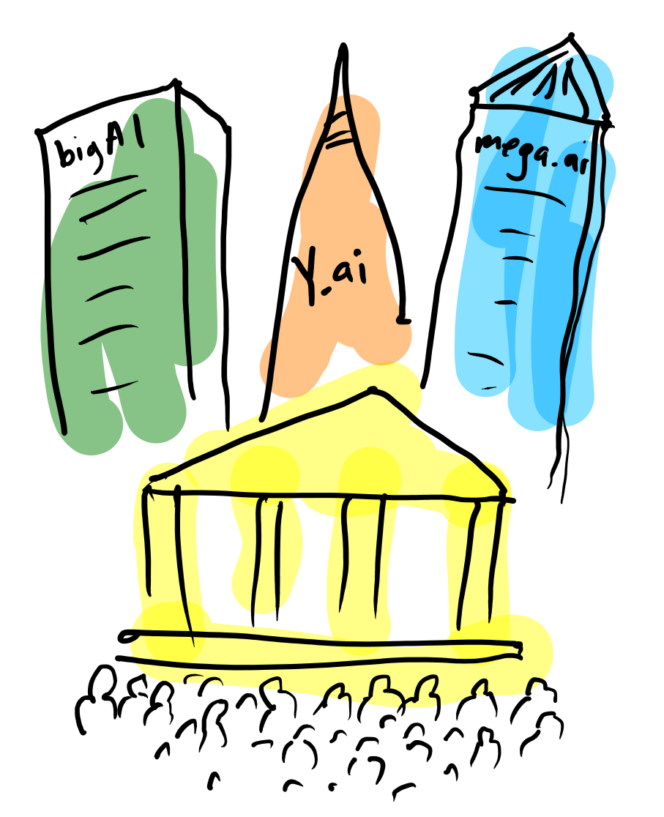
Seven Theses Against Viewpoint Diversity
Demands for “viewpoint diversity,” a pillar of the Right’s strategy to remake higher education, collide with the pursuit of truth.

Innovative Time Strategies for Schools | Unlocking Time
Explore free resources about innovative time strategies to fuel student-centered learning in schools -- includes tools, case studies and opportunities to dig deeper.

Gestalte die Zukunft durch Innovation und Design Thinking | HPI d-school
Entwickle innovative Produkte und Services an der Schnittstelle von Mensch und Technologie und gestalte die digitale Transformation. Komme zur HPI d-school!

I’m collecting visions of the university at least ten years out (i.e, stories about equilibrium conditions, not short term fixes). What interests me is that the ones I’ve seen so far are compatible. Molly Worthen’s proposal for a technology fast has a radical title, but when you dig deeper +

Opinion | Why Universities Should Be More Like Monasteries (Published 2023)
www.nytimes.comThe Academy

Collection of ideas to do with academic institutions, including comments on trends, innovations and new policies, and common practices
Future of universities

Inspired by bsky.app/profile/tedunderwood.com/post…
doi.org

Making Slides

How to Run Surveys: A Guide to Creating Your Own Identifying Variation and Revealing the Invisible

How Heavily Are PhD Students Offloading Their Scientific Writing to AI? Evidence from US STEM PhD Dissertations

Berna Devezer (@devezer.bsky.social)
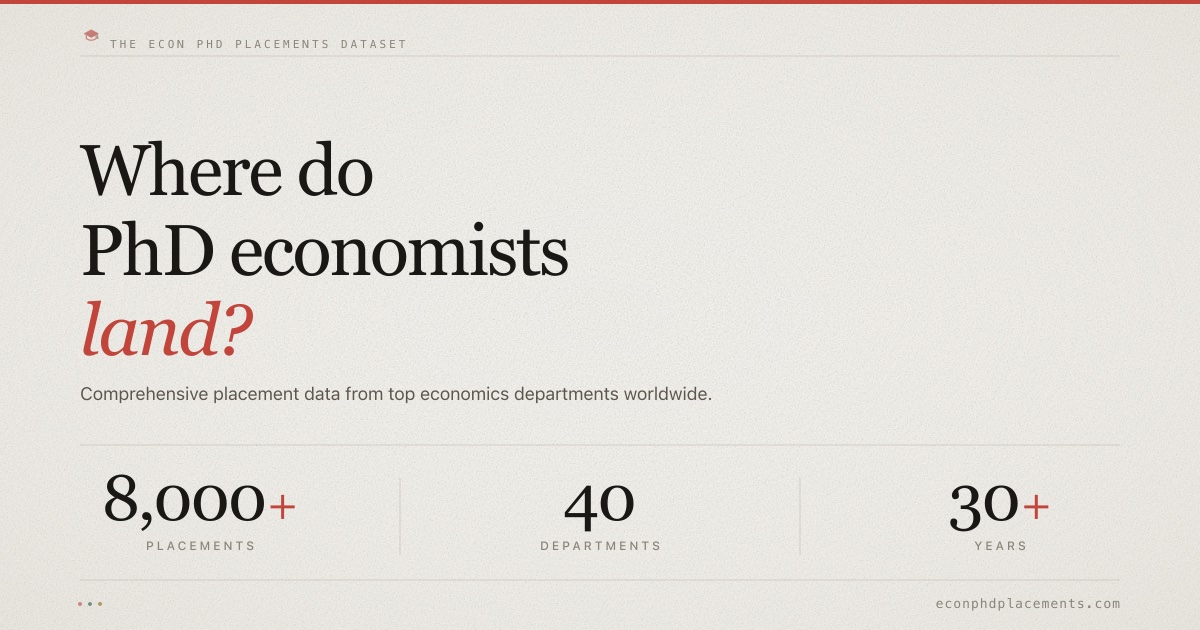
Where do PhD economists land?
College admissions insanity is substantially explained by this fact: The number of elite entry level jobs (e.g. McKinsey, Goldman Sachs…
Alternative Universities: Speculative Design for Innovation in Higher Education
Opinion | AI Is the Future. Higher Ed Should Shape It.

The University As We Know It Is Finished

Opinion | Why Universities Should Be More Like Monasteries (Published 2023)
