


Find answers to your health questions from experts you can trust. It's like having a friend who's a doctor — but here for you 24/7.
Fact Sheet 3: ME/CFS: Information for Medical Professionals
Fact Sheet 3: ME/CFS: Information for Medical Professionals Published December 2025 Link to pdf: ME/CFS: Information for Medical Professionals.pdf Discussion thread: Fact sheet #3: Information...
Meta’s New AI Asked for My Raw Health Data—and Gave Me Terrible Advice
Meta’s Muse Spark model offers to analyze users’ health data, including lab results. Beyond the obvious privacy risks, it’s not a capable stand-in for a real doctor.

Two Research Papers Published on PatientsLikeMe - SPM Blog
Two research papers were published this month on the Health 2.0 website, PatientsLikeMe. PatientsLikeMe is arguably the only “real” health social network online today, because it lets patients share actual […]
How to know if you can trust an AI’s answer to your question
One Google response asked for my medical history. Another answered a personal health question without asking who I was. Both replies came across as authoritative advice.
How to know if you can trust an AI’s answer to your question
One Google response asked for my medical history. Another answered a personal health question without asking who I was. Both replies came across as authoritative advice.
The Medium is the Message: How Non-Clinical Information Shapes Clinical Decisions in LLMs | Proceedings of the 2025 ACM Conference on Fairness, Accountability, and Transparency
There has been a growing interest in the HCI community to study Health, with particular focus in understanding healthcare practices and designing technologies to support and to enhance these practices. A majority of current health studies in HCI have ...

Social Uses of Personal Health Information Within PatientsLikeMe, an Online Patient Community: What Can Happen When Patients Have Access to One Another’s Data
Background: This project investigates the ways in which patients respond to the shared use of what is often considered private information: personal health data. There is a growing demand for patient access to personal health records. The predominant model for this record is a repository of all clinically relevant health information kept securely and viewed privately by patients and their health care providers. While this type of record does seem to have beneficial effects for the patient–physician relationship, the complexity and novelty of these data coupled with the lack of research in this area means the utility of personal health information for the primary stakeholders—the patients—is not well documented or understood. Objective: PatientsLikeMe is an online community built to support information exchange between patients. The site provides customized disease-specific outcome and visualization tools to help patients understand and share information about their condition. We begin this paper by describing the components and design of the online community. We then identify and analyze how users of this platform reference personal health information within patient-to-patient dialogues. Methods: Patients diagnosed with amyotrophic lateral sclerosis (ALS) post data on their current treatments, symptoms, and outcomes. These data are displayed graphically within personal health profiles and are reflected in composite community-level symptom and treatment reports. Users review and discuss these data within the Forum, private messaging, and comments posted on each other’s profiles. We analyzed member communications that referenced individual-level personal health data to determine how patient peers use personal health information within patient-to-patient exchanges. Results: Qualitative analysis of a sample of 123 comments (about 2% of the total) posted within the community revealed a variety of commenting and questioning behaviors by patient members. Members referenced data to locate others with particular experiences to answer specific health-related questions, to proffer personally acquired disease-management knowledge to those most likely to benefit from it, and to foster and solidify relationships based on shared concerns. Conclusions: Few studies examine the use of personal health information by patients themselves. This project suggests how patients who choose to explicitly share health data within a community may benefit from the process, helping them engage in dialogues that may inform disease self-management. We recommend that future designs make each patient’s health information as clear as possible, automate matching of people with similar conditions and using similar treatments, and integrate data into online platforms for health conversations.

‘Unbelievably dangerous’: experts sound alarm after ChatGPT Health fails to recognise medical emergencies
Study finds ChatGPT Health did not recommend a hospital visit when medically necessary in more than half of cases

Jason Crawford on Twitter / X
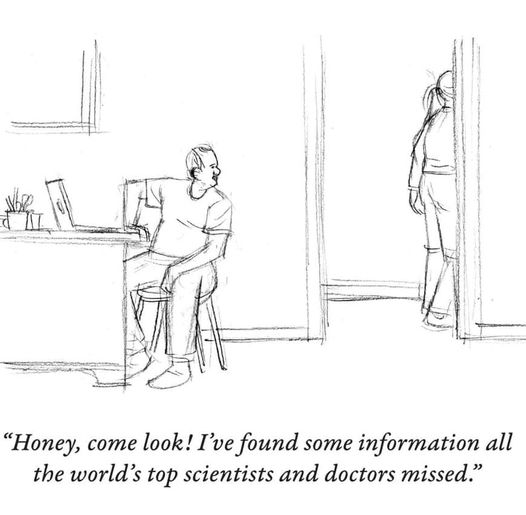
It's hard to find information that all the world's top scientists and doctors have missed.But it's not that hard, if you're intelligent, thoughtful, and diligent, to find information that the medical system has not yet caught up to—information that is not yet incorporated into… pic.twitter.com/HrgGzCUdX2— Jason Crawford (@jasoncrawford) September 22, 2024
KFF Tracking Poll on Health Information and Trust: Use of Social Media and AI For Health Information and Advice | KFF
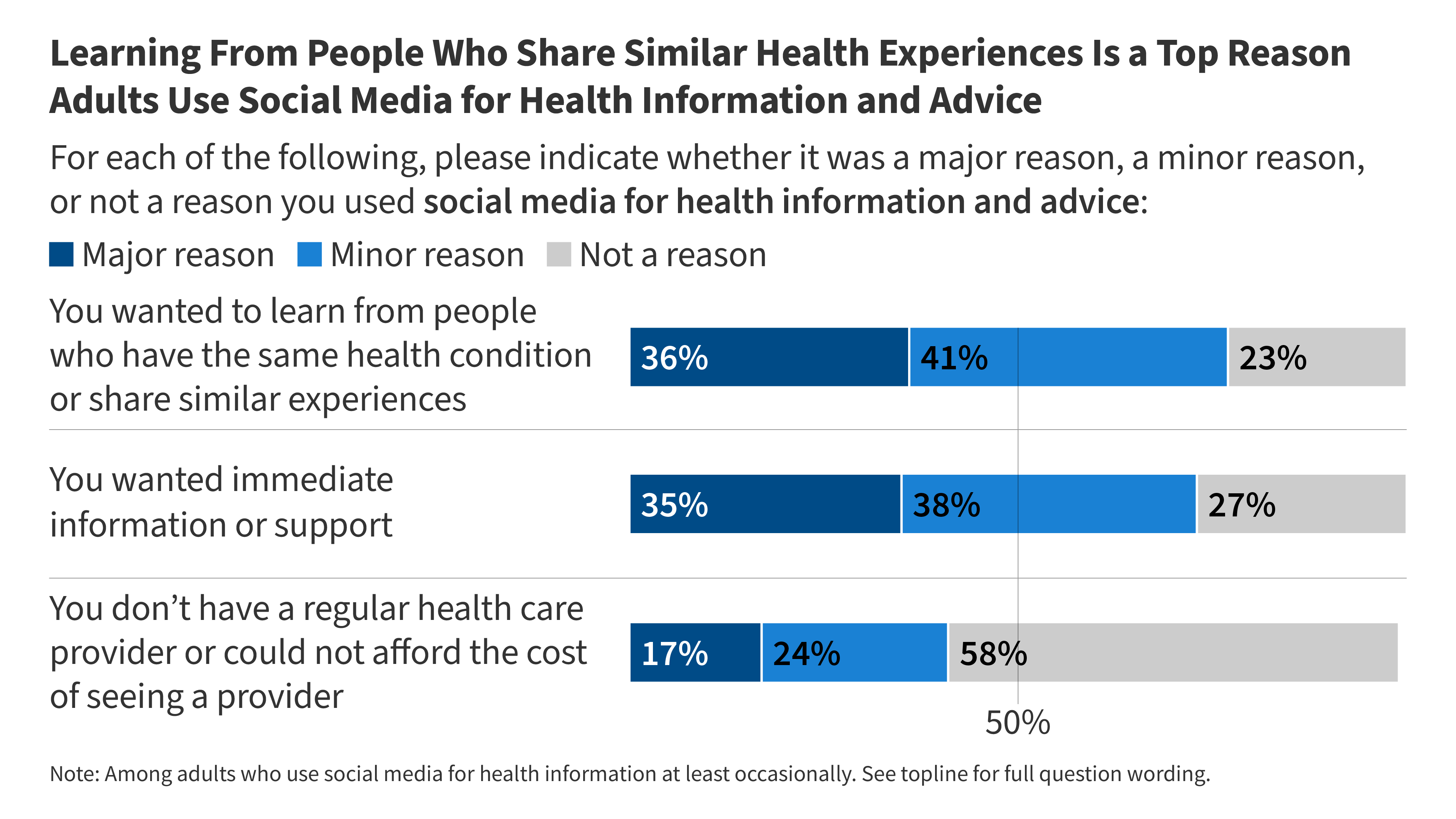
This poll finds that about 3 in 10 adults turn to social media for health information and advice at least monthly. Community connection and the need for immediate answers are the top reasons why people are turning to these tools. Slim majorities of those who use social media for health are confident they can tell what is true, and relatively few take steps to check the information they receive.
Nontraditional Narcissists
Chatbots Make Terrible Doctors, New Study Finds
Chatbots provided incorrect, conflicting medical advice, researchers found: “Despite all the hype, AI just isn't ready to take on the role of the physician.”

Launching Health in ChatGPT
Health in ChatGPT now lets eligible U.S. users securely connect medical records and Apple Health to get more personalized insights and better understand their health.

Home | Your Local Epidemiologist
Join 365k+ readers getting accurate, unfiltered, and easy-to-digest information on the rapidly changing public health landscape, so you can feel secure in making important health decisions for you and your family.
KFF Tracking Poll on Health Information and Trust: Use of AI For Health Information and Advice | KFF
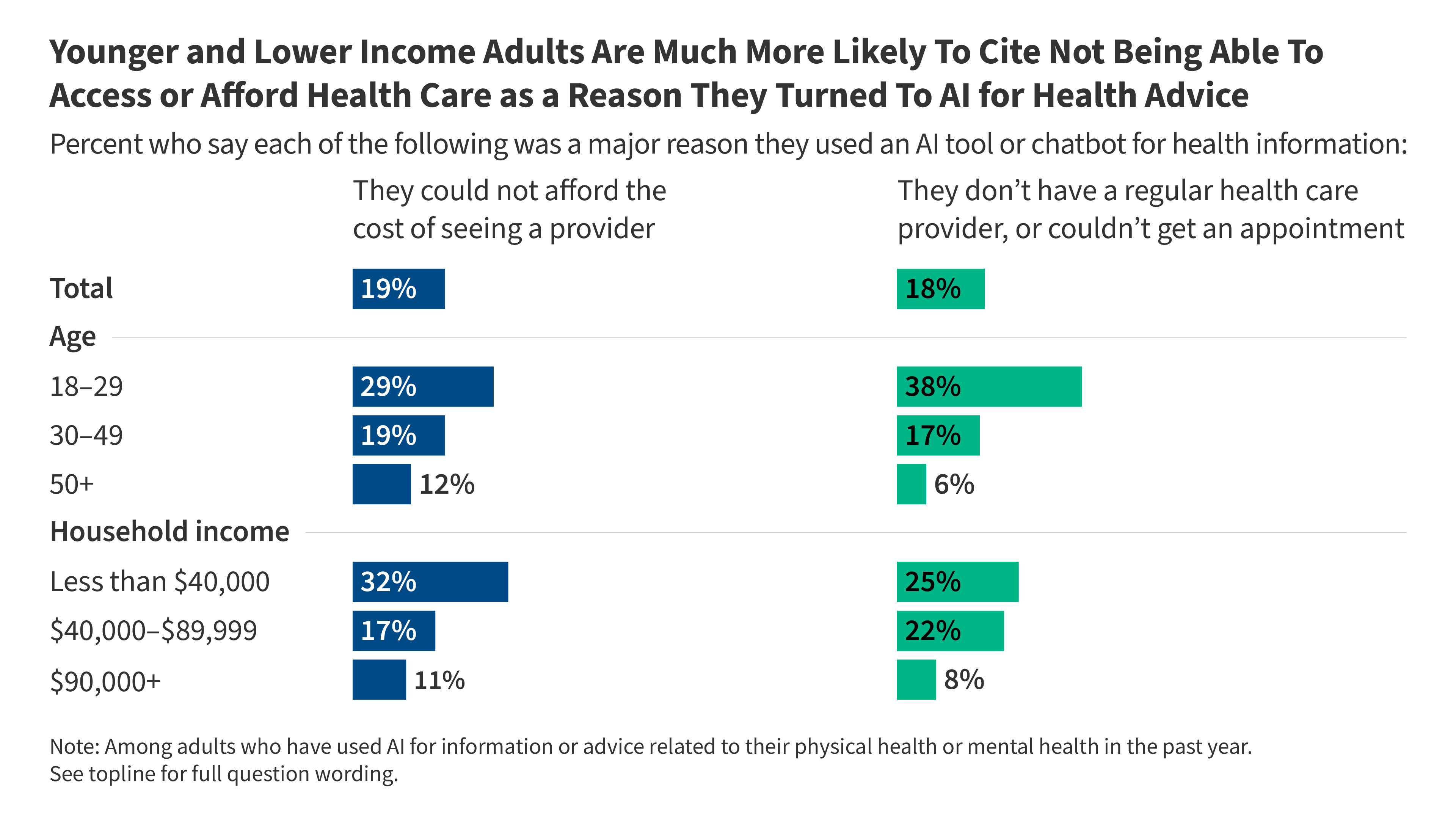
This poll finds that about as many adults are turning to AI for health information as social media, with health care costs and access driving many users, particularly younger users.
Prompting My Way Through Cancer
ChatGPT didn’t replace my care team, but it did make me a better patient.