
The human-centric approach to data is aimed at a fair, sustainable, and prosperous digital society. In such a society, people get value from their data and set the agenda on how it is used. And for organisations, the ethical use of data is always the most attractive option.
Data Feminism
Today, data science is a form of power. It has been used to expose injustice, improve health outcomes, and topple governments. But it has also been used to d...
Data Feminism
A new way of thinking about data science and data ethics that is informed by the ideas of intersectional feminism.Today, data science is a form of power. I
Data Feminism
A new way of thinking about data science and data ethics that is informed by the ideas of intersectional feminism.

Living in Data: A Citizen's Guide to a Better Information Future (Paperback)
Jer Thorp’s analysis of the word “data” in 10,325 New York Times stories written between 1984 and 2018 shows a distinct trend: among the words most closely associated with “data,” we find not only its classic companions “information” and “digital,” but also a variety of new neighbors—from “scandal” and “misinformation” to “ethics,” “friends,” and “play.”To live in data in the twenty-first century

Nonrivalry and the Economics of Data
(September 2020) - Data is nonrival: a person's location history, medical records, and driving data can be used by many firms simultaneously. Nonrivalry leads to increasing returns. As a result, there may be social gains to data being used broadly across firms, even in the presence of privacy considerations. Fearing creative destruction, firms may choose to hoard their data, leading to the inefficient use of nonrival data. Giving data property rights to consumers can generate allocations that are close to optimal. Consumers balance their concerns for privacy against the economic gains that come from selling data broadly.
Personal data storage is an idea whose time has come
Data Ownership as a conversation changes when data resides primarily with people-governed institutions rather than corporations.

Data Minimisation: a Language-Based Approach (Long Version)
Data minimisation is a privacy-enhancing principle considered as one of the pillars of personal data regulations. This principle dictates that personal data collected should be no more than...

Should We Treat Data as Labor? Moving Beyond “Free”
Should We Treat Data as Labor? Moving beyond "Free" by Imanol Arrieta-Ibarra, Leonard Goff, Diego Jiménez-Hernández, Jaron Lanier and E. Glen Weyl. Published in volume 108, pages 38-42 of AEA Papers and Proceedings, May 2018, Abstract: In the digital economy, user data is typically treated as capi...
Linked Data is a Political Agenda
What makes something data?
This is a question I posted on BlueSky on Friday 11/21/25, inspired by a talk I recently attended about evaluation of “AI” systems. I think…

The Limits of Data
Policymakers want to make decisions based on clear data, but important factors are lost when we rely solely on data. A philosopher writes:

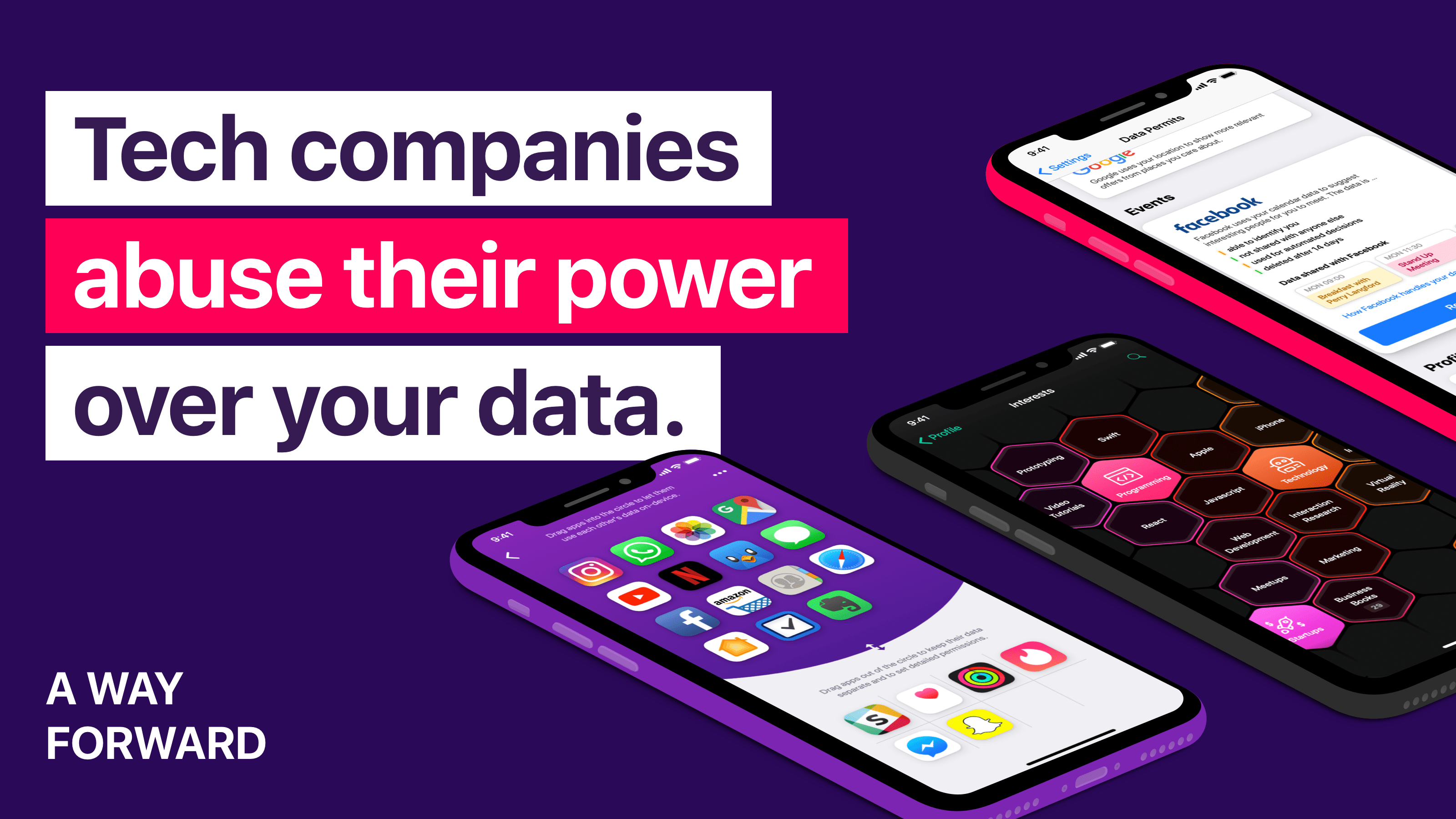
Rethinking how technology uses our personal data
This essay explores visually how keeping data and AI on‑device could empower not only users, but also companies.
Feminist Data Manifest-No
1. We refuse to operate under the assumption that risk and harm associated with data practices can be bounded to mean the same thing for everyone, everywhere, at every time. We commit to acknowledging how historical and systemic patterns of violence and exploitation produce differential vulnerabilities for communities.
Can “Conscious Data Contribution” Help Users to Exert “Data Leverage” Against Technology Companies?
Tech users currently have limited ability to act on concerns regarding the negative societal impacts of large tech companies. However, recent work suggests that users can exert leverage using their role in the generation of valuable data, for instance by withholding their data contributions to intelligent technologies. We propose and evaluate a new means to exert this type of leverage against tech companies: "conscious data contribution" (CDC).
Open North – Building trust in data, for the common good
Open North is a not-for-profit organization dedicated to advancing the common good. Working alongside governments and civic-minded organizations of all sizes, we provide data expertise to enhance decision-making, drive innovation, optimize public and civic services, and address society's most pressing challenges. Our work focuses on building the capacity of organizations to make better decisions about managing their data so that it is useful, actionable, secure, and trustworthy throughout its entire lifecycle.
We Need A New Kind Of Data Rights
Associational data rights would empower communities to reclaim power from Big Tech