


A compilation of facts and figures surrounding policing, the criminal justice system, incarceration, and more.
Criminal Justice Expenditures: Police, Corrections, and Courts
Police expenditures include spending on police, sheriffs, state highway patrols, and other governmental departments charged with protecting public safety.Cor…
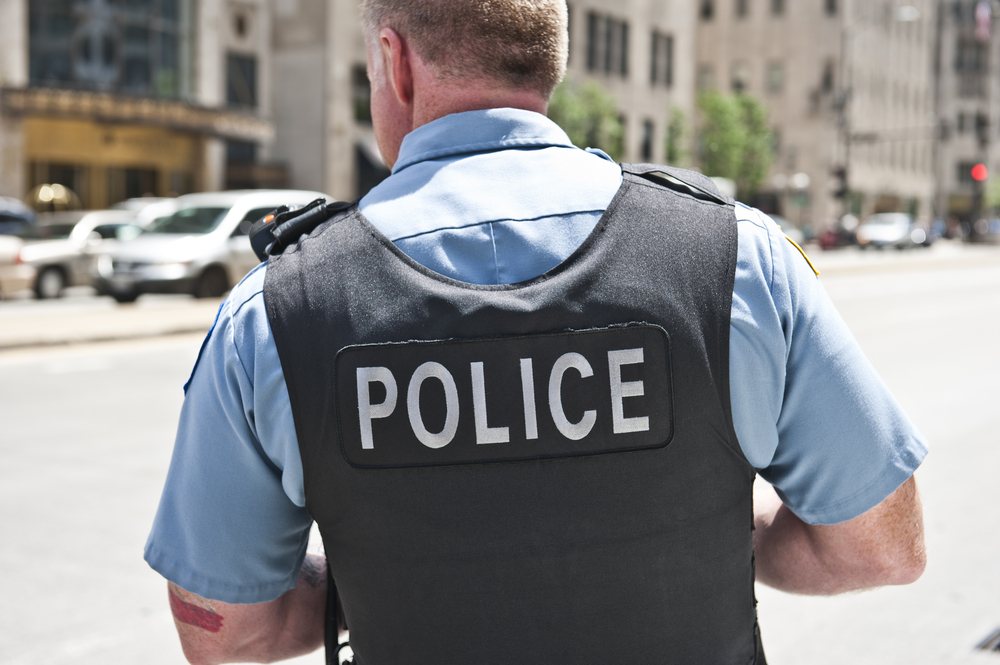
The Henry A. Wallace Police Crime Database
The Police Crime Database includes summary information on 20,711 criminal arrest cases from the years 2005-2021 involving 16,758 individual nonfederal sworn law enforcement officers, each of whom were charged with one or more crimes. The arrested officers were employed by 5,466 state, local, and special law enforcement agencies located in 1,987 counties and independent cities in all 50 states and the District of Columbia.
What the latest research tells us about racial bias in policing
What we know, and importantly don't know, about the latest research on racial bias in policing.
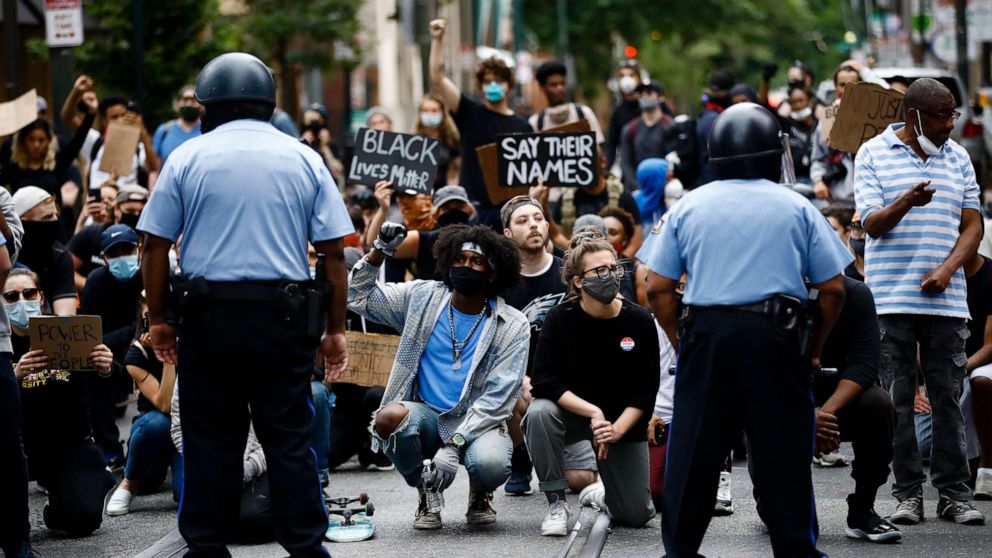
Predictive Policing and the Politics of Patterns
Abstract Patterns are the epistemological core of predictive policing. With the move towards digital prediction tools, the authority of the pattern is rearticulated and reinforced in police work. Based on empirical research about predictive policing software and practices, this article puts the authority of patterns into perspective. Introducing four ideal-typical styles of pattern identification, we illustrate that patterns are not based on a singular logic, but on varying rationalities that give form to and formalize different understandings about crime. Yet, patterns render such different modes of reasoning about crime, and the way in which they feed back into policing cultures, opaque. Ultimately, this invites a stronger reflection about the political nature of patterns.

Predictive Policing Explained
Attempts to forecast crime with algorithmic techniques could reinforce existing racial biases in the criminal justice system.

Artificial Intelligence, Predictive Policing, and Risk Assessment for Law Enforcement
There are widespread concerns about the use of artificial intelligence in law enforcement. Predictive policing and risk assessment are salient examples. Worries include the accuracy of forecasts that guide both activities, the prospect of bias, and an apparent lack of operational transparency. Nearly breathless media coverage of artificial intelligence helps shape the narrative. In this review, we address these issues by first unpacking depictions of artificial intelligence. Its use in predictive policing to forecast crimes in time and space is largely an exercise in spatial statistics that in principle can make policing more effective and more surgical. Its use in criminal justice risk assessment to forecast who will commit crimes is largely an exercise in adaptive, nonparametric regression. It can in principle allow law enforcement agencies to better provide for public safety with the least restrictive means necessary, which can mean far less use of incarceration. None of this is mysterious. Nevertheless, concerns about accuracy, fairness, and transparency are real, and there are tradeoffs between them for which there can be no technical fix. You can't have it all. Solutions will be found through political and legislative processes achieving an acceptable balance between competing priorities.

Artificial Intelligence, Predictive Policing, and Risk Assessment for Law Enforcement
There are widespread concerns about the use of artificial intelligence in law enforcement. Predictive policing and risk assessment are salient examples. Worries include the accuracy of forecasts that guide both activities, the prospect of bias, and an apparent lack of operational transparency. Nearly breathless media coverage of artificial intelligence helps shape the narrative. In this review, we address these issues by first unpacking depictions of artificial intelligence. Its use in predictive policing to forecast crimes in time and space is largely an exercise in spatial statistics that in principle can make policing more effective and more surgical. Its use in criminal justice risk assessment to forecast who will commit crimes is largely an exercise in adaptive, nonparametric regression. It can in principle allow law enforcement agencies to better provide for public safety with the least restrictive means necessary, which can mean far less use of incarceration. None of this is mysterious. Nevertheless, concerns about accuracy, fairness, and transparency are real, and there are tradeoffs between them for which there can be no technical fix. You can't have it all. Solutions will be found through political and legislative processes achieving an acceptable balance between competing priorities.
Going beyond the “common suspects”: to be presumed innocent in the era of algorithms, big data and artificial intelligence
This article explores the trend of increasing automation in law enforcement and criminal justice settings through three use cases: predictive policing, machine evidence and recidivism algorithms. The focus lies on artificial-intelligence-driven tools and technologies employed, whether at pre-investigation stages or within criminal proceedings, in order to decode human behaviour and facilitate decision-making as to whom to investigate, arrest, prosecute, and eventually punish. In this context, this article first underlines the existence of a persistent dilemma between the goal of increasing the operational efficiency of police and judicial authorities and that of safeguarding fundamental rights of the affected individuals. Subsequently, it shifts the focus onto key principles of criminal procedure and the presumption of innocence in particular. Using Article 6 ECHR and the Directive (EU) 2016/343 as a starting point, it discusses challenges relating to the protective scope of presumption of innocence, the burden of proof rule and the in dubio pro reo principle as core elements of it. Given the transformations law enforcement and criminal proceedings go through in the era of algorithms, big data and artificial intelligence, this article advocates the adoption of specific procedural safeguards that will uphold rule of law requirements, and particularly transparency, fairness and explainability. In doing so, it also takes into account EU legislative initiatives, including the reform of the EU data protection acquis, the E-evidence Proposal, and the Proposal for an EU AI Act. Additionally, it argues in favour of revisiting the protective scope of key fundamental rights, considering, inter alia, the new dimensions suspicion has acquired.

Going beyond the “common suspects”: to be presumed innocent in the era of algorithms, big data and artificial intelligence
This article explores the trend of increasing automation in law enforcement and criminal justice settings through three use cases: predictive policing, machine evidence and recidivism algorithms. The focus lies on artificial-intelligence-driven tools and technologies employed, whether at pre-investigation stages or within criminal proceedings, in order to decode human behaviour and facilitate decision-making as to whom to investigate, arrest, prosecute, and eventually punish. In this context, this article first underlines the existence of a persistent dilemma between the goal of increasing the operational efficiency of police and judicial authorities and that of safeguarding fundamental rights of the affected individuals. Subsequently, it shifts the focus onto key principles of criminal procedure and the presumption of innocence in particular. Using Article 6 ECHR and the Directive (EU) 2016/343 as a starting point, it discusses challenges relating to the protective scope of presumption of innocence, the burden of proof rule and the in dubio pro reo principle as core elements of it. Given the transformations law enforcement and criminal proceedings go through in the era of algorithms, big data and artificial intelligence, this article advocates the adoption of specific procedural safeguards that will uphold rule of law requirements, and particularly transparency, fairness and explainability. In doing so, it also takes into account EU legislative initiatives, including the reform of the EU data protection acquis, the E-evidence Proposal, and the Proposal for an EU AI Act. Additionally, it argues in favour of revisiting the protective scope of key fundamental rights, considering, inter alia, the new dimensions suspicion has acquired.
Predictive Policing and the Politics of Patterns
Abstract. Patterns are the epistemological core of predictive policing. With the move towards digital prediction tools, the authority of the pattern is rea
2018 Update on Prisoner Recidivism: A 9-Year Follow-up Period (2005-2014) | Bureau of Justice Statistics
Examines the recidivism patterns of former prisoners during a 9-year follow-up period.
Mississippi public defenders could curb incarcerations - Mississippi Today
What Mississippi needs is a state-level public defender mandate establishing clear, enforceable standards that apply in every jurisdiction: standards for compensation and expenses, for workload, for when counsel first meets a client, for continuity of representation through all stages of a case.

How the LAPD and Palantir Use Data to Justify Racist Policing
In a new book, a sociologist who spent months embedded with the LAPD details how data-driven policing techwashes bias.

How You Start is How You Finish? The Slave Patrol and Jim Crow Origins of Policing
Though history books may say otherwise, policing in the United States has its roots in the slave patrols in the South. The institution of policing, and the larger justice system, must reconcile its past to evolve away from its racist roots.

Police Records - CalMatters
Search California public records about law enforcement violence and misconduct.
Police Abolition | The Paper Pilot
The Paper Pilot's digital garden of thoughts on philosophy, politics, and sociology