

The sustainable University – structures, individuals and questions around institutional transformation
Stefan Collini · Squadrons of Pigs: Bonfire of the Universities
The problems with Britain’s universities are systemic and deep-rooted, not just local or contingent. Yet political and...
METACOG
SMILE: Co-creation of a joint Master's Degree in Sustainable Management in Life Sciences & Engineering, combining interdisciplinary training
Open Source Sustainability
The status quo in open source is broken. Corporations profit hugely from open source libraries, and give almost nothing back, which leans to burnout which is bad for everyone.

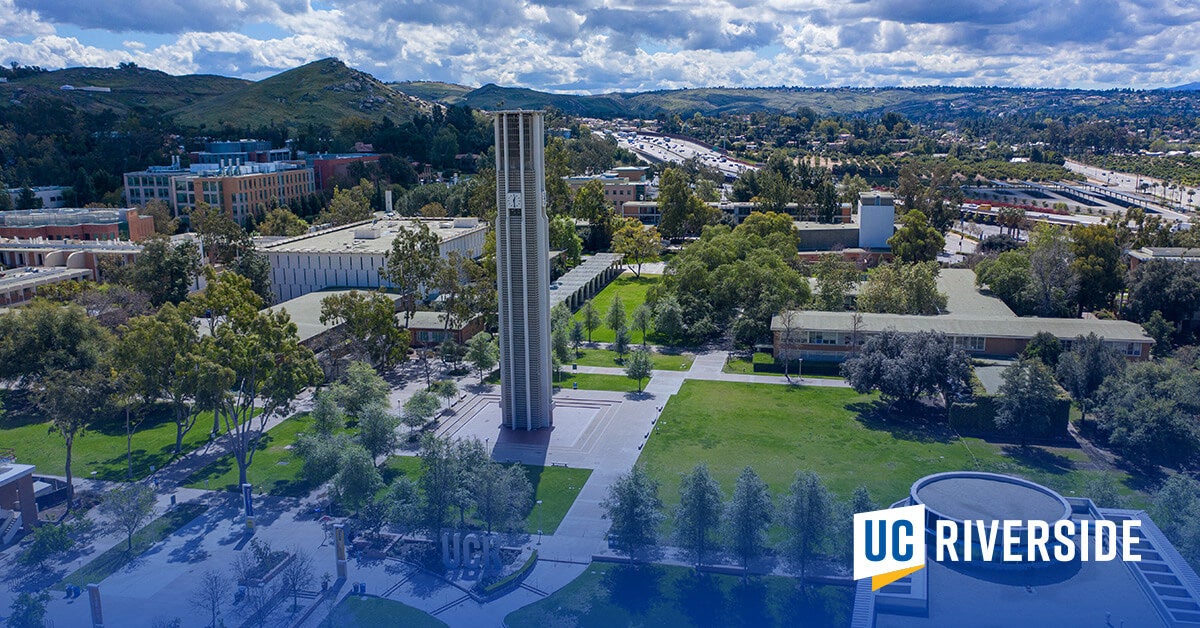
Home | University of California, Riverside
UC Riverside is the nation’s leader for social mobility with a diverse & inclusive community pioneering research with impacts around the globe.

Academic institution
An academic institution is an educational institution dedicated to education and research, which grants academic degrees. See also academy and university.

Universities on Fire: Higher Education in the Climate Crisis
Scientists agree that we are on the precipice of a global climate crisis. How will it transform colleges and universities?Winner of the Frederic W. Ness Book Award by the Association of American Colleges and UniversitiesIn 2019, intense fires in the San Francisco Bay Area closed universities and drove afflicted people to shelter at other campuses. At the same time, extraordinary fires ravaged eastern Australia. Several universities responded by promising material and research support to damaged businesses while also hosting refugees and emergency response teams in student residence halls. This was an echo of the devastation wreaked by Hurricane Katrina on Tulane University in 2005.In Universities on Fire, futurist Bryan Alexander explores higher education during an age of unfolding climate crisis. Powered by real-world examples and the latest research, Alexander assesses practical responses and strategies by surveying contemporary programs and academic climate research from around the world. He establishes a model of how academic institutions may respond and offers practical pathways forward for higher education. How will the two main purposes of education—teaching and research—change as the world heats up? Alexander positions colleges and universities in the broader social world, from town-gown relationships to connections between how campuses and civilization as a whole respond to this epochal threat.Current studies of climate change trace the likely implications across a range of domains, from agriculture to policy, urban design, technology, culture, and human psychology. However, few books have predicted or studied the effects of the climate crisis on colleges and universities. By connecting climate research to a deep, futures-informed analysis of academia, Universities on Fire explores how climate change will fundamentally reshape higher education.

The Emotional Toll of Living With Institutional Betrayal - Dame Magazine
What happens to us when institutions protect power instead of people? From Epstein to ICE, institutional betrayal is inflicting trauma and moral injury.
Open source sustainability | TechCrunch
Open source sustainability has been nothing short of an oxymoron. Engineers around the world pour their sweat and frankly, their hearts into these passion

Alternative Universities: Speculative Design for Innovation in Higher Education
Imagining the universities of the future.How can we re-envision the university? Too many examples of what passes for educational innovation today—MOOCs especially—focus on transactions, on questions of delivery. In Alternative Universities, David J. Staley argues that modern universities suffer from a poverty of imagination about how to reinvent themselves. Anyone seeking innovation in higher education today should concentrate instead, he says, on the kind of transformational experience universities enact. In this exercise in speculative design, Staley proposes ten models of innovation in higher education that expand our ideas of the structure and scope of the university, suggesting possibilities for what its future might look like. What if the university were designed around a curriculum of seven broad cognitive skills or as a series of global gap year experiences? What if, as a condition of matriculation, students had to major in three disparate subjects? What if the university placed the pursuit of play well above the acquisition and production of knowledge? By asking bold "What if?" questions, Staley assumes that the university is always in a state of becoming and that there is not one "idea of the university" to which all institutions must aspire. This book specifically addresses those engaged in university strategy—university presidents, faculty, policy experts, legislators, foundations, and entrepreneurs—those involved in what Simon Marginson calls "university making." Pairing a critique tempered to our current moment with an explanation of how change and disruption might contribute to a new "golden age" for higher education, Alternative Universities is an audacious and essential read.

Climbing the Ivory Tower: How Socio-Economic Background Shapes Academia
Founded in 1920, the NBER is a private, non-profit, non-partisan organization dedicated to conducting economic research and to disseminating research findings among academics, public policy makers, and business professionals.

Equity, Scalability, and Sustainability of Data Science Infrastructure
We seek to understand the current state of equity, scalability, and sustainability of data science education infrastructure in both the U.S. and Canada. Our analysis of the technological, funding, and organizational structure of four types of institutions shows an increasing divergence in the ability of universities across the United States to provide students with accessible data science education infrastructure, primarily JupyterHub.
Opinion | Why Universities Should Be More Like Monasteries (Published 2023)
College students need a taste of the monk’s life.

We could be building a better world with our students. Why are we disempowering them instead?
And why did our constructionism impulse die when it was most needed?
University science in the US needs a coherent plan
The Trump administration continues to degrade America’s scientific establishment, causing widespread harm to the country’s broader interests and well-being. Last week, the Association of American Universities reported that graduate student enrollment in major research universities, which award half of all doctorate degrees in the United States, is down 15% compared to a year ago. And no wonder, considering the effect of recent immigration policies that deter international students and the financial uncertainties that universities are facing given the unpredictable nature of federal funding. The ability to support new doctoral students depends heavily on research grants, and any responsible administrator would be cautious about making commitments to students they can’t keep. This is discouraging to the scientific community but should be alarming to everyone.
