


I’m obsessed with the craft of writing. I write every day, I read about the craft often, and in my...
Toward a durable writing stack – Writings and rehearsals by Nathan Schneider
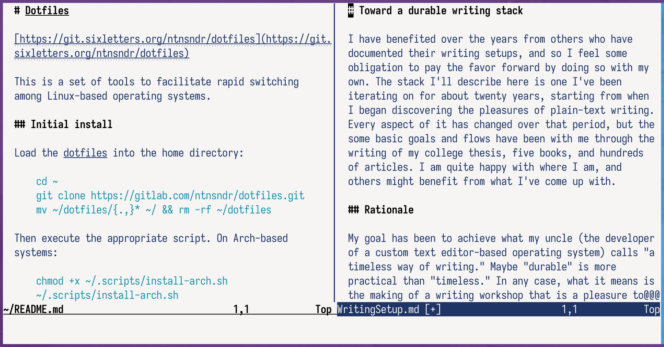
I have benefited over the years from others who have documented their writing setups, and so I feel some obligation to pay the favor forward by doing so with my own. The stack I’ll describe here is one I’ve been iterating on for about twenty years, starting from when I began discovering the pleasures of plain-text writing. Every aspect of it has changed over that period, but the some basic goals and flows have been with me through the writing of my college thesis, five books, and hundreds of articles. I am quite happy with where I am, and others might benefit from what I’ve come up with.
Writing Is Thinking
When you write about your work, it makes all of us smarter for the effort, including you. Done well, this kind of sharing means you’re contributing signal, instead of noise. But writers are made, n…

Good Taste — ADVICE TO WRITERS
Nobody tells this to people who are beginners, I wish someone told me. All of us who do creative work, we get into it because we have good taste. But there is this gap. For the first couple years you make stuff, it’s just not that good. It’s trying to be good, it has potential, but it’s not. But you

On Writing #3
Periodically I like to gather various observations about writing, and share my perspective.


Wherein I Find Myself Writing About Writing
Most everyone finds writing to be challenging (especially those who say they enjoy it). This is because writing is an intentional, thoughtful act. This is as it should be, but “AI” has recently exacerbated the misbelief that writing is simply an output. In fact, it's a creative process that has merit in and of itself.

Today · Standard Reader
Fresh writing from the publications you subscribe to, every day.
From bench to bot: Why AI-powered writing may not deliver on its promise
Efficiency isn’t everything. The cognitive work of struggling with prose may be a crucial part of what drives scientific progress.

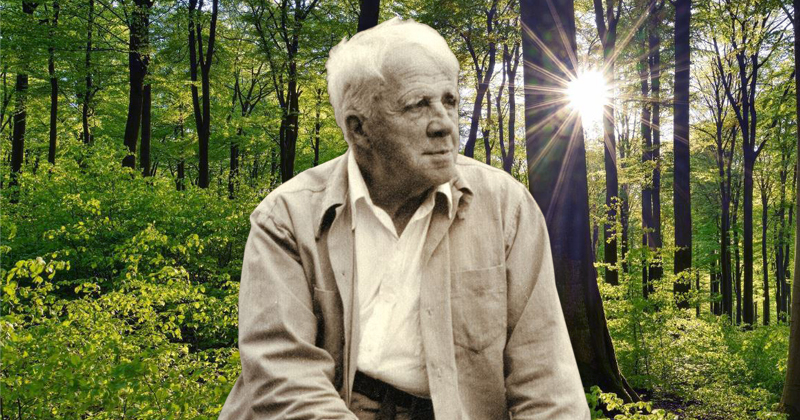
The best writing advice I’ve ever read comes from Robert Frost.
I write prose, not poetry, but the most helpful piece of advice I’ve ever read was written by a poet: Robert Frost, who was born 147 years ago today. In the second, expanded edition of his Co…
Creative Reading: Scaffolding Reading for Transformation
Reading augmentation systems increasingly help readers process text at scale. While these tools address real constraints of time and cognitive load, they often implicitly frame reading as information transmission, or "reading to discard," delegating interpretation and effort to the machine. Yet this delegation changes the outcome of reading. For example, in scholarly reading, deciding what a research text implies and why it matters is central to the work of scholarly production. We propose creative reading as an alternative goal: reading augmentation that supports readers in creating both readings and themselves as readers. By putting literary and narrative theories into conversation with scholarly sensemaking and creativity support, we present a provocation-oriented design space for valuing the process of reading as a way of preserving a plurality of readings and transforming readers over time.

Creative Reading: Scaffolding Reading for Transformation
Reading augmentation systems increasingly help readers process text at scale. While these tools address real constraints of time and cognitive load, they often implicitly frame reading as information transmission, or "reading to discard," delegating interpretation and effort to the machine. Yet this delegation changes the outcome of reading. For example, in scholarly reading, deciding what a research text implies and why it matters is central to the work of scholarly production. We propose creative reading as an alternative goal: reading augmentation that supports readers in creating both readings and themselves as readers. By putting literary and narrative theories into conversation with scholarly sensemaking and creativity support, we present a provocation-oriented design space for valuing the process of reading as a way of preserving a plurality of readings and transforming readers over time.
Writers Who Use AI Are Not Real Writers
Dorothy Parker famously (but probably not really) said, “I hate to write, but I love having written,” which is a sentiment I don’t largely understand or agree with in the broader …
An open letter to Grammarly and other plagiarists, thieves and slop merchants
To everyone at Grammarly, I am writing a book right now, a really challenging endeavor that no doubt someone in Silicon Valley will think it’s fine to steal the day it’s published. I’ve been a professional writer for decades, even though the number of ways to make
“The task that generative A.I. has been most successful at is lowering our expectations, both of the things we read and of ourselves when we write anything for others to read.” — Ted Chiang

Why A.I. Isn’t Going to Make Art
www.newyorker.com