


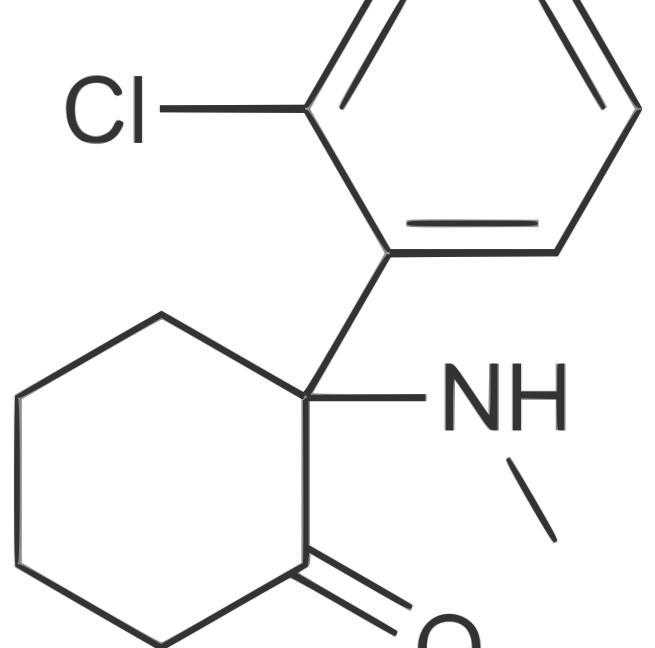
Researchers worry ketamine may be 'easily overlooked' by doctors and people considering MAID for major depression when the option becomes legal
New studies zero in on roots of depression and why ketamine reverses it
Understanding the biology may help us develop more targeted therapies.
Canadian patients fighting for psilocybin access sue federal government
‘This is the landmark case that is going to legalize psychedelics in Canada’

Is forced treatment for the mentally ill ever humane? | Hacker News
When on her medications, she is a relatively pleasant & rational person, usually able to hold an entry-level job.
High Rates of Suicide, Depression Linked to Farmers' Use of Pesticides
There is growing evidence that long-term pesticide use is linked to to alterations in farmers' mental health

Suicide Data Reveal New Intervention Spots, Such as Motels and Animal Shelters
Patterns show places where people who intend to kill themselves go—and give health workers better chances to stop them

Drug Harm Reduction - Platform | The Australian Greens
Drug use occurs in all parts of our community. It affects people of all ages and backgrounds.
Study Paints Somber Picture of U.S. Mental Health Status and Access to Care
/PRNewswire-USNewswire/ -- More Americans than ever before suffer from serious psychological distress, and the country's ability to meet the growing demand for...

Little evidence that chemical imbalance causes depression, UCL scientists find
Researchers question use of antidepressants, prescribed to one in six UK adults
The Highest Suicide Rate in the World
If Nunavut, the semi-autonomous Canadian territory that is home to roughly 28,000 indigenous Inuit people, were an independent country, it would have the highest suicide rate in the world. The suicide rate is ten times higher than the rest of Canada and seven times higher than the US. When I visited Nunavut’s capital, Iqaluit, in July, virtually every Inuit I met had lost at least one relative to suicide, and some recounted as many as five or six family suicides, plus those of friends, coworkers, and other acquaintances. Three people in my small circle of contacts lost someone close to them to suicide during my nine-day visit. Acquaintances would direct my attention to passers-by on the street: “his older brother too,” “his son.” Almost one third of Nunavut Inuit have attempted suicide, and most Inuit I met confided, without my asking, that they had done so at least once.

A British Nurse Was Found Guilty of Killing Seven Babies. Did She Do …
archived 14 May 2024 12:57:06 UTC

The Global Decline in the Mental Health of the Young
One of the major findings in wellbeing research until recently was that happiness was U-shaped by age and unhappiness hump-shaped by age. There was a midlife crisis — a finding reported in well over 600 published papers using data on 145 countries. It was present in both developing and developed countries. And it was persistent over time. The finding of a peak in ill-being in midlife was consistent with Anne Case and Angus Deaton’s work on mortality and the so-called “deaths of despair.”1 In the US in particular and to a lesser extent in other countries, White prime-aged individuals without a college degree had high death rates from suicide, drug overdoses, and cirrhosis of the liver. Drug overdose deaths in the US, for example, peaked at midlife ages. In 2023, the Centers for Disease Control and Prevention (CDC) reported that overdose death rates per 100,000 by age rose from 13.5 for 15-to-24-year-olds to 45.6 for 25-to-34-year-olds and 60.8 for 35-to-44-year-olds, and then declined to 53.3 for 45-to-54-year-olds, 49.2 for 55-to-64-year-olds, and 14.7 for those over the age of 65.2 The morbidity data matched the mortality data.

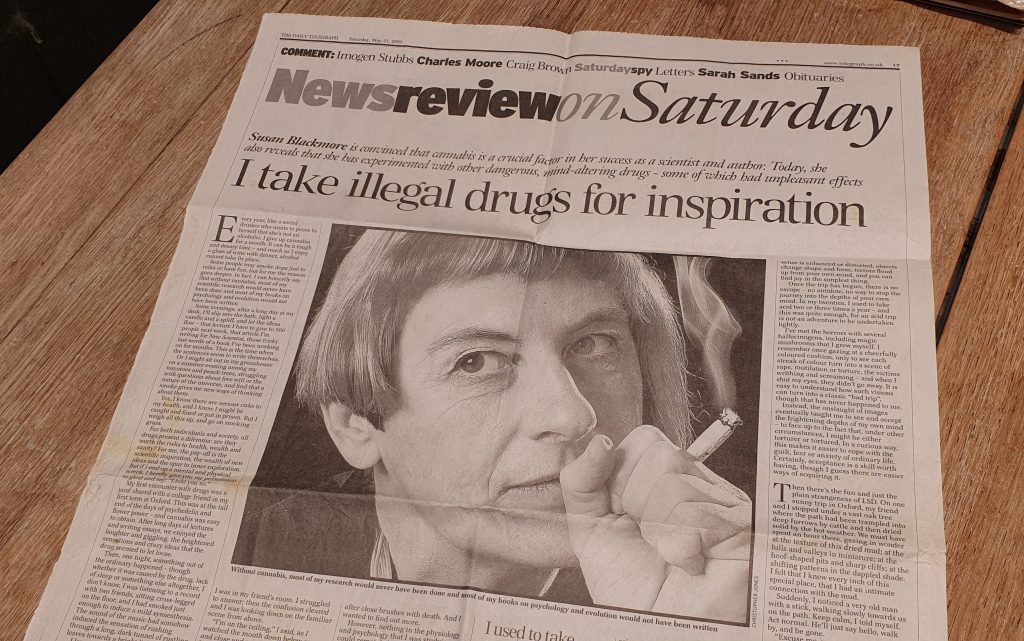
I take illegal drugs for inspiration - Dr Susan Blackmore
I take illegal drugs for inspiration Daily Telegraph, Saturday May 21st 2005, pp 17-18 (Note: This version is very slightly different from the published, edited, version) © Sue Blackmore 2005 Every year, like a social drinker who wants to prove to herself that she’s not an alcoholic, I give up cannabis for a month. It …
New Ketamine study 🧪. Abstract: ✅Ketamine "tablets were effective, safe & well tolerated" Actual results: ❌At primary endpoint of 13 weeks, 0 of 4 ketamine groups outperformed placebo /re remission ❌At 13 weeks, only 1 of 4 outperformed placebo /re response, with a beautiful p-value of 0.046 🤪

Extended-release ketamine tablets for treatment-resistant depression: a randomized placebo-controlled phase 2 trial - Nature Medicine
www.nature.comHas anyone looked at this paper more closely? I've seen many of my bachelor students refer to it when it comes to depressive disorders. Authors find worldwide depression rates doubled from 1990 to 2020, which seems like a lot. pubmed.ncbi.nlm.nih.gov/40313474/

Trends in Prevalent Cases and Disability-Adjusted Life-Years of Depressive Disorders Worldwide: Findings From the Global Burden of Disease Study From 1990 to 2021 - PubMed
pubmed.ncbi.nlm.nih.gov1. Just read about what (doesn't) work in suicide prevention in the new World Journal of Psychiatry (#1 impact factor). Unfortunately, authors refer to the outdated Barbui 2009 MA of observational studies on antidepressants, not to our update. onlinelibrary.wiley.com/doi/10.1002/wps.21284

Suicide prevention: what works, what might work, and what does not work
onlinelibrary.wiley.com
