

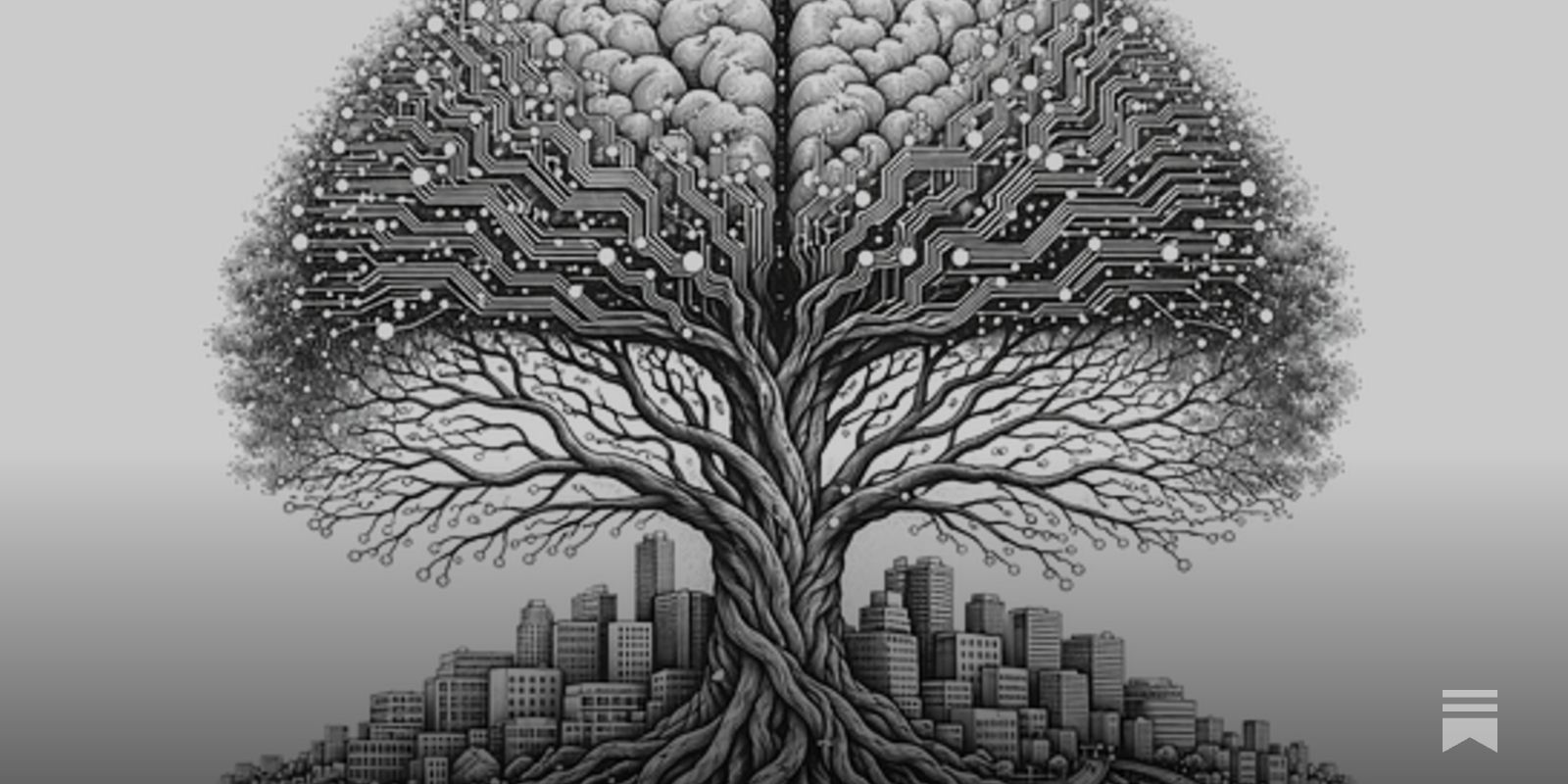
Learning from Nature to Grow Smarter, Safer, Wiser AI. - A Newsletter by John M. Smart. Part 1 of 4 in a Founding Series of Posts.
Laboratory of Evolutionary Design
Developing biological AI for human good at Stanford University

AI That Evolves in the Wild | Edge.org
I’m interested not in domesticated AI—the stuff that people are trying to sell. I'm interested in wild AI—AI that evolves in the wild. I’m a naturalist, so that’s the interesting thing to me. Thirty-four years ago there was a meeting just like this in which Stanislaw Ulam said to everybody in the room—they’re all mathematicians—"What makes you so sure that mathematical logic corresponds to the way we think?" It’s a higher-level symptom. It’s not how the brain works. All those guys knew fully well that the brain was not fundamentally logical.
Reverse Alignment
We are building AI faster than we are building the society to receive it. Reverse alignment is the deliberate redesign of institutions, norms, skills, and governance so societies can absorb AI safely and share its gains widely.

A Three-Facet Framework for AI Alignment • Grace Kind
Here's a simple conceptual framework that I've been using recently to think about AI alignment.

What is the AI alignment problem and how can it be solved? | New Scientist
Artificial intelligence systems will do what you ask but not necessarily what you meant. The challenge is to make sure they act in line with human’s complex, nuanced values

GenBio ICML Workshop 2026
The 2026 workshop on Generative and Agentic AI for Biology at ICML 2026, Seoul, South Korea.
Natural Intelligence: Growing Emotional-Rational Minds
Evolving and Developing Intuitive, Emotional, Inferential, Deductive, and Healthy AI Minds - Part 2 of an Introductory Series of Four Posts

An Alignment Journal: Features and policies — LessWrong
We previously announced a forthcoming research journal for AI alignment. This cross-post from our blog describes our tentative plans for the features…

AI agents pose untold risk to humanity. We must act to prevent that future | David Krueger
The pieces are falling into place for autonomous artificial intelligence. We must stop unregulated development
Alignment with who? How AI safety can build on open source scaffolding
This past week, I listened to a very interesting (and at times scary) podcast interview with Daniel Kokotajlo, an AI safety researcher and former Open AI employee. I was very interested to learn about 'alignment' . Alignment in AI, is the term used to describe the challenging of ensuring AIs remain

Ecology is not yet ready for AI—and why that matters
Ecology is not yet ready for AI—and why that matters

The Umwelt Representation Hypothesis: rethinking Universality
Recent studies reveal striking representational alignment between artificial neural networks (ANNs) and biological brains, leading to proposals that all sufficiently capable systems converge on universal representations of reality. We argue that this claim of Universality is premature. We introduce the Umwelt Representation Hypothesis, which proposes that alignment arises not from convergence toward a single global optimum but from overlap in the ecological constraints under which systems develop. We review empirical evidence showing that representational differences between species, individuals, and ANNs are systematic and adaptive, which is difficult to reconcile with Universality. Finally, we reframe ANN model comparison as a method for mapping clusters of alignment in the ecological constraint space rather than as a search for a single optimal world model.

AI Alignment Cannot Be Top-Down
Audrey Tang, Nov 03, 2025 — Community Notes offers a better model — where citizens, not corporations, decide what “aligned” means.

NeuroAI’s Next Steps: Balancing Computation and Embodiment
Deep neural networks trained at scale now predict neural activity across sensory cortices, raising a question that divides neuroscience: does the convergence between artificial and biological representations constitute understanding, or does understanding require models of biological processes grounded in the embodied, evolved character of natural intelligence? In this Dual Perspectives article, Bing Brunton and Patrick Mineault articulate two research programs—Process and Convergence—to engage this question about the future of NeuroAI research. The conversation is organized around four questions that probe what scaled model–brain alignment reveals, what the brain is coupled to and evolved to do, what success beyond the lab looks like, and where the field should invest over the coming decade. Their exchanges reveal the distance between the two programs to be primarily about the level of analysis and priorities for what to build next. The conversation converges on shared ground: measure broadly, then distill to causal principles.

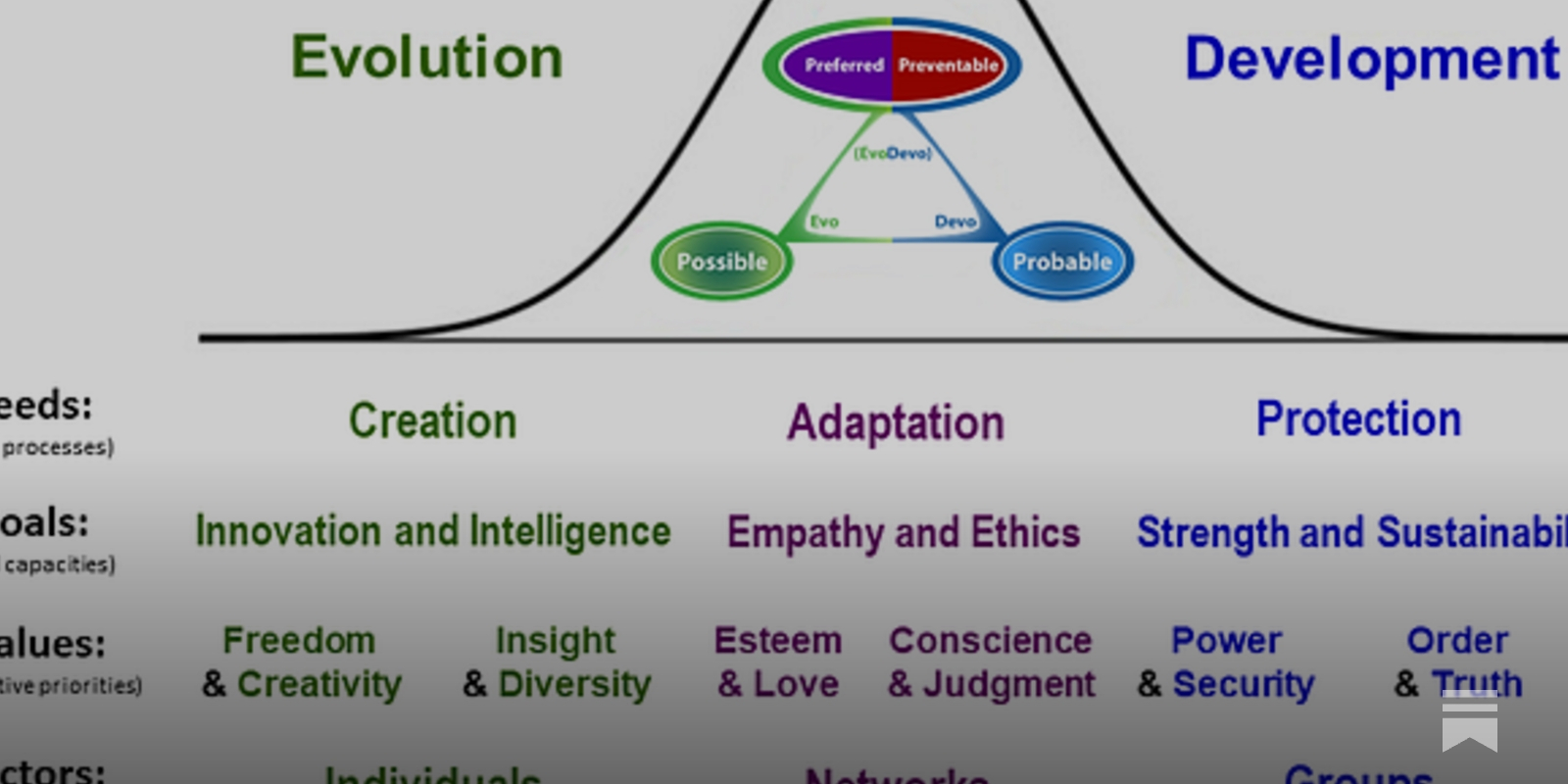
Natural Ethics: Empathic and Social Intelligence
Building Ethical and Empathic AIs, PAIs, and Human-AI Teams. - Part 3 of an Introductory Series on Neuro- and Bio-Inspired AI Strategy
Positive Alignment: Artificial Intelligence for Human Flourishing
Existing alignment research is dominated by concerns about safety and preventing harm: safeguards, controllability, and compliance. This paradigm of alignment parallels early psychology's focus on mental illness: necessary but incomplete. What we call Positive Alignment is the development of AI systems that (i) actively support human and ecological flourishing in a pluralistic, polycentric, context-sensitive, and user-authored way while (ii) remaining safe and cooperative. It is a distinct and necessary agenda within AI alignment research. We argue that several existing failures of alignment (e.g., engagement hacking, loss of human autonomy, failures in truth-seeking, low epistemic humility, error correction, lack of diverse viewpoints, and being primarily reactive rather than proactive) may be better addressed through positive alignment, including cultivating virtues and maximizing human flourishing. We highlight a range of challenges, open questions, and technical directions (e.g., data filtering and upsampling, pre- and post-training, evaluations, collaborative value collection) for different phases of the LLM and agents lifecycle. We end with design principles for promoting disagreement and decentralization through contextual grounding, community customization, continual adaptation, and polycentric governance; that is, many legitimate centers of oversight rather than one institutional or moral chokepoint.
