


Building Strong, Safe, and Secure Machines and Human-Machine Teams. - Part 4 of an Introductory Series
Humans, not rogue AI, are still the biggest cybersecurity risk to energy systems
Critical infrastructure was already vulnerable.

Natural Ethics: Empathic and Social Intelligence
Building Ethical and Empathic AIs, PAIs, and Human-AI Teams. - Part 3 of an Introductory Series on Neuro- and Bio-Inspired AI Strategy
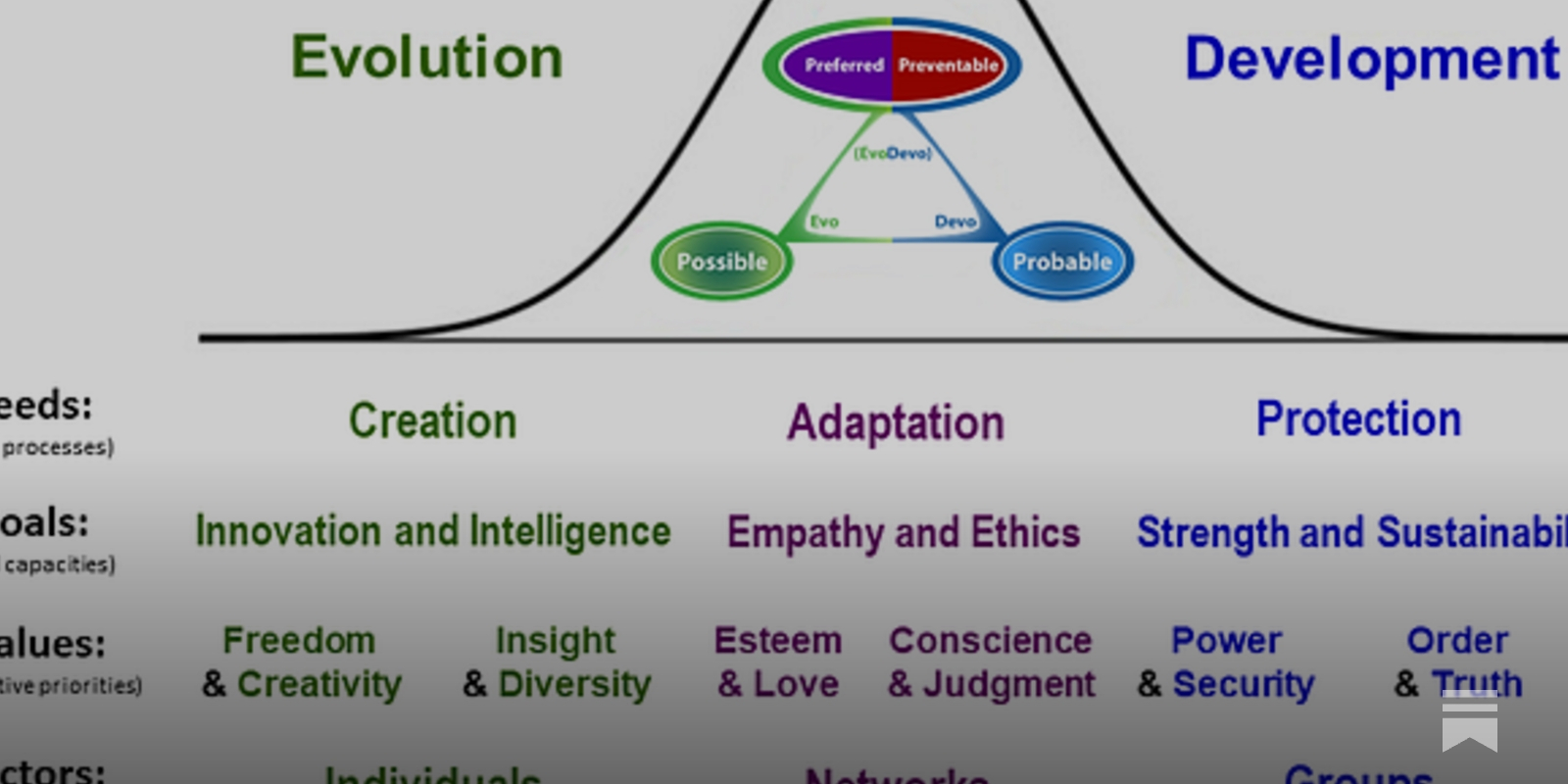
Human-Centered Artificial Intelligence: Three Fresh Ideas
Human-Centered AI (HCAI) is a promising direction for designing AI systems that support human self-efficacy, promote creativity, clarify responsibility, and facilitate social participation. These human aspirations also encourage consideration of privacy, security, environmental protection, social justice, and human rights. This commentary reverses the current emphasis on algorithms and AI methods, by putting humans at the center of systems design thinking, in effect, a second Copernican Revolution. It offers three ideas: (1) a two-dimensional HCAI framework, which shows how it is possible to have both high levels of human control AND high levels of automation, (2) a shift from emulating humans to empowering people with a plea to shift language, imagery, and metaphors away from portrayals of intelligent autonomous teammates towards descriptions of powerful tool-like appliances and tele-operated devices, and (3) a three-level governance structure that describes how software engineering teams can develop more reliable systems, how managers can emphasize a safety culture across an organization, and how industry-wide certification can promote trustworthy HCAI systems. These ideas will be challenged by some, refined by others, extended to accommodate new technologies, and validated with quantitative and qualitative research. They offer a reframe -- a chance to restart design discussions for products and services -- which could bring greater benefits to individuals, families, communities, businesses, and society.
The AI series: AI and Surveillance Capitalism
AI experts Camille Francois and Meredith Whittaker discuss how to break up Big Tech and build a safe and ethical AI.

Safety Co-Option and Compromised National Security: The Self-Fulfilling Prophecy of Weakened AI Risk Thresholds
Risk thresholds provide a measure of the level of risk exposure that a society or individual is willing to withstand, ultimately shaping how we determine the safety of technological systems. Against the backdrop of the Cold War, the first risk analyses, such as those devised for nuclear systems, cemented societally accepted risk thresholds against which safety-critical and defense systems are now evaluated. But today, the appropriate risk tolerances for AI systems have yet to be agreed on by global governing efforts, despite the need for democratic deliberation regarding the acceptable levels of harm to human life. Absent such AI risk thresholds, AI technologists-primarily industry labs, as well as "AI safety" focused organizations-have instead advocated for risk tolerances skewed by a purported AI arms race and speculative "existential" risks, taking over the arbitration of risk determinations with life-or-death consequences, subverting democratic processes. In this paper, we demonstrate how such approaches have allowed AI technologists to engage in "safety revisionism," substituting traditional safety methods and terminology with ill-defined alternatives that vie for the accelerated adoption of military AI uses at the cost of lowered safety and security thresholds. We explore how the current trajectory for AI risk determination and evaluation for foundation model use within national security is poised for a race to the bottom, to the detriment of the US's national security interests. Safety-critical and defense systems must comply with assurance frameworks that are aligned with established risk thresholds, and foundation models are no exception. As such, development of evaluation frameworks for AI-based military systems must preserve the safety and security of US critical and defense infrastructure, and remain in alignment with international humanitarian law.

Security incident disclosure — July 2026
We’re on a journey to advance and democratize artificial intelligence through open source and open science.

Effective Altruism Is Pushing a Dangerous Brand of ‘AI Safety’
This philosophy—supported by tech figures like Sam Bankman-Fried—fuels the AI research agenda, creating a harmful system in the name of saving humanity
Strengthening biosecurity in the era of AI
AI is reshaping biology, unlocking breakthroughs while raising new risks. Learn how smarter safeguards can strengthen biosecurity without slowing innovation.

Artificial Intelligence Safety and Security License Requirements
Artificial Intelligence Safety and Security License Requirements Artificial Intelligence (AI) is now broadly capable, which can produce both benefits and dangers. AI will hasten the design and proliferation of bioweapons, cyberweapons, nuclear weapons, progressively more general intelligence,...

Top AI Security Incidents of 2025 Revealed | Adversa AI
Discover how AI systems are being hacked in the wild — from prompt injection to agent abuse — with real breaches, lessons, and defenses in Adversa AI’s 2025 report.

UNESCO AI Ethics "Recommendation" – Let's do this!
artificial and natural intelligence, including politics, policy, ethics and security

A Roadmap to Democratic AI — The Collective Intelligence Project
Our roadmap outlines concrete steps that can be taken in 2024 to build a more democratic AI ecosystem that is adaptive, accountable, processes decentralized information, provides public goods, and safeguards human wellbeing. We describe what the ecosystem could build, research, advocate for, and fun
Natural Intelligence: Growing Emotional-Rational Minds
Evolving and Developing Intuitive, Emotional, Inferential, Deductive, and Healthy AI Minds - Part 2 of an Introductory Series of Four Posts

The Sinister Valley: The dangerous deception behind the AI revolution
Behind the hype surrounding artificial intelligence lies a corporate agenda of exploitation, environmental destruction and evasion of accountability.

AI agents pose untold risk to humanity. We must act to prevent that future | David Krueger
The pieces are falling into place for autonomous artificial intelligence. We must stop unregulated development

Does the AI Safety Movement Have It All Wrong?