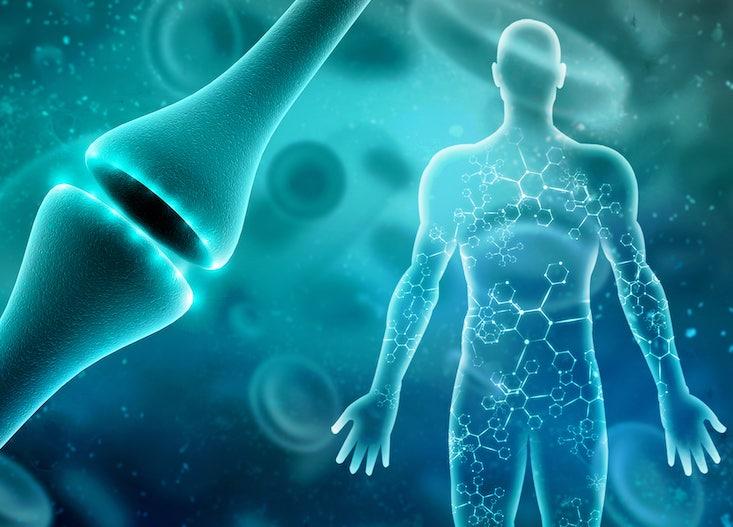
“It’s really hard to define what’s special about neurons,” says Tufts molecular biologist Michael Levin. “Almost all cells do the things neurons do, just more slowly.”Illustration by jijomathaidesigners / Shutterstock Life seems to be tied to bioelectricity at every level. The late electrophysiologist and surgeon Robert Becker spent decades researching the role of the body’s…
Can only meat machines be conscious?
Computational functionalism claims that executing certain computations is sufficient for consciousness, regardless of the physical mechanisms implementing those computations. This view neglects a compelling alternative: that subcomputational biological mechanisms, which realize computational processes, are necessary for consciousness. By contrasting computational roles with their subcomputational biological realizers, I show that there is a systematic tension in our criteria for consciousness: prioritizing computational roles favors consciousness in AI, while prioritizing subcomputational biological realizers favors consciousness in simpler animals. Current theories of consciousness are 'meat-neutral', but if specific physical substrates are necessary, AI may never achieve consciousness. Understanding whether consciousness depends on computational roles, biological realizers, or both, is crucial for assessing the prospects of consciousness in AI and less complex animals.

The cell membrane as the ‘missing link’ for the evolution of consciousness
While Prof. Torday agrees with Federico Faggin that quantum mechanics is salient to consciousness, he maintains that the role of the cell membrane—which separates an organism from its environment—is key to the selective assimilation or mirroring of the quantum properties of the cosmos into the differentiated consciousness of the organism. This essay is short, dense, and may be difficult to unpack. But it handsomely rewards the effort of the patient and determined reader. The many literature citations in the essay also provide rich ground for further exploration.

The sentient cell: the cellular foundations of consciousness
"All species, extant and extinct, from the simplest unicellular prokaryotes to humans, have an existential consciousness. Without sentience, the first cells that emerged some 4 billion years ago would have been evolutionary dead-ends, unable to survive in the chaotic, dangerous environment in which life first appeared and evolved. In this book, Arthur Reber's theory, the Cellular Basis of Consciousness (CBC), is outlined and distinguished from those models that argue that minds could be instantiated on artificial entities and those that maintain consciousness requires a nervous system. The CBC framework takes a novel approach to classic topics such as the origin-of-life, philosophy of mind, the role of genes, the impact of cognition, and how biological information is processed by all species. It also calls for a rethinking of a variety of issues including the moral implications of the sentient capacities of all species, how welfare concerns need to be expanded beyond where they currently are, and critically, how all life is intertwined in a coordinated cognitive ecology. The Sentient Cell explores this revolutionary model, which updates the standard neo-Darwinian framework within which current approaches operate and examines the underlying biomolecular features that are the likely candidates for the "invention" of consciousness and outline their role in cellular life." --

Biophoton signal transmission and processing in the brain
The transmission and processing of neural information in the nervous system plays a key role in neural functions. It is well accepted that neural communication is mediated by bioelectricity and chemical molecules via the processes called bioelectrical and chemical transmission, respectively. Indeed, the traditional theories seem to give valuable explanations for the basic functions of the nervous system, but difficult to construct general accepted concepts or principles to provide reasonable explanations of higher brain functions and mental activities, such as perception, learning and memory, emotion and consciousness. Therefore, many unanswered questions and debates over the neural encoding and mechanisms of neuronal networks remain. Cell to cell communication by biophotons, also called ultra-weak photon emissions, has been demonstrated in several plants, bacteria and certain animal cells. Recently, both experimental evidence and theoretical speculation have suggested that biophotons may play a potential role in neural signal transmission and processing, contributing to the understanding of the high functions of nervous system. In this paper, we review the relevant experimental findings and discuss the possible underlying mechanisms of biophoton signal transmission and processing in the nervous system.
How and why exactly did consciousness become a problem? | Aeon Essays
How exactly did consciousness become a problem? And why, after years off the table, is it a hot research subject now?
The hard problem of consciousness is a distraction from the real one | Aeon Essays
It looks like scientists and philosophers might have made consciousness far more mysterious than it needs to be

Learning Outside the Brain: Integrating Cognitive Science and Systems Biology
Learning is commonplace in organisms such as ourselves and even in organisms as far distant as the bee and the octopus. Such learning is implemented by brains, or neuronal networks, and has been extensively studied within ethology, psychology, cognitive science, and neuroscience. Whether learning also takes place in nonneuronal settings has remained a matter of sustained controversy, too often dominated by ideological views. In this survey, I will explain how learning can be rigorously interpreted as a form of information processing and then explore the evidence for whether learning also takes place in organismal contexts outside the brain, such as physiology, development, and individual cells. I will try to explain why it is important to build bridges in this way between cognitive science and systems biology, why concepts and methods from various branches of engineering may be helpful in this task, and what the eventual impact may be on how we think about the organism.
The inner screen model of consciousness: applying the free energy principle directly to the study of conscious experience
This paper presents a model of consciousness that follows directly from the free- energy principle (FEP). We first rehearse the classical and quantum formulations of the FEP. In particular, we consider the “inner screen hypothesis” that follows from the quantum information theoretic version of the FEP. We then review applications of the FEP to the known sparse (nested and hierarchical) neuro-anatomy of the brain. We focus on the holographic structure of the brain, and how this structure supports (overt and covert) action.
History of Neuroscience and AI: From neurons to the first artificial neural networks
There Is No ‘Hard Problem Of Consciousness’
Consciousness is not separate from the physical world — our “soul” is of the same nature as our body and any other phenomenon of the world.

Conscious artificial intelligence and biological naturalism
As artificial intelligence (AI) continues to advance, it is natural to ask whether AI systems can be not only intelligent, but also conscious. I consider why people might think AI could develop consciousness, identifying some biases that lead us astray. I ask what it would take for conscious AI to be a realistic prospect, challenging the assumption that computation provides a sufficient basis for consciousness. I'll instead make the case that consciousness depends on our nature as living organisms – a form of biological naturalism. I lay out a range of scenarios for conscious AI, concluding that real artificial consciousness is unlikely along current trajectories, but becomes more plausible as AI becomes more brain-like and/or life-like. I finish by exploring ethical considerations arising from AI that either is, or convincingly appears to be, conscious. If we sell our minds too cheaply to our machine creations, we not only overestimate them – we underestimate ourselves.
Neural Networks Are Already Clean
A working hypothesis about neurons, generalization, and the ecology of circuits.

Donald Hoffman: Reality is an Illusion - How Evolution Hid the Truth | Lex Fridman Podcast #293
How the Brain Uses Glucose to Fuel Self-Control
The brain requires tons of energy—and new experiments show how low glucose levels and self-control issues are connected.

The science of consciousness does not need another theory, it needs a minimal unifying model
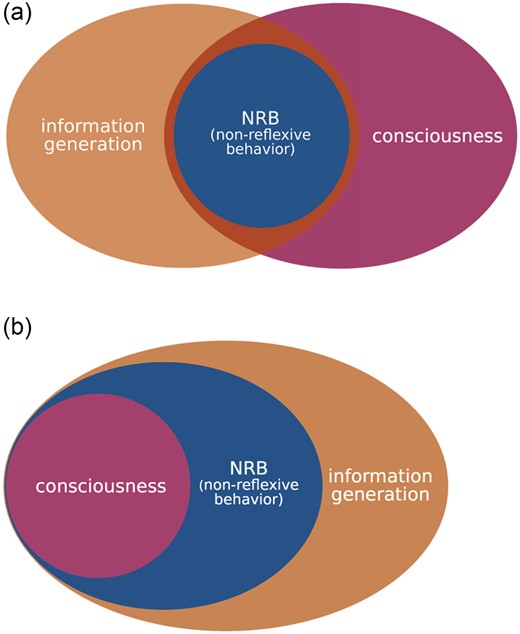
Abstract. This article discusses a hypothesis recently put forward by Kanai et al., according to which information generation constitutes a functional basi
Conscious or Not
For as long as I remember, people have been arguing about whether machines could be intelligent or not.