

a game about news cycles, vicious cycles, infinite cycles
Saving Incremental Games | The Paper Pilot
The Paper Pilot's digital garden of thoughts on philosophy, politics, and sociology
The Fifth Cycle of Humanity
The hidden ‘rules of the game’ that dictate how we navigate the world | Psyche Videos
How free are we really, if human behaviour embodies the complex, intertwined webs of society and history?

Game Dev Tree | The Paper Pilot
The Paper Pilot's digital garden of thoughts on philosophy, politics, and sociology
#760: Gambling the future into existence
Plus: Cosmo for conservatives, AI;DR and being "agentic"

Resonite
A novel digital universe with infinite possibilities. Whether you resonate with people around the world in a casual conversation, playing games and socializing. Or you riff off each other when creating anything from art to programming complex games, you'll find your place here.
You couldn't create a more anti-news internet if you tried
What behavioral economics can add to the story of news decline.
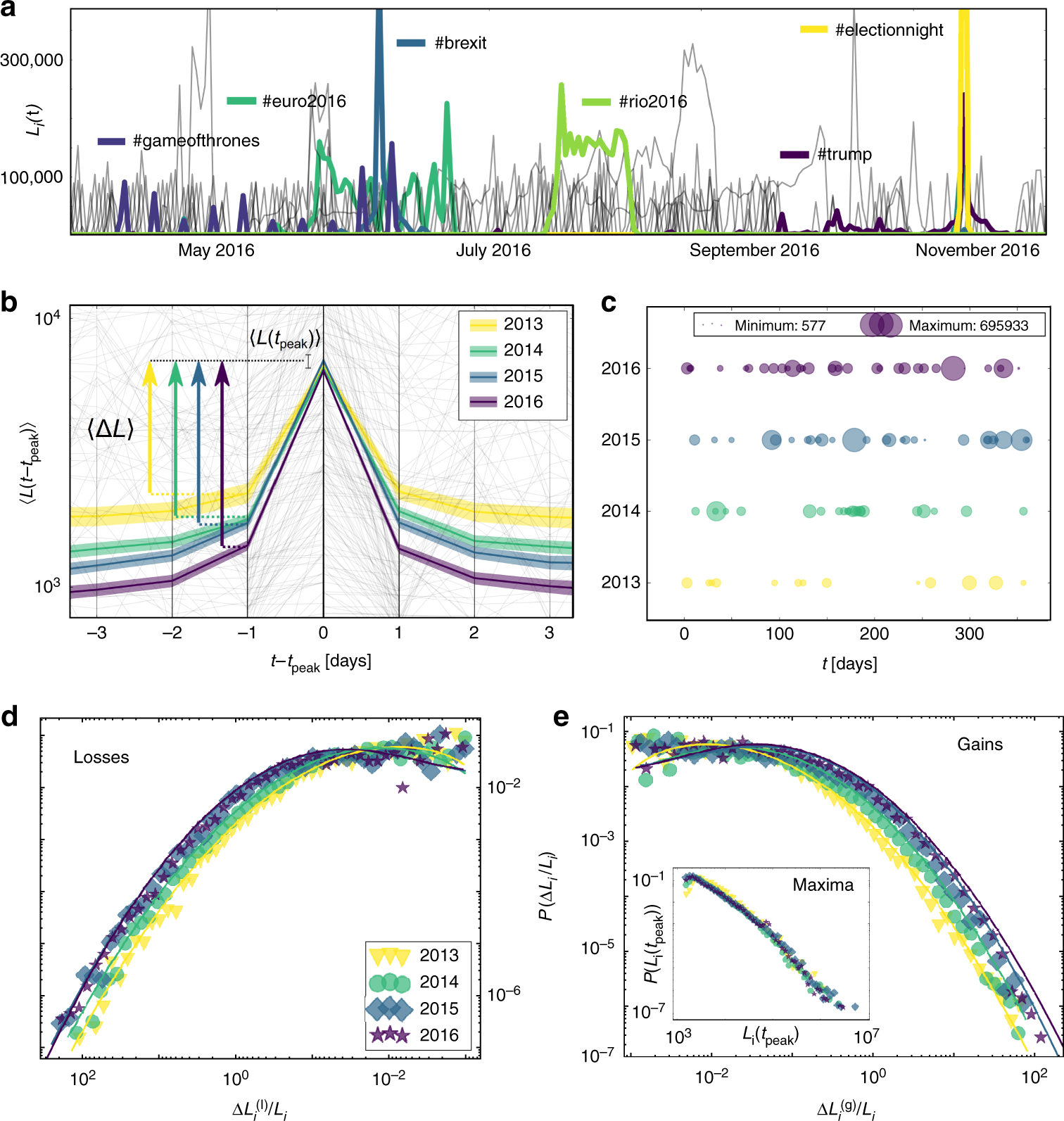
Accelerating dynamics of collective attention
With news pushed to smart phones in real time and social media reactions spreading across the globe in seconds, the public discussion can appear accelerated and temporally fragmented. In longitudinal datasets across various domains, covering multiple decades, we find increasing gradients and shortened periods in the trajectories of how cultural items receive collective attention. Is this the inevitable conclusion of the way information is disseminated and consumed? Our findings support this hypothesis. Using a simple mathematical model of topics competing for finite collective attention, we are able to explain the empirical data remarkably well. Our modeling suggests that the accelerating ups and downs of popular content are driven by increasing production and consumption of content, resulting in a more rapid exhaustion of limited attention resources. In the interplay with competition for novelty, this causes growing turnover rates and individual topics receiving shorter intervals of collective attention.
Recognizing Vibe Coded Games | The Paper Pilot
The Paper Pilot's digital garden of thoughts on philosophy, politics, and sociology
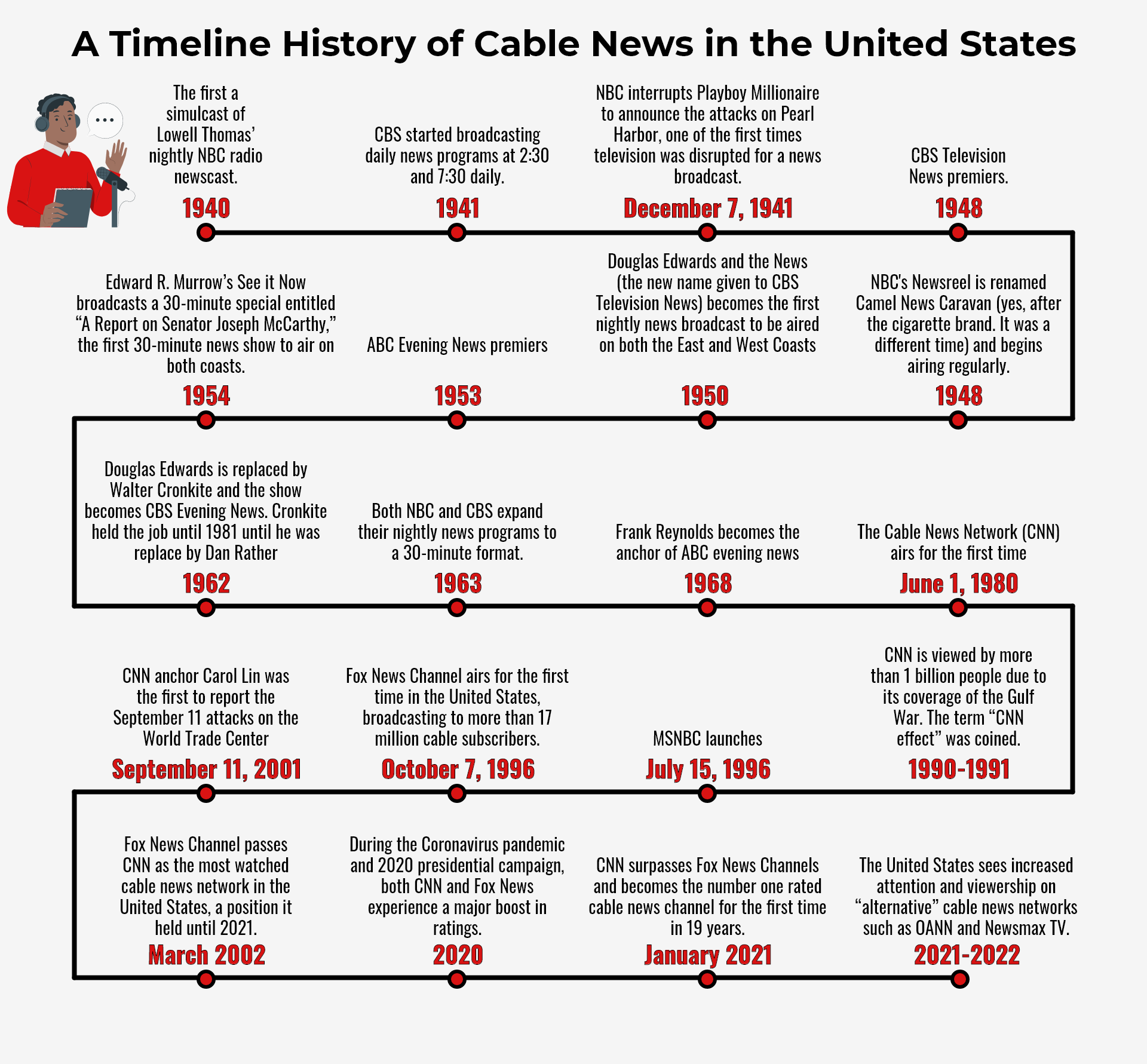
The Growth and Impact of Cable News
Cable news has had a tremendous impact on how people consume news. We discuss the growth and impact of cable news including the good, bad and downright ugly.
Video Game Monetization | The Paper Pilot
The Paper Pilot's digital garden of thoughts on philosophy, politics, and sociology
WE ALL WE GOT
Welcome to We All We Got: A Digital Green Book for the Culture—a guide for navigating the ever-growing wave of digital manipulation aimed at dividing, deceiving, and discouraging Black communities.

The spreading of misinformation online
Significance The wide availability of user-provided content in online social media facilitates the aggregation of people around common interests, worldviews, and narratives. However, the World Wide Web is a fruitful environment for the massive diffusion of unverified rumors. In this work, using a massive quantitative analysis of Facebook, we show that information related to distinct narratives––conspiracy theories and scientific news––generates homogeneous and polarized communities (i.e., echo chambers) having similar information consumption patterns. Then, we derive a data-driven percolation model of rumor spreading that demonstrates that homogeneity and polarization are the main determinants for predicting cascades’ size. , The wide availability of user-provided content in online social media facilitates the aggregation of people around common interests, worldviews, and narratives. However, the World Wide Web (WWW) also allows for the rapid dissemination of unsubstantiated rumors and conspiracy theories that often elicit rapid, large, but naive social responses such as the recent case of Jade Helm 15––where a simple military exercise turned out to be perceived as the beginning of a new civil war in the United States. In this work, we address the determinants governing misinformation spreading through a thorough quantitative analysis. In particular, we focus on how Facebook users consume information related to two distinct narratives: scientific and conspiracy news. We find that, although consumers of scientific and conspiracy stories present similar consumption patterns with respect to content, cascade dynamics differ. Selective exposure to content is the primary driver of content diffusion and generates the formation of homogeneous clusters, i.e., “echo chambers.” Indeed, homogeneity appears to be the primary driver for the diffusion of contents and each echo chamber has its own cascade dynamics. Finally, we introduce a data-driven percolation model mimicking rumor spreading and we show that homogeneity and polarization are the main determinants for predicting cascades’ size.

(please don't) add me to the group
We talk a lot about how broken the internet is for all of us as individuals. Doomscrolling, algorithmic feeds, overall exhaustion at The Horrors. But this...

Nicky Case: The Attractors Behind Disasters
The Internet, and how we've developed with it

Not "doomscrolling has killed our lives". But how, looking back, our enjoyment of the internet has shaped our experience of life.
We can have a different web

My journey to the heart of the forgotten internet

VC&G | » My memories of what life was like before the Internet

Habbo Hotel Memories - Sneer Campaign
blogs.loc.gov

My old SoundCloud page is a time capsule