


why things change, or don't
Adding Realistic Rivers to Random Terrain
Discusses a method for adding rivers to randomly generated terrain that adds a realistic touch.

Designing Imaginative Environments by Nathan Fowkes
Join industry veteran Nathan Fowkes on a deep dive into the hows and whys of designing environments for entertainment. From creating mood with color and light, to exploring different biomes and weather, to crafting architecture and props, he will teach you how to design amazing environments that make your work stand out from the crowd.
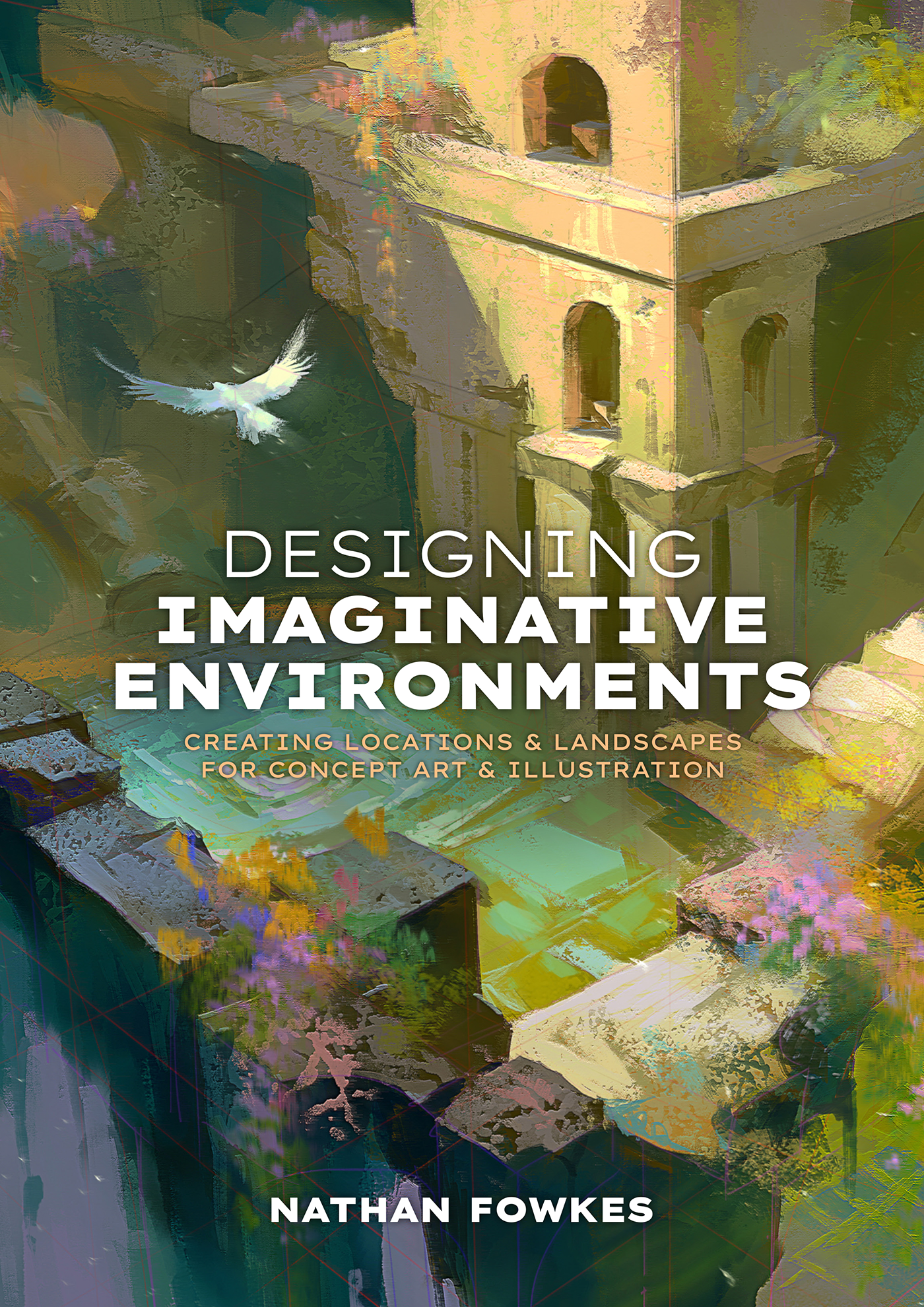
Searching for Birds
An interactive story about the birds that capture our curiosity, told through data, visuals and illustrations
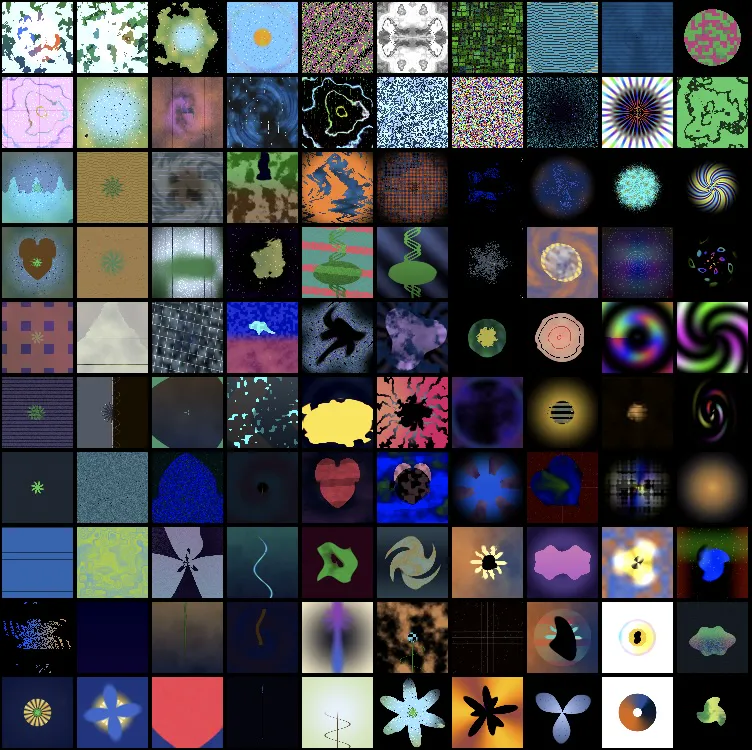
experiments/second-sky/README.md at main · oaustegard/experiments
Random vibe-experiments. Contribute to oaustegard/experiments development by creating an account on GitHub.
Introduction to Movement Ecology
Spatial Web Browsing
Adding spatial affordances to the experience of browsing the web
On the roles of function and selection in evolving systems
Physical laws—such as the laws of motion, gravity, electromagnetism, and thermodynamics—codify the general behavior of varied macroscopic natural systems across space and time. We propose that an additional, hitherto-unarticulated law is required to characterize familiar macroscopic phenomena of our complex, evolving universe. An important feature of the classical laws of physics is the conceptual equivalence of specific characteristics shared by an extensive, seemingly diverse body of natural phenomena. Identifying potential equivalencies among disparate phenomena—for example, falling apples and orbiting moons or hot objects and compressed springs—has been instrumental in advancing the scientific understanding of our world through the articulation of laws of nature. A pervasive wonder of the natural world is the evolution of varied systems, including stars, minerals, atmospheres, and life. These evolving systems appear to be conceptually equivalent in that they display three notable attributes: 1) They form from numerous components that have the potential to adopt combinatorially vast numbers of different configurations; 2) processes exist that generate numerous different configurations; and 3) configurations are preferentially selected based on function. We identify universal concepts of selection—static persistence, dynamic persistence, and novelty generation—that underpin function and drive systems to evolve through the exchange of information between the environment and the system. Accordingly, we propose a “law of increasing functional information”: The functional information of a system will increase (i.e., the system will evolve) if many different configurations of the system undergo selection for one or more functions.

Complexity Explorables
A collection of interactive explorable explanations of complex systems in biology, physics, mathematics, social sciences, epidemiology, ecology and other fields....
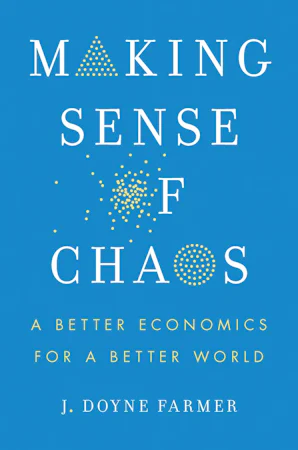
Making Sense of Chaos
From a pioneer in the field of complexity science and chaos theory, a plan for solving the world’s most pressing problems “Farmer convincingly argues t...
Gradients of intimacy and creating shelter: An interview with Erin Kissane
How might we use nature as an inspiration for creating online communities?

The Affordance Loop - Erin Kissane's small internet website
On the social internet, people who have used the biggest platforms and networks enter new ones expecting to find ~standard affordances *and* expecting that familiar interface cues will map to familiar affordances. When newer systems and tools confound those expectations, people get, *at best*, confused. At worst, they try to walk across a solid-looking but sink-into-able surface and get stuck in a bog.

One About The Atmosphere
Want to change minds? Here's a tip: stop trying. Change the atmosphere instead.

Wrote up some thoughts on new *atmospheric generatives* Things that can generate value even in environments where everything can be copied, like: contextualization • fluidity • aggregation • relationality Riffing on a @kevinkelly.bsky.social piece from years ago; extending for the atmosphere!

On atmospheric generatives…
scraps.schlage.townDigital Gardens

"A garden is a collection of evolving ideas that aren’t strictly organised by their publication date. "

Home
Welcome
The Garden of Maggie Appleton
Desert Thunder's Digital Garden
Hey stranger, I'm Hayleigh.
A Brief History & Ethos of the Digital Garden
