

This post was updated on February 27, 2018. Update: NLM appreciates all of the input we have received in response to our February 1, 2018, announcement that PubMed Commons is being discontinued. Thank you for your thoughtful comments. We are heartened to hear that many of you found it to be a useful service. As … Continue reading PubMed Commons to be Discontinued →
NHS Goes To War Against Open Source
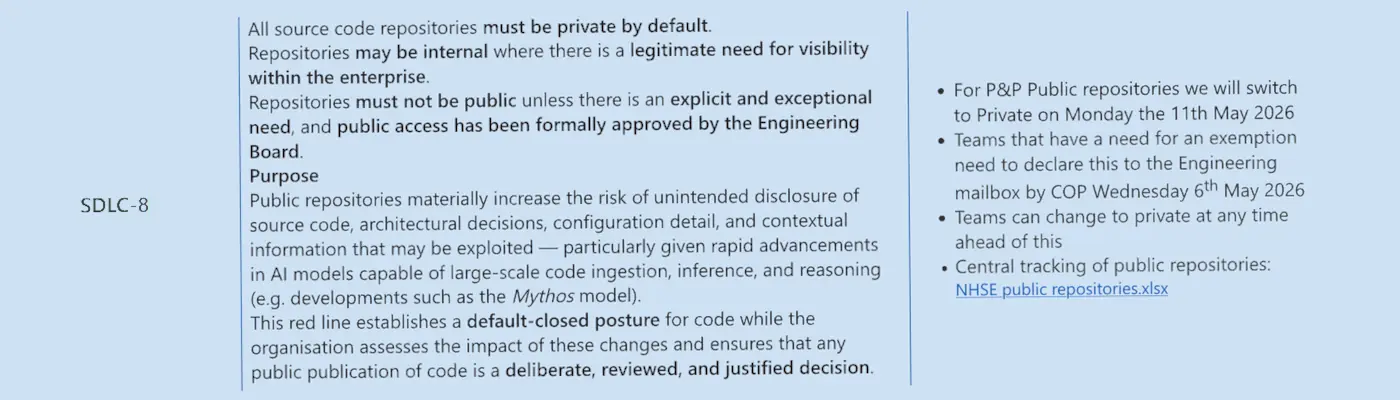
The NHS is preparing to close nearly all of its Open Source repositories. Throughout my time working for the UK Government - in GDS, NHSX, i.AI, and others - I championed Open Source. I spoke to dozens of departments about it, wrote guidance still in use today, and briefed Ministers on why it was so important. That's why I'm beyond disappointed at recent moves from NHS England to backtrack on…
Launching openRxiv Labs - openRxiv
Over the last thirteen years, bioRxiv and medRxiv have grown into widely used infrastructure for rapid research sharing in biology and medicine. The reliability and researcher-first values that have defined these platforms since their founding remain central to how we operate, and building on the trust, partnerships, and community relationships researchers worldwide depend on is…

How did Open Collective's docs change in three months?
This is my last week as a Google Season of Docs [https://developers.google.com/season-of-docs] technical writer and, let me tell you, working with Open Collective was a delightful experience! In the last three months, I got to know more about one of the most fascinating communities

We live in a golden age of biology. So why are people still dying from disease? Because discovery and development move slower than they should. Today, we’re partnering with Incyte to change… | Samuel G. Rodriques | 491 comments
We live in a golden age of biology. So why are people still dying from disease? Because discovery and development move slower than they should. Today, we’re partnering with Incyte to change that. Kosmos is now the first agent that can compress months of drug development into weeks, from the earliest stages of scientific discovery through to FDA approval. Incyte will be the first company to deploy it across their pipeline. Work that used to take a team of scientists months now happens in weeks. Patients can't wait, and neither can we. | 491 comments on LinkedIn
Retracted coronavirus (COVID-19) papers
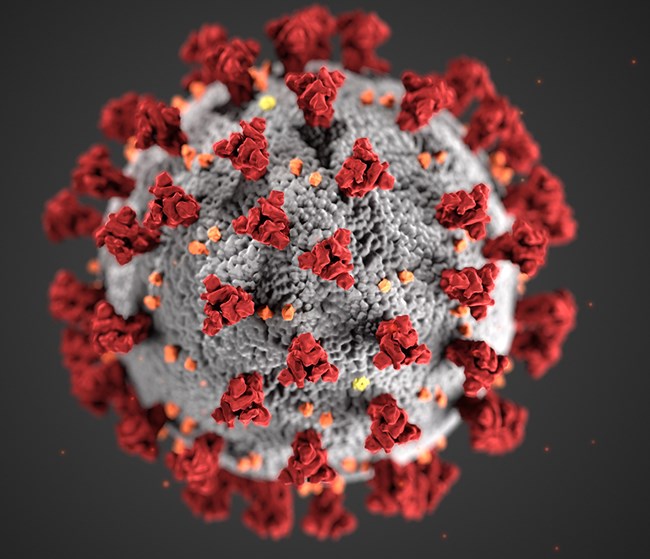
via CDC We’ve been tracking retractions of papers about COVID-19 as part of our database. Here’s a running list, which will be updated as needed. (For some context on these figures, see…
Jason Shepherd on Twitter / X
I have quite a lot of thoughts on this..that won't fit in a tweet. Bottomline is that there are issues scientists in the US would love to improve - faster review, less grant writing, more stability and freedom to do risky science. The folks celebrating this doc are mostly../1 https://t.co/xlPAH9XYNC— Jason Shepherd (@JasonSynaptic) July 23, 2026
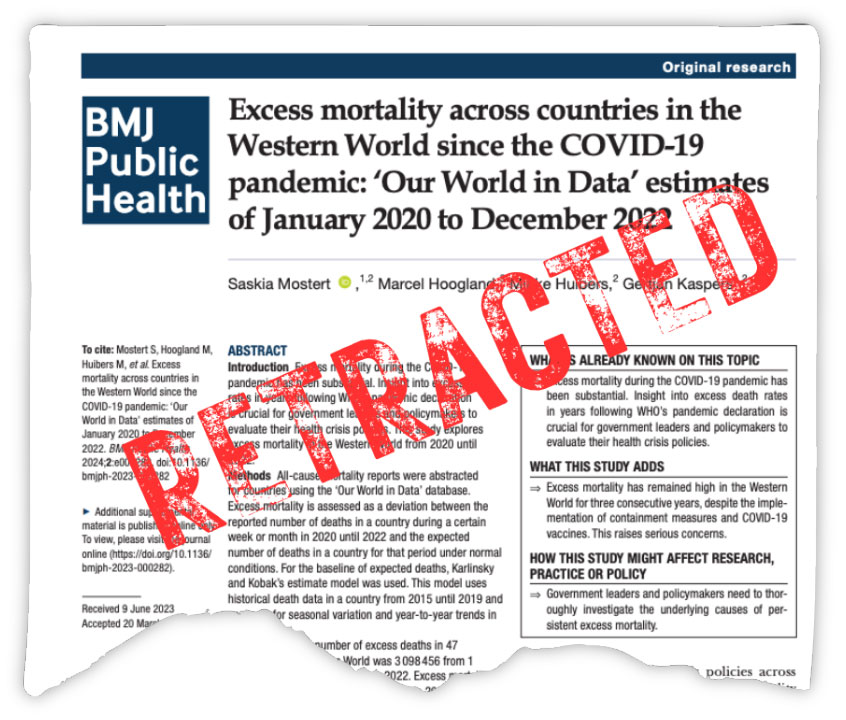
BMJ Group retracts paper on COVID-19 vaccines and mortality featured in Senate hearing
BMJ Public Health has retracted a paper some — including a witness at a recent U.S. Senate subcommittee hearing — have used to link COVID-19 vaccines to deaths. The action comes more than two years…
Workshop on Governing Knowledge Commons - PUBLICATIONS
Edited collections of knowledge commons case studies produced by the Workshop on Governing Knowledge Commons.


SAGE Search
The UK Government’s response to the Coronavirus pandemic was informed by its Scientific Advisory Groups for Emergencies (SAGE) ecosystem, which included the main SAGE committee, many sub committees, and information from government departments, public bodies (e.g. NHS, UKHSA, ONS) and commissioned academic research. From January 2020 to February 2022 this resulted in over 900 documents that fed into or were produced by SAGE. SAGE was stood down after February 2022.
The Story behind the Science: Preprints of pandemic potential—how bioRxiv and medRxiv brought preprints to the life sciences
ABSTRACT The bioRxiv and medRxiv preprint servers brought preprinting to the life sciences and played a critical role in disseminating COVID research during the pandemic. Here, I reflect on the birth of bioRxiv and medRxiv and the crucial role so many members of the community played, our experience during the pandemic, and the launch of the new non-profit organization set up to oversee the servers. The pandemic was a stress test for bioRxiv and medRxiv that demonstrated their value and robustness. Under the umbrella of openRxiv, they are now poised to become long-term infrastructure underpinning a new publishing ecosystem.

Is it time for Cloud Native Open Source?
tl;dr; maybe, but the old school Open Source is not going away any time soon
Ramez Naam on Twitter / X
There was a site years ago called CureTogether where patients could share information in a structured way on their disease, regimen, and progress, working towards a sort of bottoms-up clinical trial. 23andMe acquired them and it seems to be mostly dead.— Ramez Naam (@ramez) September 14, 2025
can someone just dump PubMed into @semble.so please
How times change! A decade ago, a failed replication of work by the same lab led to 'repligate' and blog posts such as psychol.cam.ac.uk/cece/blog Now, failed replications can be published an no one blinks an eye. That is progress due to all the scholars working hard to improve science!
@bmj.com Please look at PubPeer comments on an article you published last week. pubpeer.com/publications/C08779C45DB6E407… I think your research integrity dept shld act swiftly on this one, given clinical significance. I'm aware of even more evidence of problems so let me know if this is not sufficient.
PubPeer - Prevention of acute myocardial infarction induced heart fail...
pubpeer.com

