

Using the data from the Program for the International Assessment of Adult Competencies (PIAAC), this Data Point summarizes the number of U.S. adults with low levels of English literacy and describes how they differ by nativity status1 and race/ethnicity.
Use it or lose it: How cognitive skills change with age
Cognitive skills are commonly assumed to begin deteriorating from the age of 30, which could pose a significant challenge for rapidly ageing populations. But this assumption relies largely on cross-sectional data that cannot distinguish between ageing patterns and cohort differences. Using German longitudinal data, this column finds that skills, on average, increase markedly into one’s 40s before decreasing slightly in literacy and more severely in numeracy. In addition, skills decline at older ages only for those with below-average skill usage, outlining a clear policy pathway for avoiding skill declines.

The End of Reading Never Began
What “The End of Reading Is Here” gets wrong about literacy, intellectual authority, and American “decline”

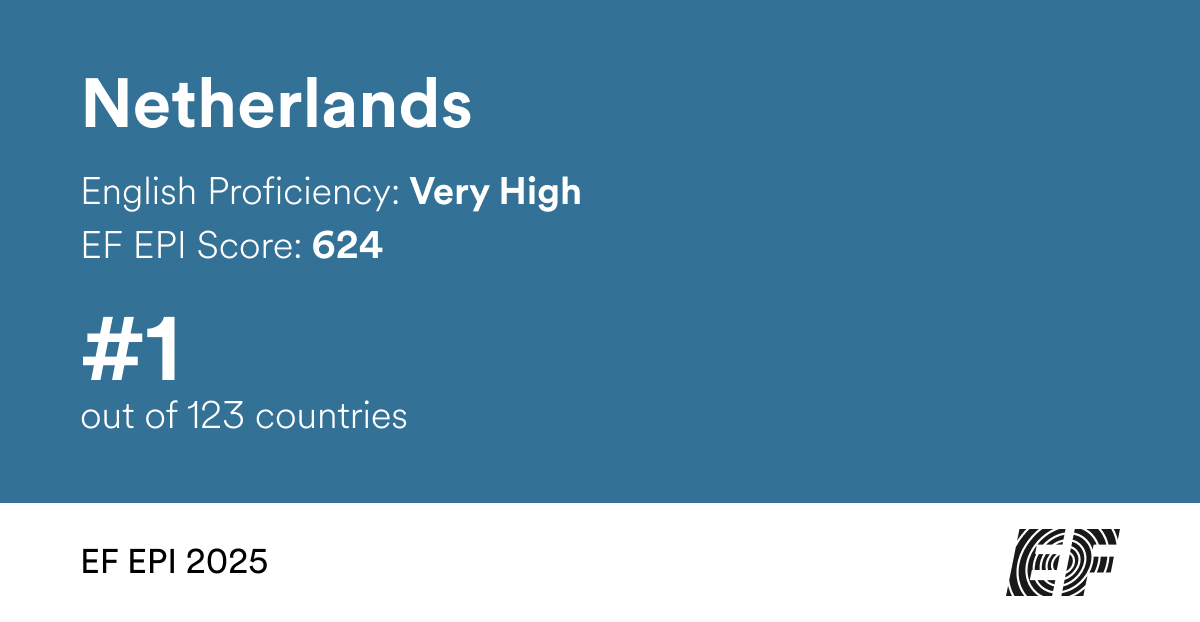
Netherlands | EF English Proficiency Index | EF Global Site (English)
Discover the EF English Proficiency Index score for Netherlands
What we think is a decline in literacy is a design problem | Aeon Essays
Your inability to focus isn’t a failing. It’s a design problem, and the answer isn’t getting rid of our screen time

Welcome | Yale Grammatical Diversity Project: English in North America
This Project explores syntactic diversity found in varieties of English spoken in North America. By documenting the subtle, but systematic, differences in the syntax of English varieties, it provides a crucial source of data for the development of theories of human linguistic knowledge.
The shrinking landscape of linguistic diversity in the age of large language models
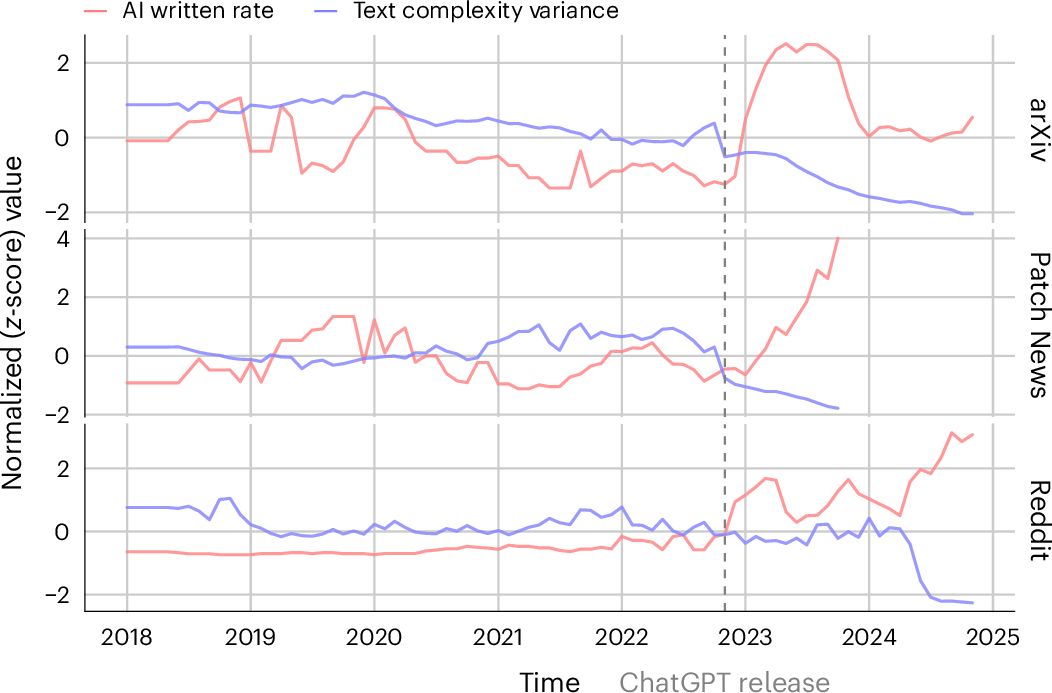
Language is far more than a communication tool; it encodes a wealth of information about a person’s identity, psychological state and social context, providing valuable insights for diverse fields including psychology, marketing and healthcare. Across three studies spanning seven datasets in different domains and over 880,000 texts, we show that the widespread adoption of large language models (LLMs) as writing assistants is linked to declines in linguistic diversity, interfering with the societal and psychological insights language provides. While core content is retained when LLMs polish and rewrite texts, LLMs also homogenize writing styles, reducing writing-complexity variance by a statistically significant 21–50% across datasets and models (P ≤ 0.05), and amplify patterns associated with dominant characteristics while suppressing others, emphasizing conformity over individuality. These trends hold across different LLMs, prompts and contexts, with potential implications for diagnostic processes, personalization efforts, hiring assessments and cultural preservation.
The End of Reading Is Here
Optimists once believed that universal literacy was inevitable. Now it seems that the age of reading might be a short anomaly in human history.

Academia: What Was "Digital Literacy"?
Short Shelf Lives Make For Bad Curricular Planning

How US adults are using AI, according to AP-NORC polling
A new poll finds most Americans say they've used artificial intelligence to search for information. But it's younger adults who appear to be the generation leaning the most into AI, with many using it for brainstorming and work tasks.
“The End of Reading Is Here” - The Ringer
There’s no doubt that reading is in decline. But what is that decline doing to the way we think? Derek talks with The Atlantic’s Rose Horowitch about why Americans are reading fewer books than ever and struggling more with complex texts and what that means for education, work, politics, and culture.

Opinion | My Students Can’t Read
The generational collapse in literacy is measurable, persistent, and likely to get worse.

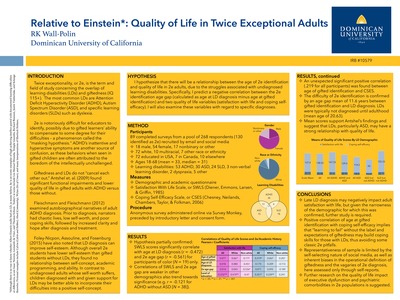
Relative to Einstein: Quality of Life in Twice Exceptional Adults
Twice exceptionality, or 2e, is the recently-coined term for the intersection of learning disabilities (LDs) and giftedness in an individual. Typically, these learning disabilities encompass ADHD, ASD, and/or specific learning disorders such as dyslexia. Because giftedness may obscure or compensate for a student’s academic struggles, and because institutional fixation on disability may overshadow intelligence, twice exceptionality is often missed by teachers and other authority figures in a child’s life. Given the ongoing difficulties of screening for twice exceptionality, it is likely that many 2e students have gone unidentified throughout most of their academic careers, without receiving the accommodations that would most benefit their studies. Furthermore, 2e adults whose schooling predated widespread awareness of twice exceptionality are more likely to have been diagnosed later in life. The twin prongs of identification and intervention for 2e youth make up the bulk of studies in the field. Today’s 2e youth are better-identified, better-studied, and better-supported than any previous generation, but 2e adults remain an understudied population. In addition to the difficulties and contradictions inherent in twice exceptionality, late identification and lack of support are likely to have negatively impacted twice exceptional adults, both in and out of the classroom. The present study will examine the ability of 2e adults to effectively cope with stressors in their lives, as well as their current level of life satisfaction. Approximately fifty or more 2e adults will be recruited through email and social media, and via the disability department of a small liberal arts university. Participants will be asked about their diagnostic histories and their experiences with higher education, and will then complete the Satisfaction With Life Scale (Diener, E., Emmons, R. A., Larsen, R. J., & Griffin, S., 1985) and Coping Self-Efficacy Scale (Chesney, M.A., Neilands, T.B., Chambers, D.B., Taylor, J.M., & Folkman, S., 2006). Data will be collected and analyzed in March and April 2017. We hypothesize that there will be a relationship between the age of identification as twice exceptional and adult quality of life, operationalized by Satisfaction with Life and Coping Self-Efficacy. Additionally, we will explore the relationships between specific diagnoses and these variables, as well as factors of race and gender. This study will provide information on an underserved and understudied group, and we hope it will provide a deeper understanding of the needs and strengths of this population.
Childhood And Education #17: Is Our Children Reading
Reading is the most fundamental thing in education.
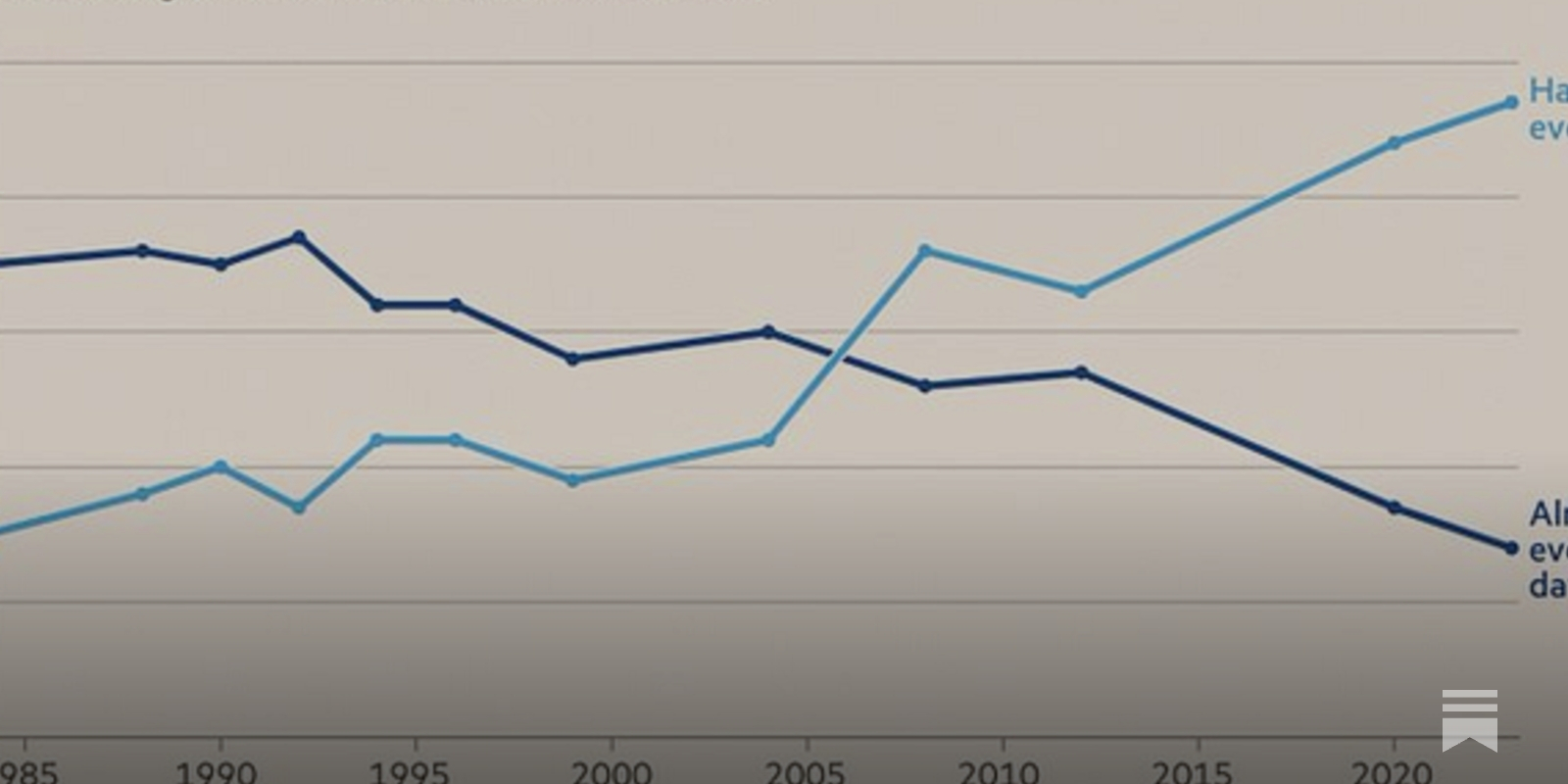
Childhood and Education #21: Grades and Standards
First you get to college via the wrong metrics, as previously discussed in #12. Then things get easier.

Women Worry, Men Adopt: How Gendered Perceptions Shape the Use of Generative AI
Generative artificial intelligence (GenAI) is diffusing rapidly, yet its adoption is strikingly unequal. Using nationally representative UK survey data from 2023 to 2024, we show that women adopt GenAI substantially less often than men because they perceive its societal risks differently. We construct a composite index capturing concerns about mental health, privacy, climate impact, and labor market disruption. This index explains between 9 and 18 percent of the variation in GenAI adoption and ranks among the strongest predictors for women across all age groups, surpassing digital literacy and education for young women. Intersectional analyses show that the largest disparities arise among younger, digitally fluent individuals with high societal risk concerns, where gender gaps in personal use exceed 45 percentage points. Using a synthetic twin panel design, we show that increased optimism about AI's societal impact raises GenAI use among young women from 13 percent to 33 percent, substantially narrowing the gender divide. These findings indicate that gendered perceptions of AI's social and ethical consequences, rather than access or capability, are the primary drivers of unequal GenAI adoption, with implications for productivity, skill formation, and economic inequality in an AI enabled economy.

Well, well. I’ve been told I have a fairly “neutral” accent, but they guessed my home state based on the Standard Language Quiz with 60 questions (“about 50% of your answers match a typical resident”). mydialect.us/quiz-standard.html

Standard Language Quiz — Dialect Map Quiz
mydialect.us