


Martin Wilkinson’s book The Ethics of Public Health Paternalism is a normative analysis of paternalistic governmental policies within liberal democracies that …
Morality vs. Politics as a Framing Problem: How (Not) to Misunderstand the Fight Against Climate Change
Topoi - This paper is guided by two research hypotheses: (1) In contemporary public discourse, many of the most urgent political problems are predominantly framed and understood in moral terms; (2)...

Freedom Now | Polity: Vol 52, No 3
Left-wing politics is resurgent. Self-proclaimed socialists are unexpectedly popular. Proposals like universal health care are a commonplace of Democratic campaigns. But there is not yet a clear, unifying idea behind this political shift. We propose that that idea is freedom. While the left once understood freedom as emancipation from the economy, the right spent the twentieth century neutralizing and appropriating the idea of freedom by reinventing the economy as the true site of freedom. To reclaim freedom as a value of the left, we have to begin with the daily experience of most people: the unfreedom of the workplace. The authoritarian organization of work is not just an offense against freedom; it also helps us understand how freedom requires emancipation both from the economy and within the economy, and why that emancipation requires mass struggle.

Why Do Americans Have Shorter Life Expectancy and Worse Health Than Do People in Other High-Income Countries?
Americans lead shorter and less healthy lives than do people in other high-income countries. We review the evidence and explanations for these variations in longevity and health. Our overview suggests that the US health disadvantage applies to multiple mortality and morbidity outcomes. The American health disadvantage begins at birth and extends across the life course, and it is particularly marked for American women and for regions in the US South and Midwest. Proposed explanations include differences in health care, individual behaviors, socioeconomic inequalities, and the built physical environment. Although these factors may contribute to poorer health in America, a focus on proximal causes fails to adequately account for the ubiquity of the US health disadvantage across the life course. We discuss the role of specific public policies and conclude that while multiple causes are implicated, crucial differences in social policy might underlie an important part of the US health disadvantage.


Environmental epidemiology in a crossfire
Two tendencies have emerged in environmental epidemiology that hamper the translation of research findings into prevention of environmental hazards. One is the increased focus on highlighting weaknesses of epidemiology research that is clearly meant to explain away the research conclusions and weaken their possible implications for interventions to control environmental hazards. Another is the voluminous amount of information sharing that involves a substantial amount of misinformation, as part of the ongoing infodemic. In this light, the appearance of the catalogue of doubt-raising strategies, indeed the worst practices of scientific inference, is good news. Collected under the auspices of the International Network for Epidemiology in Policy, it serves to illustrate the range of possible (and impossible) forms of critique that may be raised on behalf of vested interests or other groups who for some reason disagree with the epidemiological conclusions. We believe that this systematic list will be useful in our field and help to identify critiques of policy options that are hidden and sometimes suppressed in weighing the epidemiological evidence.

The Tragedy of the Commons
The population problem has no technical solution; it requires a fundamental extension in morality.

US Domestic Policy Dashboard - Impact Counter | Impact Counter
Explore US domestic policies and their impact on public health across all branches of government.

Acting ethically in an imperfect world
Life is complicated. Regardless of what your beliefs or politics or ethics are, the way that we set up our society and economy will often force you to act against them: You might not want to fly somewhere but your employer will not accept another mode of transportation, you want to eat vegan but are […]

Accountable Capitalism Act
Political commentator Matthew Yglesias wrote that "Warren's plan starts from the premise that corporations that claim the legal rights of personhood should be legally required to accept the moral obligations of personhood."[2] The New York Times columnist David Leonhardt called the proposal "the most intriguing policy idea to come out of the early 2020 campaign".[3]

Toward environmental liberalism
The underlying normative claim of my environmental writing

PDF Reader | Immunological Discourse in Political Philosophy
Praxis on Twitter / X
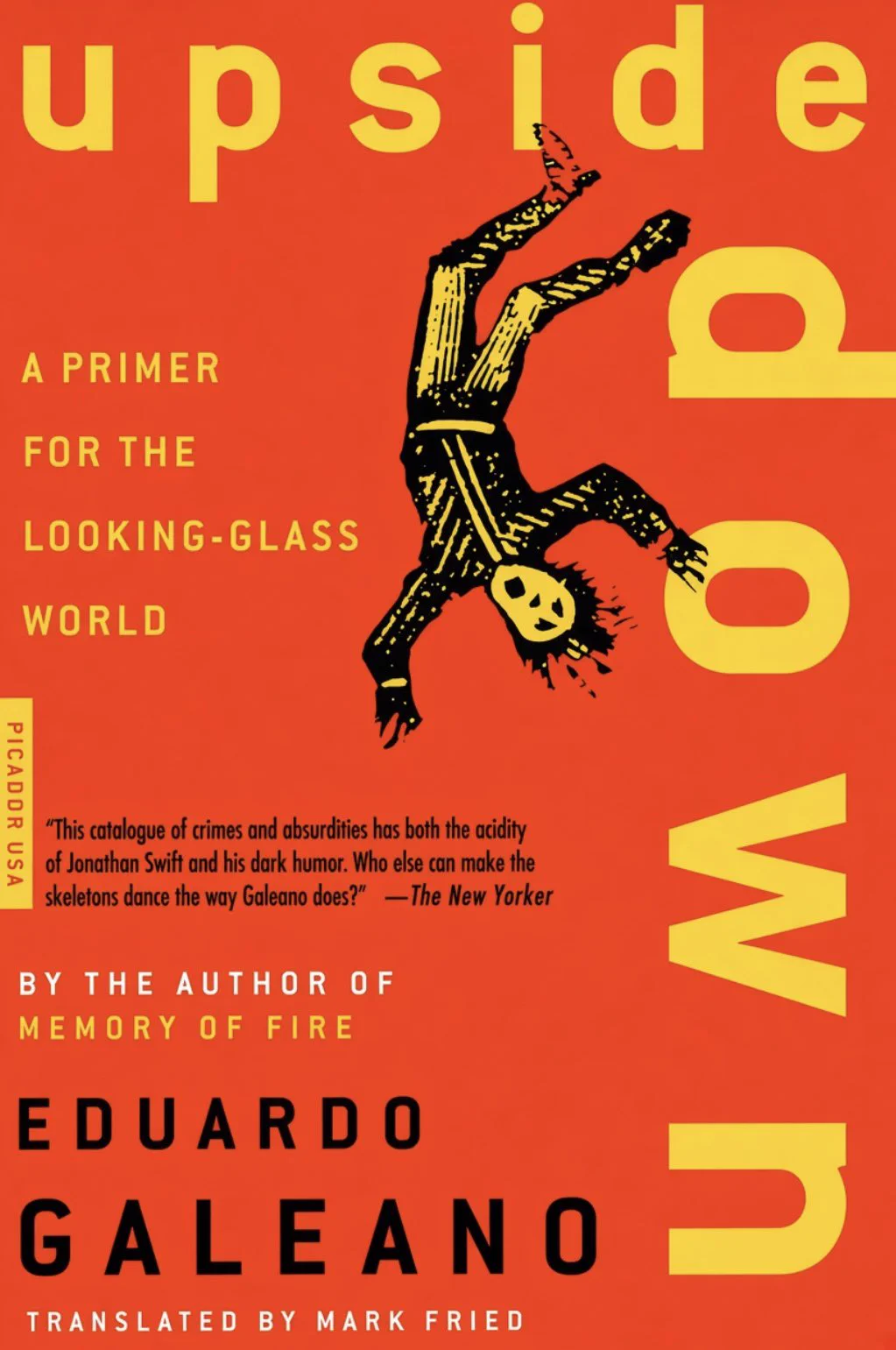
I think Eduardo Galeano in this piece does a great job pointing out how society tolerates inequalities. More importantly he exposes the sanitized terms we use to justify them. He juxtaposes concepts that our political and ethical dictionary would never allow together. When a++ pic.twitter.com/XJsvSNUxVY— Praxis (@praxiss) September 25, 2026
A Nonideal Theory of Sexual Consent
Our autonomy can be compromised by limitations in our capacities, or by the power relationships within which we are embedded. If we insist that real consent requires full autonomy, then virtually no sex will turn out to be consensual. I argue that under conditions of compromised autonomy, consent must be socially and interpersonally scaffolded. To understand consent as an ethically crucial but nonideal concept, we need to think about how it is related to other requirements for ethical sex, such as the ability to exit a situation, trust, safety, broader social support, epistemic standing in the community, and more.
A Nonideal Theory of Sexual Consent
Our autonomy can be compromised by limitations in our capacities, or by the power relationships within which we are embedded. If we insist that real consent requires full autonomy, then virtually no sex will turn out to be consensual. I argue that under conditions of compromised autonomy, consent must be socially and interpersonally scaffolded. To understand consent as an ethically crucial but nonideal concept, we need to think about how it is related to other requirements for ethical sex, such as the ability to exit a situation, trust, safety, broader social support, epistemic standing in the community, and more.
Abortion care to become free in Victoria after Liberals match Labor pledge
Victoria would provide free abortion care if Premier Ben Carroll is re-elected, with a politically charged plan to provide better care for women in regional and rural communities.