


From an amoeba to a blue whale
Happywhale
Send us your whale photos, we’ll identify the individuals for fun and for science. We'll share with you what we find!
Whales' Bubble Net Fishing | Nature's Great Events | BBC Earth
Earliest octopuses were giant top predators in Cretaceous oceans
Top predators drive changes in ecosystem structure. For the last ~370 million years, large-sized vertebrates have dominated the apex of the marine food chain, while invertebrates have served as smaller prey. Here we describe invertebrate top predators ...

How To Speak Whale | Book | Tom Mustill
How to Speak Whale is an unforgettable look at how close we truly are to communicating with another species – and how doing so might change our world. Discover more.
The phonology of sperm whale coda vowels
Abstract. Sperm whales (Physeter macrocephalus) communicate using series of clicks known as codas. In previous research, sperm whale codas have been shown
Chondrilla nucula (Porifera, Demospongiae) : an example of successful plasticity ; ecological and morphological aspects
Sponges (Porifera) represent an important component of the Mediterranean sessile benthic community. They are present both in shallow and deeper waters, on soft and hard bottoms and some species, namely the bath sponges, has an application in human life since a long time. In the last few decades, they also assumed an importance among the organisms producing bioactive compounds which application goes from the homeopathy to the classical medicine to the industry. The study of the taxonomy, ecology and biology of sponges has an history hundreds years old. Now, due to the new findings that render sponges an exploitable marine resource, a coupling of the traditional sciences with the new emerging applications (biotechnology) is urgently needed. The Northern Adriatic Sea was the craddle of the sponge science hosting 36% of the sponge species present in the whole Mediterranean Sea. For the present work, the sponge fauna of a channel-like bay called Limski kanal (Croatia) has been intensively studied for the first time and a list of sponges, including species new for this area, is the result of a series of surveys in twelve sampling sites along the channel. As an introduction to the classification of sponges, a guide to the identification of the most common Mediterranean species has been written and included. A study on the temporal dynamic of a sponge community (Limski kanal, Croatia) was made by using fixed frames that have been photographed along a period of two years. Either seasonality, morphological variability, growth and degeneration phenomena have been observed, providing one more evidence of the incredible plasticity of the Porifera. Among the species in the Limski kanal, Chondrilla nucula (Porifera, Demospongiae) has been chosen as model organism. Firstly, its distribution, abundance and average coverage have been studied, showing that this species is very common along the channel, also in areas with a high sedimentation. Its distribution pattern depends mainly on light availability and kind of substrate. C. nucula is known as a very plastic species: here some macromorphological aspects related to the locomotion, the fragmentation events, the elimination of the sediment and the epibiosis are described in the attempt to give an overview on the successful life strategies of this sponge. Up to now only morphological studies on the oogenesis and spermatogenesis are available but the complete life cycle is unknown. In this study, macromorphological variations in specimens of C. nucula in reproduction and the first stages of embryogenesis have been described for the first time. Finally, in view of a biotechnological use of sponges as bioremediator organisms, the filtration and the bacterial retention rates of C. nucula have been investigated using clearance tests. In spite of a low filtration rate, the sponge showed high bacterial retention rates. This, together with the easy techniques required to farm it, makes of this sponge an eligible candidate for bioremediation. To achieve an effective conservation management plan and a sustainable exploitation of the marine resources, the knowledge on the biological and ecological characteristics of the benthic community and of the single species is absolutely necessary.
Growth, metabolic partitioning, and the size of microorganisms
Population growth rate is a fundamental ecological and evolutionary characteristic of living organisms, but individuals must balance the metabolism devoted to biosynthesis and reproduction against the maintenance of existing structure and other functionality. Here we present a mathematical model that relates metabolic partitioning to the form of growth. The model captures the observed growth trajectory of single cells and individuals for a variety of species and taxa spanning prokaryotes, unicellular eukaryotes, and small multicellular eukaryotes. Our analysis suggests that the per-unit costs of biosynthesis and maintenance are conserved across prokaryotes and eukaryotes. However, the relative metabolic expenditure on growth and maintenance of whole organisms clearly differentiates taxa: prokaryotes spend an increasing fraction of their entire metabolism on growth with increasing cell size, whereas eukaryotes devote a diminishing fraction. These differences allow us to predict the minimum and maximum size for each taxonomic group, anticipating observed evolutionary life-history transitions. The framework provides energetic insights into taxonomic tradeoffs related to growth and metabolism and constrains traits that are important for size-structured modeling of microbial communities and their ecological and biogeochemical effects.

Can We Talk to Whales?
Researchers believe that artificial intelligence may allow us to speak to other species.
Whale Hunting
Discovering the hidden stories of how the world really works — by Project Brazen.
New perspectives on body size and shape evolution in dinosaurs
ABSTRACT Diversity in the body shapes and sizes of dinosaurs was foundational to their widespread success during the Mesozoic era. The ability to quantify body size and form reliably is therefore critical to the study of dinosaur biology and evolution. Body mass estimates for any given fossil animal are, in theory, most informative when derived from volumetric models that account for the three‐dimensional shapes of the entire body. In addition to providing estimates of total body mass, volumetric approaches can be used to determine the inertial properties of specific body segments and the overall distribution of mass throughout the body, each of which are essential for the modelling and interpretation of form–function relationships and their associations with ecology. However, the determination of body volumes in fossil taxa is often subjective, and may be sensitive to varied artistic inference. This highlights the need for an approach to body mass estimation in which body segment volumes are systematically constrained by quantitative scaling relationships between the hard tissues that fossilise and the soft tissues only observable in extant taxa. To this end, we used recently published skeletal to soft tissue volumetric scaling factors derived from CT data of extant sauropsids to estimate body segment mass properties from skeletal models of 52 non‐avian dinosaurs representing the majority of major clades and body plans. The body masses estimated by this study range from less than 200 g in the tiny avialan Yixianornis to over 60 tonnes in the giant sauropod Patagotitan , which is currently the largest dinosaur known from mostly complete skeletal remains. From our models, we infer that many previous reconstructions of soft tissue envelopes may be too small, and that many dinosaurs were therefore heavier than previous estimates. Our models generally overlap with the range of body mass estimates derived from limb bone shaft dimensions, but with considerable quantitative variability among major clades. This suggests that different taxa either differed in skeletal to soft tissue volume ratios, or that their limb bone dimensions varied relative to body mass, perhaps related to differences in locomotor dynamics and postural evolution. Our models also allowed us to investigate variation in mass distribution and body proportions across different dinosaurs from a perspective grounded in extant anatomical data, framing long‐standing hypotheses about their form, function, and behaviour in a quantitative context. For example, reconstructed disparity in whole‐body centres of mass reflects a broad array of postures in different dinosaur clades, while the lack of strong positive allometry in the dimensions of the weight‐bearing limb segments relative to total body mass corroborates previous studies suggesting an overall decrease in dinosaur locomotor performance as body size increased.

Reciprocal nutritional benefits in a Mediterranean seagrass-sponge association
Sponges commonly form associations within seagrass meadows, but their potential impact on seagrass productivity and nutrient cycles remains poorly understood. This study investigates the association between the demosponge Chondrilla nucula and the Mediterranean seagrass Posidonia oceanica in two sampling occasions during the plant growth (spring) and senescence (autumn) seasons at a small inlet near Naples, Italy, where the sponge grows conspicuously within the seagrass bed. We found a non-linear relationship between the benthic cover of the sponge and the seagrass, with higher C. nucula cover linked to intermediate P. oceanica cover, suggesting spatial dependence. Posidonia oceanica showed higher net primary production (NPP) in spring, while C. nucula was net heterotrophic in spring but exhibited near zero metabolic balance in autumn. NPP remained stable when the two organisms were associated, regardless of the season. Chondrilla nucula consistently contributed inorganic nutrients to the association in the form of phosphate, ammonium, and substantial nitrate, recycling nutrients that potentially benefited P. oceanica in its growth season. In return, the seagrass released dissolved organic carbon in spring, which is consistent with supporting sponge heterotrophic nutrition. These findings suggest reciprocal benefits in the interaction between C. nucula and P. oceanica , with nutrient exchange facilitating a facultative mutualism that potentially supports and stabilizes the productivity of the seagrass ecosystem.
Reciprocal nutritional benefits in a sponge-seagrass association
Sponges commonly form associations within seagrass meadows, but their potential impact on seagrass productivity and nutrient cycles remains poorly understood. This study investigates the association between the demosponge Chondrilla nucula and the Mediterranean seagrass Posidonia oceanica in two sampling occasions during the plant growth (spring) and senescence (autumn) seasons at a small inlet near Naples, Italy, where the sponge grows conspicuously within the seagrass bed. We found a non-linear relationship between the benthic cover of the sponge and the seagrass, with higher C. nucula cover linked to intermediate P. oceanica cover, suggesting spatial dependence. P. oceanica showed higher net primary production (NPP) in spring, while C. nucula was net heterotrophic in spring but exhibited slightly positive NPP in autumn. NPP remained stable when the two organisms were associated, regardless of the season. C. nucula consistently contributed inorganic nutrients to the association in the form of phosphate, ammonium, and substantial nitrate, recycling nutrients that potentially benefited P. oceanica in its growth season. In return, the seagrass consistently provided dissolved organic carbon, which aided sponge nutrition in spring. These findings suggest reciprocal benefits in the interaction between C. nucula and P. oceanica, with nutrient exchange facilitating a facultative mutualism that potentially supports and stabilizes the productivity of the seagrass ecosystem. SIGNIFICANCE STATEMENT This study provides a novel exploration of the reciprocal interactions between the demosponge Chondrilla nucula and the Mediterranean seagrass Posidonia oceanica, revealing a facultative mutualism mediated by nutrient exchange. Our findings show a non-linear spatial dependence between sponge and seagrass cover and demonstrate the sponge’s substantial contributions of inorganic nutrients (phosphate, ammonium and conspicuous nitrate) to the seagrass, particularly during its productive spring season. In return, P. oceanica supplies dissolved organic matter, aiding sponge nutrition. This study uniquely quantifies these reciprocal nutrient exchanges across the plant growth and senescence seasons, demonstrating how such interactions stabilize net primary production and support ecosystem functioning. These insights address a critical gap in understanding the role of sponge-seagrass associations in nutrient cycling, highlighting their significance for the resilience, productivity, and metabolic balance of coastal ecosystems under changing environmental conditions.

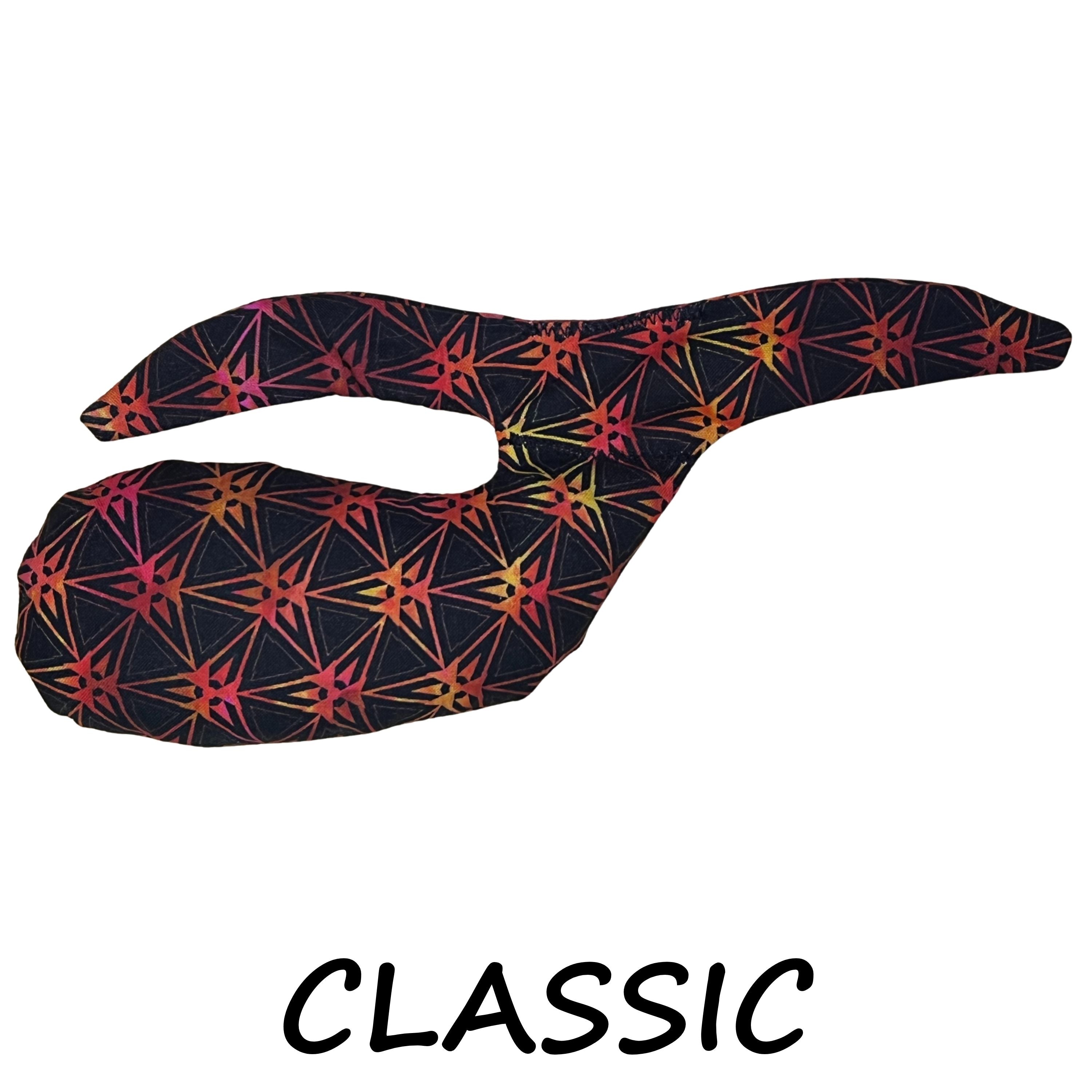
Classic
Classic whale sacs in a variety of patterns. You may see these on the shelf at your favorite disc shop or sporting goods store as well!
Future of Bluesky/ATproto

Food for thought

Mosh Lee (@mosh.bsky.social)
The social meaning of atproto (by 𝕮) — Semble
Technological (by Paul Stephenson) — Semble

How Bluesky earned its reputation — and why it could be the way of the future

Can Puck reinvent the news business for the influencer age?
Tech Lessons from the Past (by Bee 🐝) — Semble