

Bringing Systematic Review to Life
Covidence - Where trusted evidence gets made.
The world's leading software for managing and streamlining your systematic review. Discover how to do a systematic review in less time, while maintaining quality and accuracy.

AI-Powered Systematic Review & Literature Review Platform
Rayyan is the pioneering AI-powered platform redefining evidence-based research & decision-making. Designed for efficient systematic literature review ...
PREreview: Open preprint reviews. For all researchers.

Reviewing post-publication peer review
Post-publication peer review (PPPR) is transforming how the life sciences community evaluates published manuscripts and data. Unsurprisingly, however, PPPR is experiencing growing pains, and some elements of the process distinct from standard pre-publication review remain controversial. I discuss the rapid evolution of PPPR, its impact, and the challenges associated with it.

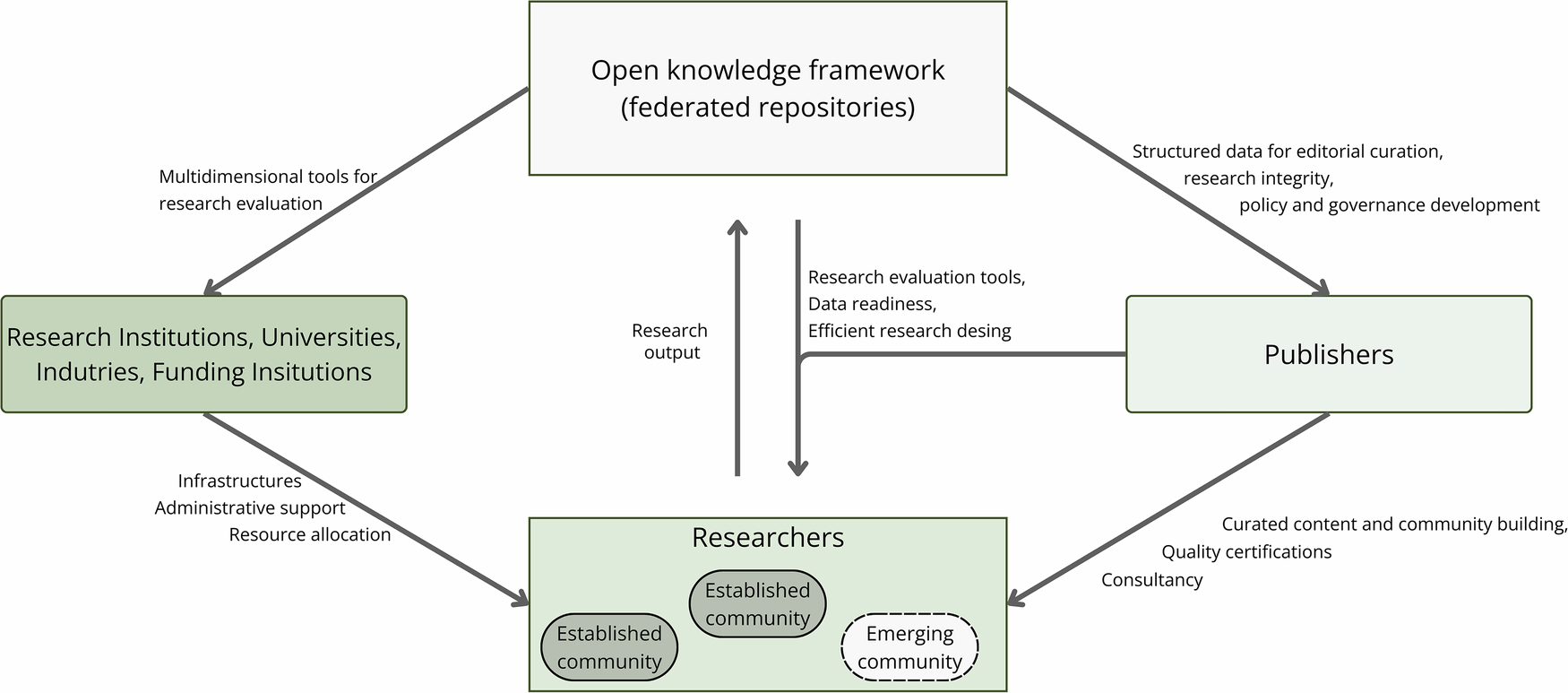
Fostering cultural change in research through innovative knowledge sharing, evaluation, and community engagement strategies
Bringing together researchers, funders, industry partners, and publishers from 14 countries across five continents, we advance the debate around open-science, assessment and learning. We introduce an integrative “open-knowledge system” framework linking knowledge production, validation, assessment, and reuse into one ecosystem view, and translate it into actionable recommendations for each stakeholder. Shifting focus to modular, machine-readable knowledge objects, these recommendations are intended to help diagnose misaligned incentives and guide reforms that properly value all scientific contributions.
Making sense of preprints by adding context – The Publish Your Reviews initiative - LSE Impact
Improving scientific publishing is often framed as an issue of openness and speed and less often as one of context. In this post, Ludo Waltman and Jessica Polka make the case for a more contextualised approach to open access publishing and preprinting, and introduce the Publish Your Reviews initiative. Launched today by ASAPbio, the initiative

You can just review things: A digital ethnography of informal peer review
Across scholarly communities, manuscripts face similar evaluative rituals: editors invite experts to privately assess submissions through formal peer reviews. This closed, loosely structured, and...

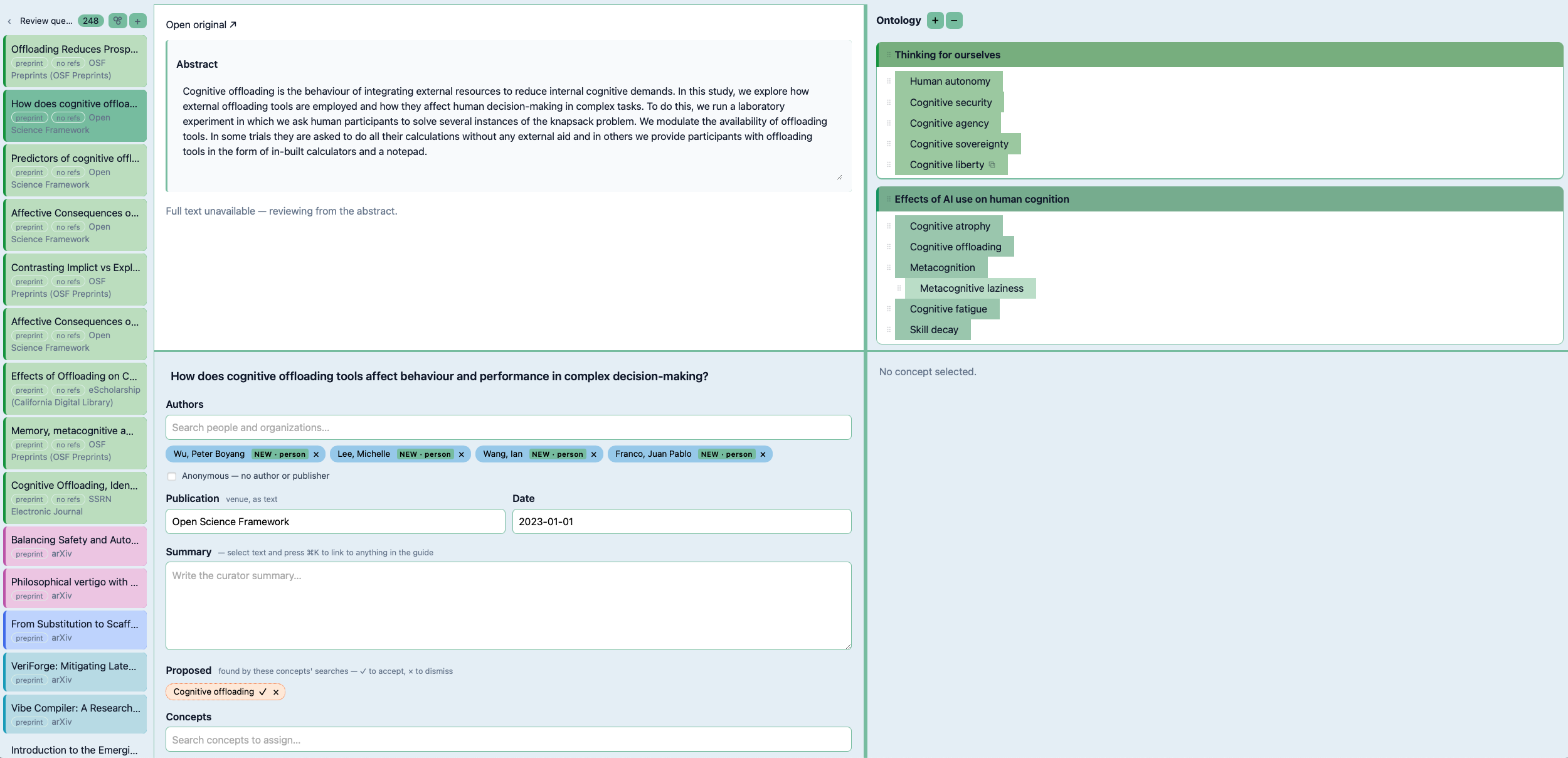
See what you think
Allegra A. Beal Cohen's blog about knowledge curation, new interfaces, and large-scale qualitative data.
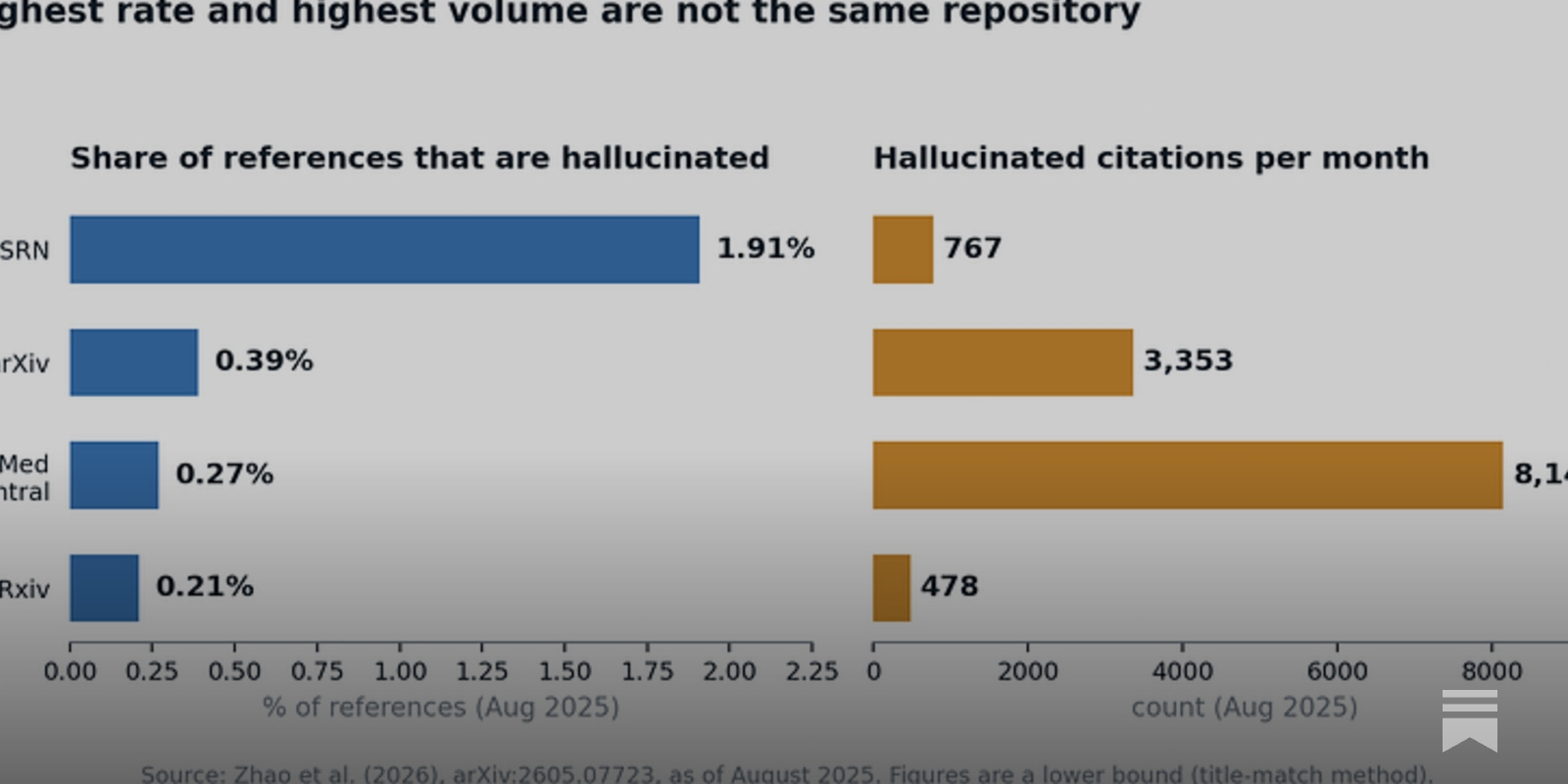
Ground the model, or it invents the evidence
Trusted, curated, subject-specific models are needed for academia
Konrad Hinsen's blog
Knowledge refinement is the ever ongoing process in science (and beyond it) that shepherds knowledge from lab notebooks into journal articles and then on to review articles, monographs, reference handbooks, university textbooks, and finally professional domain expertise and school education for a wider public. It has been going on for a few centuries, but we hardly talk about it. In fact, I made up the term because I couldn't find an established one. Computational knowledge has not yet found its place in the knowledge refinement process. Why not? And what can we do to make it happen?
Introducing Nested Learning: A new ML paradigm for continual learning
Ali Behrouz, Student Researcher, and Vahab Mirrokni, VP and Google Fellow, Google Research

Peer Review at the Crossroads
Peer review has long been regarded as a cornerstone of scholarly communication, ensuring high quality and credibility of published research. Although academic journals trace their origins back three centuries, the procedures for evaluating submissions, particularly peer review, have undergone continuous evolvement. Peer review’s formal institutionalization in the mid-20th century represents a significant, yet natural, phase in this ongoing transformation of scholarly communication. By the early 21st century, there emerged an opinion that the conventional model of peer review faces systematic challenges, including inefficiency, bias, and institutional inertia. The study aims to synthesize the evolution, practices, and outcomes of both conventional and innovative peer review models in scholarly publishing. Through a mixed-methods approach combining interpretative literature review and process modeling (Business Process Model and Notation –BPMN), it identifies four frameworks: pre-publication peer review, registered reports, modular publishing, and the Publish-Review-Curate (PRC) model. While the PRC model, which integrates preprints with post-publication review, demonstrates advantages in transparency and accessibility, no single approach emerges as universally ideal. The choice of model depends on disciplinary context, resource availability, and institutional priorities. The analysis underscores the need for adaptable platforms that enable hybrid workflows, balancing rigor with inclusivity. Future research must address empirical gaps in evaluating these innovations, particularly their long-term impact on equity and epistemic norms.
Description not evaluation - The Cynefin Co
One of the things I am enjoying at the moment is the way a lot of things are coming together conceptually. It happens like this when you develop or repurpose knowledge from different sources. Individual practices and ideas make sense in their own right. Then you read more, practice more, and the various origins […]

Science has been in a “replication crisis” for a decade. Have we learned anything?
Bad papers are still published. But some other things might be getting better.

Organising knowledge with multi-level content
A paper about the importance of knowledge structures and multi-level content.
