

NeuroRVQ: Multi-Scale Biosignal Tokenization for Generative Foundation Models
nubrain - A foundation model for neural decoding
Building the world's largest dataset of human brain activity.
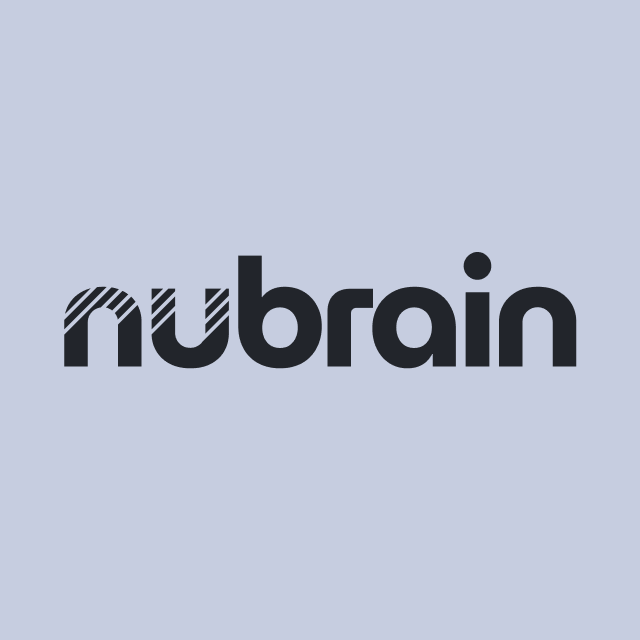
DISCO: Inventing Enzymes for Chemistry | FutureHouse
DISCO is a new multimodal generative model that co-designs protein sequence and 3D structure from scratch.
GenBio ICML Workshop 2026
The 2026 workshop on Generative and Agentic AI for Biology at ICML 2026, Seoul, South Korea.
51 Ways to Spell the Image Giraffe: The Hidden Politics of Token Languages in Generative AI
Generative AI models don't operate on human languages – they speak in **tokens**. Tokens are computational fragments that deconstruct lan...

Neuropeek — Accelerating the Neuro-AI convergence
Where brain data becomes shared knowledge. A community-driven platform federating neuroscience datasets, models, and tools to accelerate discovery.

On the Opportunities and Risks of Foundation Models
AI is undergoing a paradigm shift with the rise of models (e.g., BERT, DALL-E, GPT-3) that are trained on broad data at scale and are adaptable to a wide range of downstream tasks. We call these models foundation models to underscore their critically central yet incomplete character. This report provides a thorough account of the opportunities and risks of foundation models, ranging from their capabilities (e.g., language, vision, robotics, reasoning, human interaction) and technical principles(e.g., model architectures, training procedures, data, systems, security, evaluation, theory) to their applications (e.g., law, healthcare, education) and societal impact (e.g., inequity, misuse, economic and environmental impact, legal and ethical considerations). Though foundation models are based on standard deep learning and transfer learning, their scale results in new emergent capabilities,and their effectiveness across so many tasks incentivizes homogenization. Homogenization provides powerful leverage but demands caution, as the defects of the foundation model are inherited by all the adapted models downstream. Despite the impending widespread deployment of foundation models, we currently lack a clear understanding of how they work, when they fail, and what they are even capable of due to their emergent properties. To tackle these questions, we believe much of the critical research on foundation models will require deep interdisciplinary collaboration commensurate with their fundamentally sociotechnical nature.

Foundation Model Predicts Brain Responses to Visual and Auditory Stimuli | Elisa Cascardi posted on the topic | LinkedIn
Thrilled to share this work with the world! Today, we're releasing a foundation model that predicts how the human brain responds to almost any sight or sound -- and replace the need for human scans to significantly fast-track neuroscience and clinical research. 🧠 With this model, we can simulate brain responses to advance our understanding of the brain -- without the need for costly human brain scans 🌐 By using improved understanding of how efficient our brains perceive the world around us, we can guide the development of more advanced AI systems 👩⚕️ With computer-simulated experimentation, we can now speedup clinical research to diagnose neurological diseases and find treatments faster We've open sourced the model and code for researchers to use and build on, and an interactive demo for you to learn more -- see below! 📄 Paper: https://lnkd.in/e7cbunJp 💻 Code: https://lnkd.in/ebwBVuJp ▶️ Demo: https://lnkd.in/eEUVxP4S 🤗 Model: https://lnkd.in/e2T8nPJP So thrilled to be a part of this team with Stéphane d'Ascoli Jean-Rémi King Jérémy RAPIN Yohann Benchetrit Teon Brooks Katelyn Begany Joséphine Raugel Hubert Banville and for the great teamwork with Diego Marcos Dominic Giardini bringing this research to life! #neuroscience #AI #aiforscience #opensource #neuroAI
An atlas-scale generative model for unified representation learning of bulk RNA-seq data
Public bulk RNA-seq repositories contain hundreds of thousands of samples, creating opportunities for large-scale representation learning, but integration across studies remains challenging because of heterogeneous annotations, experimental protocols, and technical variation. While pre-trained foundation models are now widely available for single-cell RNA-seq, comparable resources for bulk RNA-seq remain scarce, motivating a model that learns a unified, tissue-aware representation directly from bulk data. We trained a supervised variational autoencoder (VAE) on a compendium of 118,263 bulk RNA-seq samples that we assembled from TCGA, GTEx, and ARCHS4 and mapped to 42 tissue categories. The model classifies tissue of origin at 94.9% balanced accuracy (weighted F1 96.2%) and compresses 16,115 genes into a 121-dimensional latent space. Tissue identity is the primary organizing axis of the latent space, while source effects remain secondary. To assess the impact of data volume, we constructed training sets at three different scales (38K, 75K, and 118K samples). Our results demonstrated that reconstruction fidelity improved incrementally with each expansion of the dataset, but with diminishing returns. We validated the model on an independent cohort of 734 paediatric tumour samples from TARGET, achieving 84.6% agreement with the expected tissue of origin. The trained model and code are available at GitHub ([https://github.com/BIMSBbioinfo/flexynesis\_tissue\_vae_manuscript][1]) with an interactive web application. ### Competing Interest Statement The authors have declared no competing interest. [1]: https://github.com/BIMSBbioinfo/flexynesis_tissue_vae_manuscript

NeuralBench: A Unifying Framework to Benchmark NeuroAI Models | Hubert Banville
🧠 NeuralBench is now open source. Today we're releasing NeuralBench, a unified framework for benchmarking foundation models of brain activity, developed by the Brain & AI team at FAIR, Meta. 💻 Code: https://lnkd.in/dNJsgBgM 📄 White paper: https://lnkd.in/dvWMg7rx Brain foundation models are starting to show positive transfer to a range of downstream tasks, from brain-computer interfacing to clinical classification. But systematically evaluating them is hard: heterogeneous preprocessing pipelines, input structures, and adaptation methodologies make results difficult to compare. Most prior work also focuses on a narrow set of downstream tasks. NeuralBench addresses this by defining each task end-to-end with config files (data source, preprocessing, splits, optimiser, metrics, architecture) so all models can be evaluated on the same footing. What's in our first release, NeuralBench-EEG v1.0: ⚡ 36 EEG tasks across 94 public datasets, spanning motor imagery, clinical classification, cognitive decoding, and phenotype prediction. 🤖 Task-specific deep learning architectures (EEGNet, Deep4, EEGConformer, CTNet, ...) benchmarked side-by-side with recent EEG foundation models (BENDR, LaBraM, BIOT, CBraMod, LUNA, REVE). 🧩 Extensible to other neuroimaging modalities: the framework already runs MEG and fMRI tasks, leveraging our NeuralSet ecosystem for accessing brain imaging data and the broader neuroscientific software stack. 📜 Released under the MIT license. Help us make it better. Through our white paper, we invite the community to contribute new tasks, datasets, and models, especially for fMRI, MEG, and iEEG. The long-term goal is a fully unified benchmark across neuroimaging tasks and modalities. 🙏🙏🙏 This was a big team effort with Stéphane d'Ascoli, Simon Dahan, Jérémy RAPIN, Marlène Careil, Yohann Benchetrit, Jarod Lévy, Saarang P., Antoine Ratouchniak, Lucy (Mingfang) Zhang, Elisa Cascardi, Katie Begany, Teon Brooks, and Jean-Rémi King. Special thanks to Alexandre Gramfort, Thomas Moreau, Arnaud Delorme, Bruno A. and Pierre Guetschel for feedback and support. #Neuroscience #AI #NeuroAI #Python #OpenSource

#brainfoundationmodels #neuroai #eeg #meg #fmri #neuroscience #machinelearning #opensource #fair | Jarod Lévy
Today, the Brain&AI team announces a new release with NeuralBench. 📊📊📊 A unified framework for benchmarking foundation models of brain activity. This wouldn’t have been possible without the tremendous work of Hubert Banville 🎉 🎉 🎉 - 🧠 36 EEG tasks - 🗄️ 94 public datasets. - 💻 Code: https://lnkd.in/dPDMwja3 - 📄 Paper: https://lnkd.in/ddDU2p6d This package allows systematic evaluation of any foundation models. NeuralBench addresses this by defining each task end-to-end with config files (data source, preprocessing, splits, optimizer, metrics, architecture) so all models can be evaluated on the same footing. We invite the community to contribute new tasks, datasets, and models, especially for fMRI, MEG, and iEEG. The long-term goal is a fully unified benchmark across neuroimaging tasks and modalities. What's in the first release, NeuralBench-EEG v1.0: - 36 EEG tasks across 94 public datasets, spanning motor imagery, clinical classification, cognitive decoding, and phenotype prediction. - Task-specific deep learning architectures (EEGNet, Deep4, EEGConformer, CTNet, ...) benchmarked side-by-side with recent EEG foundation models (BENDR, LaBraM, BIOT, CBraMod, LUNA, REVE). - Extensible to other neuroimaging modalities: the framework already runs MEG and fMRI tasks, leveraging our NeuralSet ecosystem for accessing brain imaging data and the broader neuroscientific software stack. - Released under the MIT license. Big team effort with Stéphane d'Ascoli, Simon Dahan, Jérémy RAPIN, Marlène Careil, Yohann Benchetrit, Saarang P., Antoine Ratouchniak, Lucy (Mingfang) Zhang, Elisa Cascardi, Katie Begany Teon Brooks, and Jean-Rémi King. And special thanks: Alexandre Gramfort Thomas Moreau Arnaud Delorme Bruno A. Pierre Guetschel #BrainFoundationModels #NeuroAI #EEG #MEG #fMRI #Neuroscience #MachineLearning #OpenSource #FAIR

Constellation
Building foundation models of human state to understand brains, bodies, and environments
#neuroscience #ai #python #opensource #neuroai | Jean-Rémi King
⚡ We're happy to release NeuralSet: a fast, simple, and scalable Python framework for Neuro-AI. Already supports: 🧠 fMRI, EEG, MEG, iEEG, spikes… recordings 💬 text, 🔊 audio, ▶️ video, 🏞️ image… embeddings 📦 `pip install neuralset` 💻 Code: https://lnkd.in/eamwxBUY 📄 Paper: https://lnkd.in/epbreyDy Made possible thanks to: Hubert Banville, Katie Begany, Corentin Bel, Yohann Benchetrit, Teon Brooks, Marlène Careil, Simon Dahan, Stéphane d'Ascoli, Alexandre Défossez, Linnea Evanson, PhD, Pablo J. Diego Simón, Julien Gadonneix, Sophia Houhamdi, Shubh Khanna, Jarod Lévy, Pierre Orhan, Antoine Ratouchniak, Joséphine Raugel, Andrea Elena Santos Revilla, Alexis Thual, Lucy (Mingfang) Zhang, Jérémy RAPIN #Neuroscience #AI #Python #OpenSource #NeuroAI
#neuroscience #ai #python #opensource #neuroai | Jean-Rémi King | 34 comments
⚡ We're happy to release NeuralSet: a fast, simple, and scalable Python framework for Neuro-AI. Already supports: 🧠 fMRI, EEG, MEG, iEEG, spikes… recordings 💬 text, 🔊 audio, ▶️ video, 🏞️ image… embeddings 📦 `pip install neuralset` 💻 Code: https://lnkd.in/eamwxBUY 📄 Paper: https://lnkd.in/epbreyDy Made possible thanks to: Hubert Banville, Katie Begany, Corentin Bel, Yohann Benchetrit, Teon Brooks, Marlène Careil, Simon Dahan, Stéphane d'Ascoli, Alexandre Défossez, Linnea Evanson, PhD, Pablo J. Diego Simón, Julien Gadonneix, Sophia Houhamdi, Shubh Khanna, Jarod Lévy, Pierre Orhan, Antoine Ratouchniak, Joséphine Raugel, Andrea Elena Santos Revilla, Alexis Thual, Lucy (Mingfang) Zhang, Jérémy RAPIN #Neuroscience #AI #Python #OpenSource #NeuroAI | 34 comments on LinkedIn
#neuroscience #ai #python #opensource #neuroai | Jean-Rémi King | 34 comments
⚡ We're happy to release NeuralSet: a fast, simple, and scalable Python framework for Neuro-AI. Already supports: 🧠 fMRI, EEG, MEG, iEEG, spikes… recordings 💬 text, 🔊 audio, ▶️ video, 🏞️ image… embeddings 📦 `pip install neuralset` 💻 Code: https://lnkd.in/eamwxBUY 📄 Paper: https://lnkd.in/epbreyDy Made possible thanks to: Hubert Banville, Katie Begany, Corentin Bel, Yohann Benchetrit, Teon Brooks, Marlène Careil, Simon Dahan, Stéphane d'Ascoli, Alexandre Défossez, Linnea Evanson, PhD, Pablo J. Diego Simón, Julien Gadonneix, Sophia Houhamdi, Shubh Khanna, Jarod Lévy, Pierre Orhan, Antoine Ratouchniak, Joséphine Raugel, Andrea Elena Santos Revilla, Alexis Thual, Lucy (Mingfang) Zhang, Jérémy RAPIN #Neuroscience #AI #Python #OpenSource #NeuroAI | 34 comments on LinkedIn
Anshul Kundaje on Twitter / X
Brainstorming with frontier AI models in more open ended domains (like bio that do not have closed verifiable loops) that you have deep expertise in, really showcases the pretense of understanding that they display. 1/— Anshul Kundaje (@anshulkundaje) September 25, 2026
Generative artificial intelligence: The Times and Sunday Times editorial guidelines
As we explore the potential of generative artificial intelligence our commitment is to uphold our high editorial standards.