


According to a new study, children living in cities with significant levels of air pollution face increased risk for short term memory loss, lower IQ and other detrimental neurological problems.
Air pollution causes ‘huge’ reduction in intelligence, study reveals
Impact of high levels of toxic air ‘is equivalent to having lost a year of education’

Pollution · Patrick Collison
Air pollution is a very big deal. Its adverse effects on numerous health outcomes and general mortality are widely documented. However, our understanding of its cognitive costs is more recent and those costs are almost certainly still significantly under-emphasized. For example, cognitive effects are not mentioned in most EPA materials.
We Need More Research on how CO2 Affects Cognition
A growing body of research indicates there are potentially large health benefits to improving indoor air quality.
Exposure to air pollution is linked to an increase in violent crime
Dirty air may be even more dangerous than previously thought

Cyclists 'exposed to less air pollution than drivers' on busy routes
Study shows people in cars and buses spend longer in toxic air, as do walkers on main roads

Stuffy offices can halve cognitive scores
The bad air quality found in many office buildings may also affect performance, health.

High intelligence: A risk factor for psychological and physiological overexcitabilities
High intelligence is touted as being predictive of positive outcomes including educational success and income level. However, little is known about the difficulties experienced among this population. Specifically, those with a high intellectual capacity (hyper brain) possess overexcitabilities in various domains that may predispose them to certain psychological disorders as well as physiological conditions involving elevated sensory, and altered immune and inflammatory responses (hyper body). The present study surveyed members of American Mensa, Ltd. (n=3715) in order to explore psychoneuroimmunological (PNI) processes among those at or above the 98th percentile of intelligence. Participants were asked to self-report prevalence of both diagnosed and/or suspected mood and anxiety disorders, attention deficit hyperactivity disorder (ADHD), autism spectrum disorder (ASD), and physiological diseases that include environmental and food allergies, asthma, and autoimmune disease. High statistical significance and a remarkably high relative risk ratio of diagnoses for all examined conditions were confirmed among the Mensa group 2015 data when compared to the national average statistics. This implicates high IQ as being a potential risk factor for affective disorders, ADHD, ASD, and for increased incidence of disease related to immune dysregulation. Preliminary findings strongly support a hyper brain/hyper body association which may have substantial individual and societal implications and warrants further investigation to best identify and serve this at-risk population.
Any amount of alcohol consumption harmful to the brain, finds study
UK study of 25,000 people finds even moderate drinking is linked to lower grey matter density

How flying seriously messes with your mind
Travelling by plane has become an everyday activity – but our bodies and brains are still affected by it.

Largest Study of Its Kind Finds How Long-Term Cannabis Use Affects Memory
The study looked at the effect of cannabis use on young adults who are recent or heavy users.

Safety of Safety Evaluation of Pesticides: developmental neurotoxicity of chlorpyrifos and chlorpyrifos-methyl
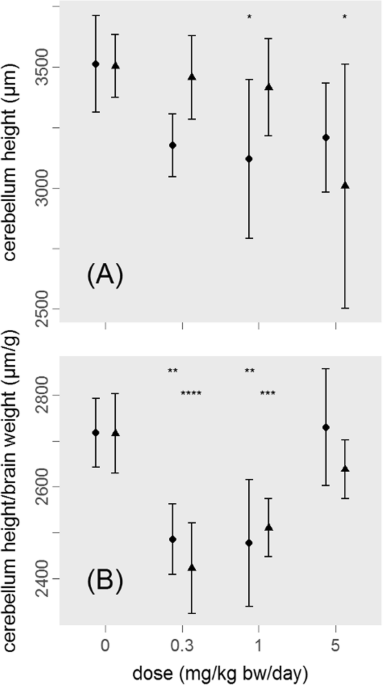
Authorization of pesticides for market release requires toxicity testing on animals, typically performed by test laboratories on contract with the pesticide producer. The latter provides the results and summary to the regulatory authorities. For the commonly used pesticide chlorpyrifos, an industry-funded toxicity study concludes that no selective effects on neurodevelopment occur even at high exposures. In contrast, the evidence from independent studies points to adverse effects of current exposures on cognitive development in children. We reviewed the industry-funded developmental neurotoxicity test data on chlorpyrifos and the related substance chlorpyrifos-methyl. We noted treatment-related changes in a brain dimension measure for chlorpyrifos at all dose levels tested, although not been reported in the original test summary. We further found issues which inappropriately decrease the ability of the studies to reveal true effects, including a dosage regimen that resulted in too low exposure of the nursing pups for chlorpyrifos and possibly for chlorpyrifos-methyl, and a failure to detect any neurobehavioral effects of lead nitrate used as positive control in the chlorpyrifos study. Our observations thus suggest that conclusions in test reports submitted by the producer may be misleading. This discrepancy affects the ability of regulatory authorities to perform a valid and safe evaluation of these pesticides. The difference between raw data and conclusions in the test reports indicates a potential existence of bias that would require regulatory attention and possible resolution.
Social isolation linked to changes in brain structure and lower cognition ability
This showed that socially isolated people had poorer cognition, including in memory and reaction time, and lower volume of grey matter in many parts of the brain. These areas included the temporal region (which processes sounds and helps encode memory), the frontal lobe (which is involved in attention, planning and complex cognitive tasks) and the hippocampus – a key area involved in learning and memory, which is typically disrupted early in Alzheimer’s disease.
What the Studies Say About How AI Affects Your Brain: A (Very Big) Compilation
The entire literature clearly points to a single surprising finding
Revealed: almost everyone in Europe is breathing toxic air
Guardian investigation finds 98% of Europeans breathing highly damaging polluted air linked to 400,000 deaths a year

Mounting research shows that COVID-19 leaves its mark on the brain, including significant drops in IQ scores
Two new high-profile studies add to the increasingly worrisome picture of how even mild cases of COVID-19 can have detrimental effects on brain health.

Air Pollution and the Public Health Costs of AI
A new study by Caltech and UC Riverside uncovers the hidden toll that AI exacts on health throughout its lifecycle, from chip manufacturing to data center operation.
