
A new study sheds light on how the brain changes as a result of chronic stress. Selective noradrenaline release rewires connectivity patterns between different brain regions. Activity in the amygdala and networks that process sensory stimuli increased.
The neuroimaging correlates of depression established across six large-scale population datasets
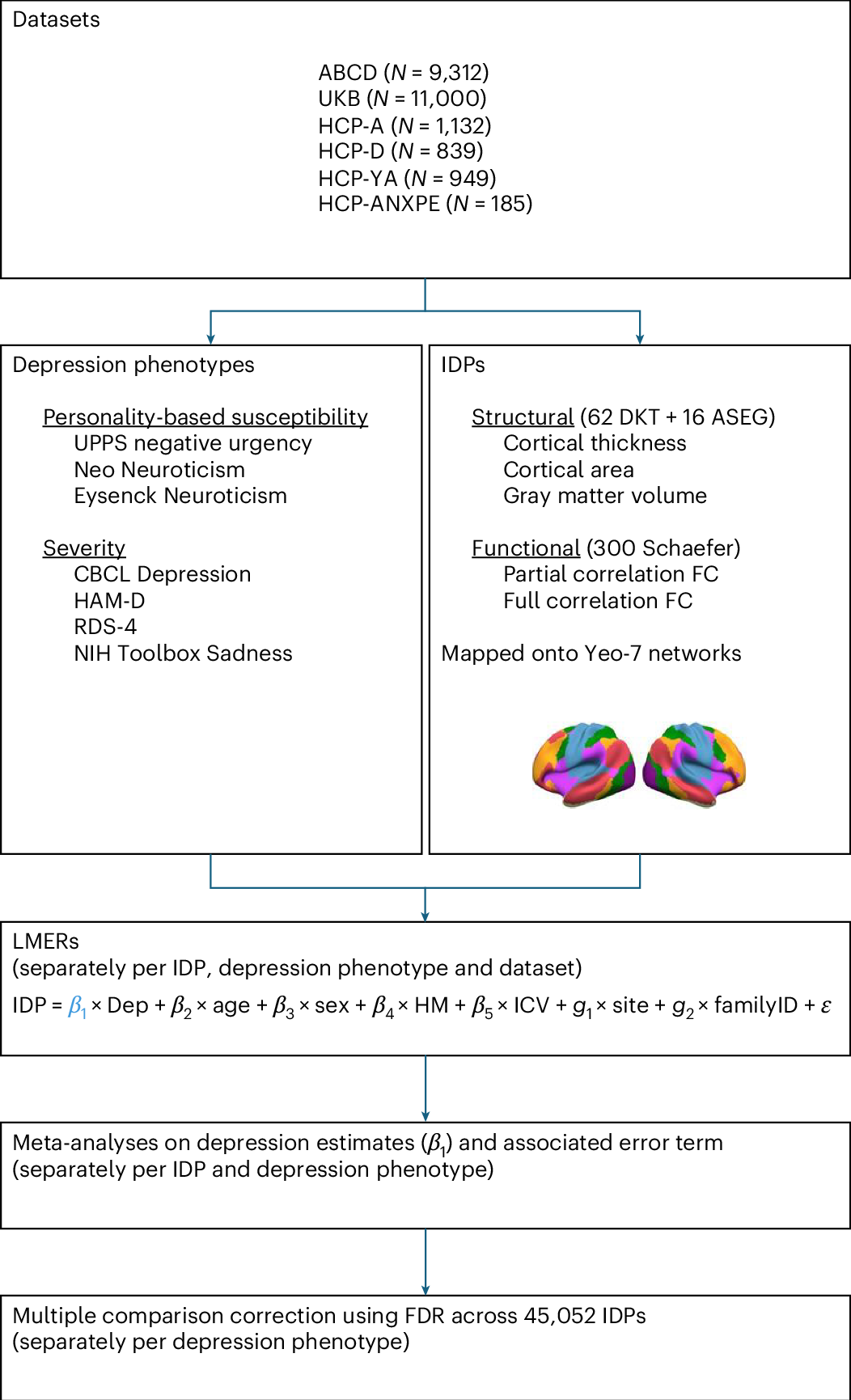
Depression has been linked to reduced size of subcortical regions and abnormal functional connectivity in frontal and default mode networks. However, recent meta-analyses have failed to identify significant converging correlates of depression across the literature such that a conclusive mapping of the neuroimaging correlates of depression remains elusive. We leveraged 23,417 participants across 6 population datasets to comprehensively establish the neuroimaging correlates of depression. We found reductions in gray matter volume/cortical surface area associated with depression in the frontal cortex, anterior cingulate and insula, confirming previous studies showing the importance of prefrontal and default mode regions in depression. Our findings demonstrate multiple surprising results, including a lack of depression correlates in subcortical brain regions and significant depression correlates in somatomotor and visual regions. Overall, these results shed new light on key brain regions involved in the pathophysiology of depression, updating our understanding of the neuroimaging correlates of depression symptoms.
The neuroimaging correlates of depression established across six large-scale population datasets
Depression has been linked to reduced size of subcortical regions and abnormal functional connectivity in frontal and default mode networks. However, recent meta-analyses have failed to identify significant converging correlates of depression across the literature such that a conclusive mapping of the neuroimaging correlates of depression remains elusive. We leveraged 23,417 participants across 6 population datasets to comprehensively establish the neuroimaging correlates of depression. We found reductions in gray matter volume/cortical surface area associated with depression in the frontal cortex, anterior cingulate and insula, confirming previous studies showing the importance of prefrontal and default mode regions in depression. Our findings demonstrate multiple surprising results, including a lack of depression correlates in subcortical brain regions and significant depression correlates in somatomotor and visual regions. Overall, these results shed new light on key brain regions involved in the pathophysiology of depression, updating our understanding of the neuroimaging correlates of depression symptoms.
Think Twice: How the Gut's "Second Brain" Influences Mood and Well-Being
The emerging and surprising view of how the enteric nervous system in our bellies goes far beyond just processing the food we eat
The Entangled Brain: How Perception, Cognition, and Emotion Are Woven Together
A new vision of the brain as a fully integrated, networked organ.Popular neuroscience accounts often focus on specific mind-brain aspects like addiction, c

How the Brain Uses Glucose to Fuel Self-Control
The brain requires tons of energy—and new experiments show how low glucose levels and self-control issues are connected.

Why Your Brain Needs More Downtime
Research on naps, meditation, nature walks and the habits of exceptional artists and athletes reveals how mental breaks increase productivity, replenish attention, solidify memories and encourage creativity

Depression doesn't shrink the brain like we thought it did | New Scientist
For the past decade, depression has been linked to a shrunken hippocampus, which has a vital role in memory. But a large study using up-to-date scanning techniques suggests this may not be the case

Leading Innovation in Psychiatric Treatment | Alto Neuroscience
We leverage brain biology to develop personalized medicines, helping patients get better faster.

Neuralink and the Brain's Magical Future — Wait But Why
I knew the future would be shocking but this is a whole other level.

Chronic methylphenidate abuse: Effects on behaviour, redox homeostasis, and cholinergic system
Methylphenidate (MPH) (metil 2-fenil-2-(piperidin-2-il) acetato) is used as a drug of abuse as well as a cognitive enhancer owing to its amphetaminic structure. The objective of this study was to evaluate whether chronic exposure to an abusive context and dose of MPH (80 mg/L for 15 min/day for 7 days) in adult life causes behavioural changes related to anxiety, fear, sociability, locomotion, and memory as well as altered levels of biochemical markers, cortisol, and the cholinergic system. Here we used the zebrafish (Danio rerio) as a translatio Nnal model. We showed that fish exposed to MPH showed marked hypolocomotion and anxiogenic patterns, fear behaviour, and memory delay. MPH exposure also increased the levels of antioxidant enzymes, non-protein thiols, and reactive oxygen species compared with those in the control group, and the redox status was altered at the cerebral and peripheral levels. The cholinergic system exhibits a reduction in signalling and an increase in cortisol levels. Our results clarified the mechanisms involved in the toxicity elicited by the abusive use of MPH. Overall, our results demonstrated that chronic administration of an abusive dose of MPH in individuals without a diagnosis of attention deficit hyperactivity disorder (ADHD) can cause important damage.
Stimming and Emotional Regulation:
The Essential Role of Rhythmic Self-Modulation

Computational Psychiatry Needs Systems Neuroscience
This piece was originally published in The Transmitter. I am adapting it here with some additional context for readers of this newsletter.

Brain Hyperconnectivity in Children with Autism and its Links to Social Deficits
In this study, Supekar, Menon, and colleagues shed light on a longstanding question about the nature of brain connectivity aberrations in autism. Using functional neuroimaging data, they demonstrate that the brains of children with autism are hyperconnected in ways that are related to the severity of social impairment exhibited by these children. They replicate these findings in two additional cohorts of children, challenging current theories of brain connectivity in autism and providing unique insights into the brain mechanisms underlying the disorder.

Motif Neurotech — Therapeutic Brain Computer Interface For Mental Health
We're building devices to help you monitor and regulate your mental health and performance.
.png)
Learning What Substance Is Suspected of Causing Alzheimer’s May Throw You Into an Existential Crisis
A surprisingly common substance was found to have a causal relationship with the kind of brain damage associated with Alzheimer's disease.