

Dopamine neurons largely rely on their own discharge to determine release rates of the hormone, researchers report.
Serotonin Helps Your Brain Predict Future Rewards - Neuroscience News
New research reveals that serotonin plays a key role in how the brain predicts future rewards, shedding light on its puzzling activity in response to both pleasure and pain.

How the Brain Uses Glucose to Fuel Self-Control
The brain requires tons of energy—and new experiments show how low glucose levels and self-control issues are connected.

What stress does to the brain - Neuroscience News
A new study sheds light on how the brain changes as a result of chronic stress. Selective noradrenaline release rewires connectivity patterns between different brain regions. Activity in the amygdala and networks that process sensory stimuli increased.

The Brain's Autopilot Mechanism Steers Consciousness
Freud’s notion of a dark, libidinous unconscious is obsolete. A new theory holds that the brain produces a continuous stream of unconscious predictions

How the Brain Separates Touch We Choose vs. Touch We Receive - Neuroscience News
Touch is a vital sense, yet the brain processes active and passive touch using distinct pathways.

Serotonin Transporters Increase When Depression Fades - Neuroscience News
Neuroimaging revealed serotonin transporter levels increased in people who were in recovery from depression following cognitive behavioral therapy.

Your Brain Chooses What to Let You See | Quanta Magazine
Beneath our awareness, the brain lets certain kinds of stimuli automatically capture our attention by lowering the priority of the rest.

Stimming and Emotional Regulation:
The Essential Role of Rhythmic Self-Modulation

The sleep switch that builds muscle, burns fat, and boosts brainpower
UC Berkeley researchers mapped the brain circuits that control growth hormone during sleep, uncovering a feedback system where sleep fuels hormone release, and the hormone regulates wakefulness. The discovery helps explain links between poor sleep, obesity, diabetes, and cognitive decline, while opening new paths for treating sleep and metabolic disorders.
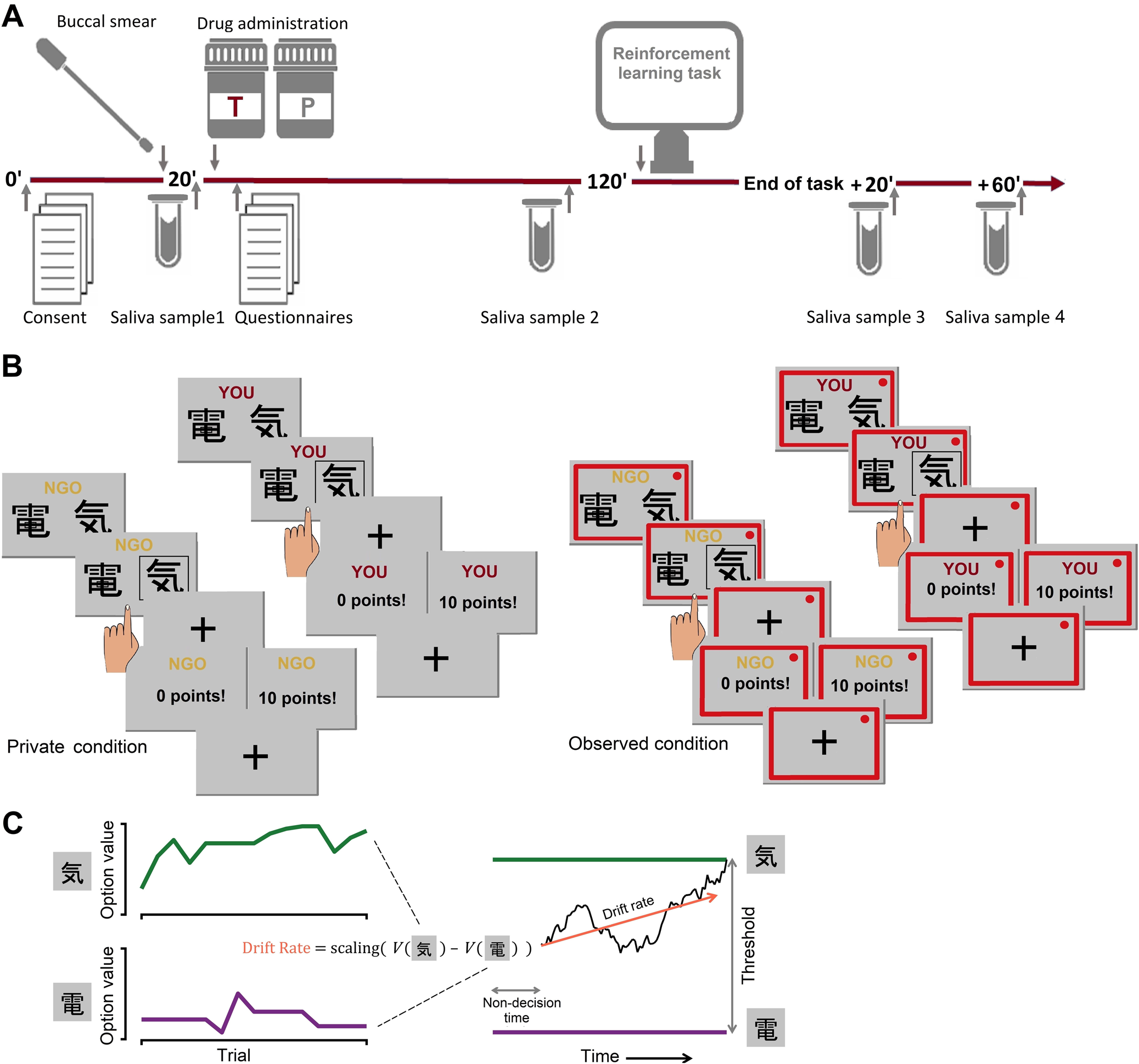
Testosterone eliminates strategic prosocial behavior through impacting choice consistency in healthy males
Neuropsychopharmacology - Testosterone eliminates strategic prosocial behavior through impacting choice consistency in healthy males
The neuron as a direct data-driven controller | PNAS
In the quest to model neuronal function amid gaps in physiological data, a promising strategy is to develop a normative theory that interprets neur...

Aging Out of Fucks: The Neuroscience of Why You Suddenly Can’t Pretend Anymore
Your brain's middle finger to people-pleasing

The Brain ‘Rotates’ Memories to Save Them From New Sensations | Quanta Magazine
Some populations of neurons simultaneously process sensations and memories. New work shows how the brain rotates those representations to prevent interference.
How Information is Like Snacks, Money, and Drugs To Your Brain - Slashdot
A new study by researchers at UC Berkeley's Haas School of Business has found that information acts on the brain's dopamine-producing reward system in the same way as money or food. From a report: "To the brain, information is its own reward, above and beyond whether it's useful," says Assoc. Prof. ...

First Brain-Wide Map of Decision-Making Charted In Mice - Slashdot
In a landmark collaboration across 22 labs, neuroscientists have created the first brain-wide map of decision-making in mice, tracking over 620,000 neurons across nearly 280 brain regions. They found that decision-making is distributed much more broadly than previously thought, involving not just "c...
The Role of Estrogen Receptors and Their Signaling across Psychiatric Disorders
Increasing evidence suggests estrogen and estrogen signaling pathway disturbances across psychiatric disorders. Estrogens are not only crucial in sexual maturation and reproduction but are also highly involved in a wide range of brain functions, such as cognition, memory, neurodevelopment, and neuroplasticity. To add more, the recent findings of its neuroprotective and anti-inflammatory effects have grown interested in investigating its potential therapeutic use to psychiatric disorders. In this review, we analyze the emerging literature on estrogen receptors and psychiatric disorders in cellular, preclinical, and clinical studies. Specifically, we discuss the contribution of estrogen receptor and estrogen signaling to cognition and neuroprotection via mediating multiple neural systems, such as dopaminergic, serotonergic, and glutamatergic systems. Then, we assess their disruptions and their potential implications for pathophysiologies in psychiatric disorders. Further, in this review, current treatment strategies involving estrogen and estrogen signaling are evaluated to suggest a future direction in identifying novel treatment strategies in psychiatric disorders.
